Turkey vulture
Cathartes aura
— Where the name comes from
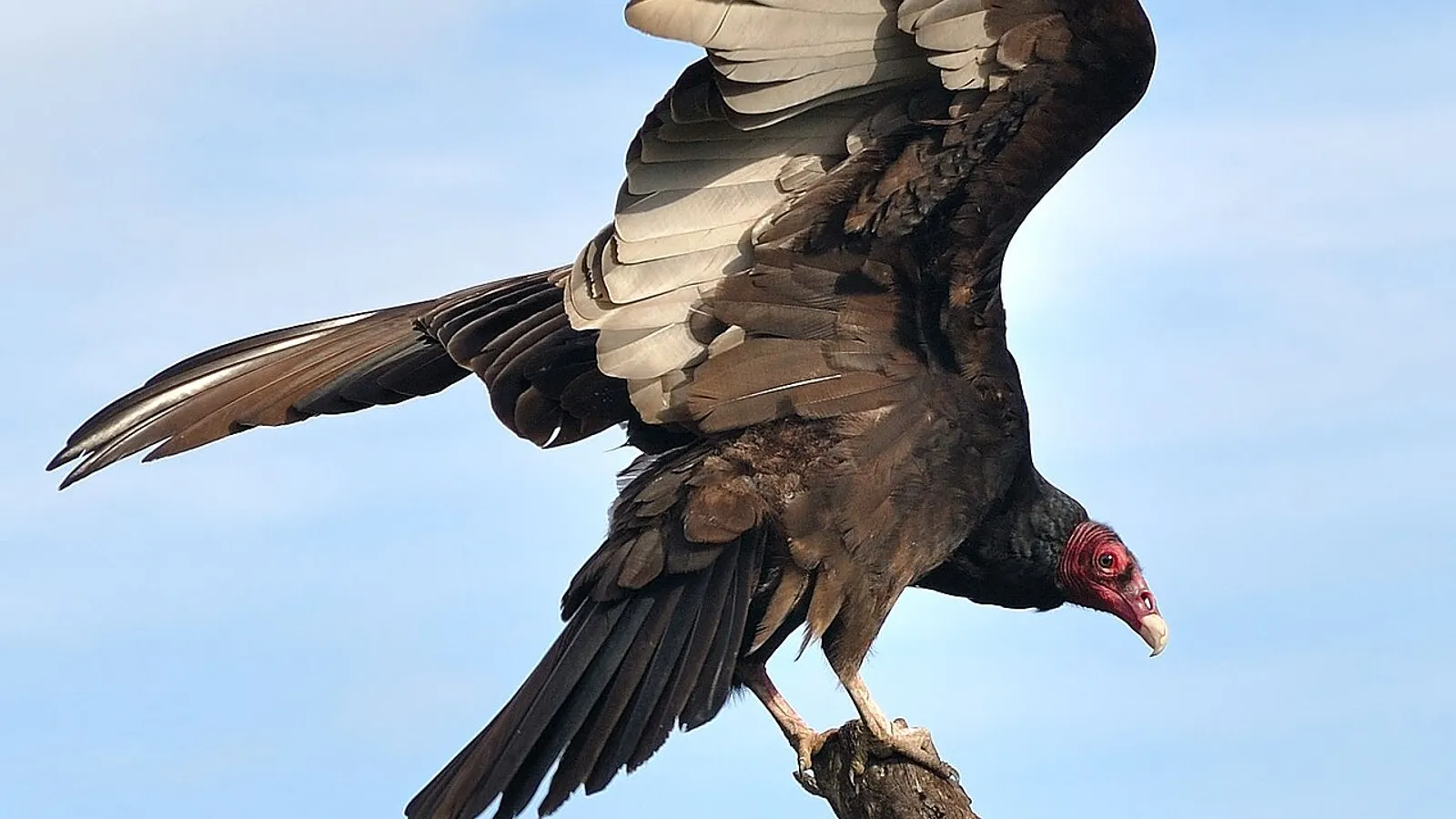
Cathartes is Greek, kathartḗs, “the purifier”: a fond name for a bird that clears the landscape of carcasses. Aura is not the Latin breeze, though that would suit a great glider: it came from American Spanish, which very likely took it from an indigenous Mexican name. In English it is the turkey vulture, for the bare red head that reminded settlers of a turkey’s.
— Facts
- Group
- Birds · Aves
- Order
- New World vultures
- Habitat
- Prairie, open woodland, desert, farmland and the edges of towns
- Range
- From southern Canada to Tierra del Fuego
- Size
- 62–81 cm, wingspan 160–183 cm, 0.8–2.3 kg
- Diet
- Carrion, including small, fresh carcasses
- Lifespan
- 16–20 years in the wild, over 30 in captivity
— Characteristics
- 01
It soars with its wings raised in a V, tilting from side to side.
- 02
It cools off by urinating on its legs: the evaporation chills and disinfects them.
- 03
It has no voice: it can only hiss and grunt.
— What sets it apart
It finds food by smell, something very rare among birds. Its olfactory lobe is huge, and lets it find a carcass beneath a forest canopy, where no raptor would see it. Its nose has served industry too: in the 1930s engineers at a Californian oil company noticed vultures gathering above leaks in their gas pipelines, drawn by ethyl mercaptan, the same rotten-smelling molecule released by corpses and added to gas precisely so that it can be smelt. All they had to do was look where the birds were circling.