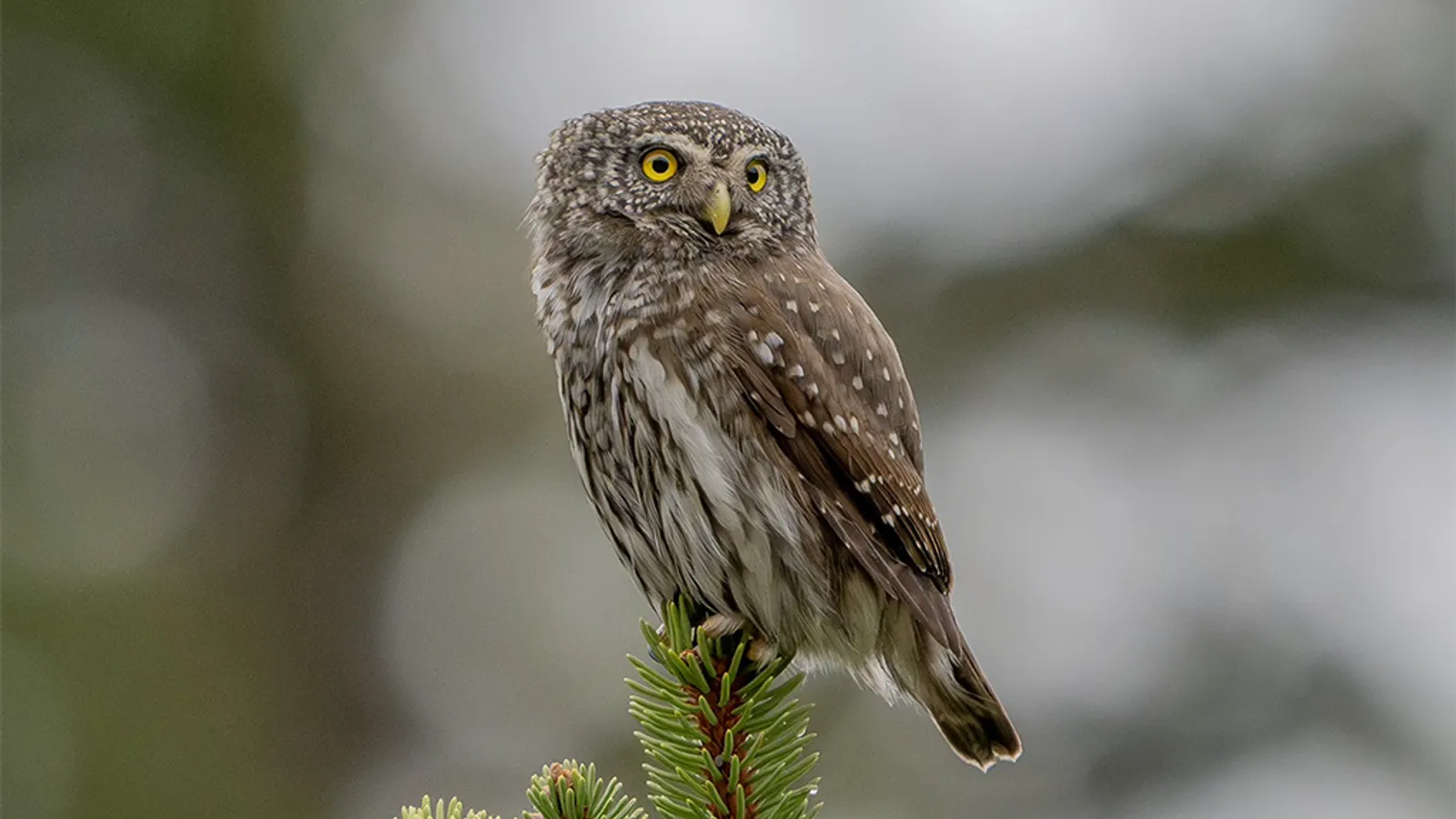
Eurasian pygmy owl
Glaucidium passerinum
— Where the name comes from
Glaucidium is a diminutive of glaux, the Greeks’ little owl, Athena’s bird with the pale eyes: “owlet”. Passerinum adds that it is the size of a sparrow, and that is no exaggeration: at sixteen centimetres it is the smallest owl in Europe. The same idea returns in the German name, Sperlingskauz, the “sparrow owl”.
— Facts
- Group
- Birds · Aves
- Order
- Owls
- Habitat
- Mountain and boreal conifer forest
- Range
- From Scandinavia to eastern Siberia; in the Alps and the Carpathians
- Size
- 15–19 cm, wingspan 32–39 cm, 50–80 g
- Diet
- Small rodents and birds, including birds its own size
- Lifespan
- Up to 7 years
— Characteristics
- 01
On its nape it has two dark patches that imitate a pair of eyes.
- 02
It hunts mostly at dusk, and often by day as well.
- 03
When agitated it flicks its tail.
— What sets it apart
In winter it keeps a larder. In tree holes and nest boxes it stores whole prey — voles, shrews, small birds — which the frost keeps as a freezer would: dozens have been counted in a single larder, sometimes more than a hundred. That is how it gets through the weeks when snow makes hunting impossible. Its two false eyes are for daytime: the small birds that spot it and gather round to drive it off cannot tell which way it is looking.