
Eurasian griffon vulture
Gyps fulvus
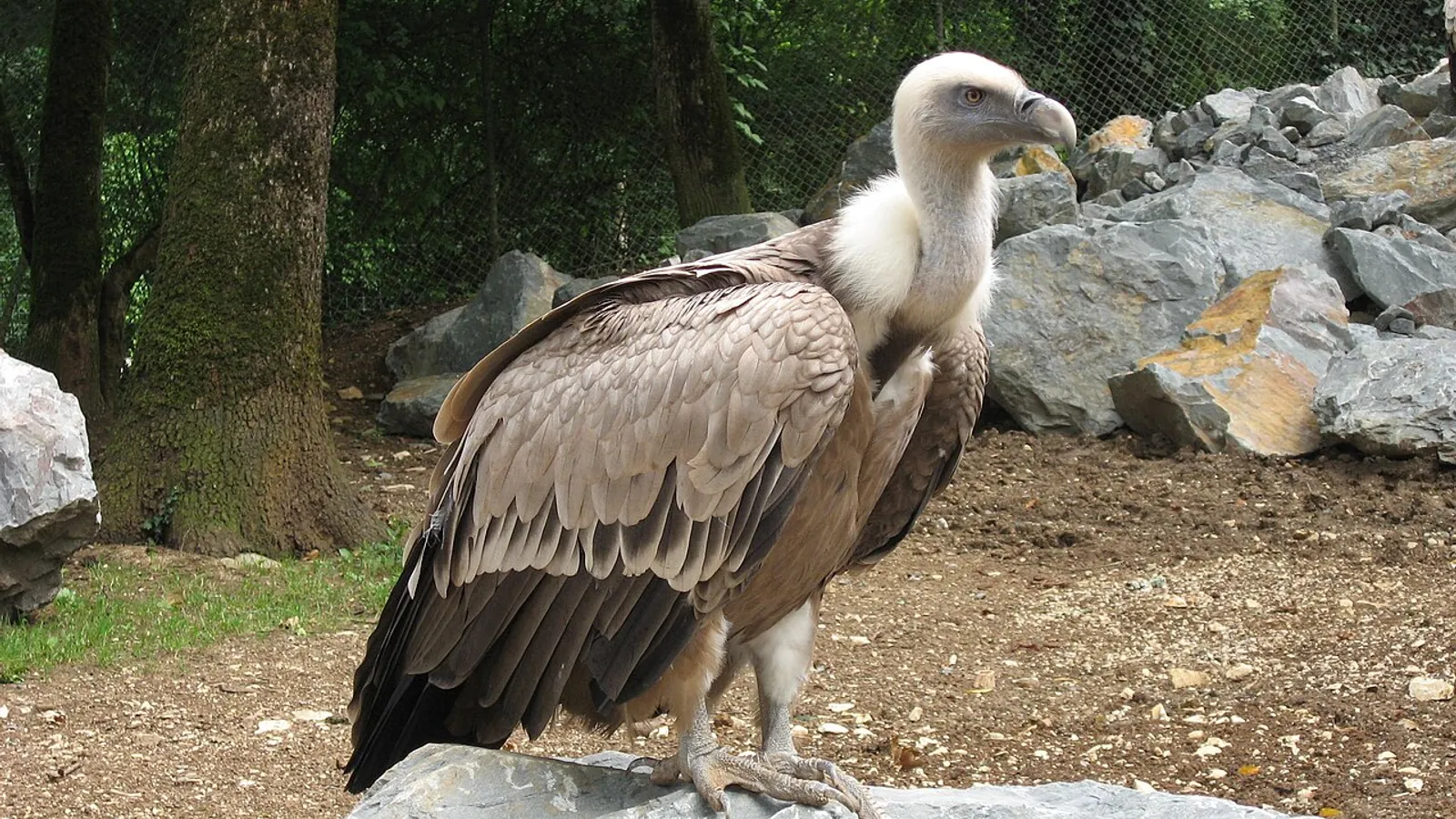
— Where the name comes from
Gyps is the Greek gýps, vulture; fulvus is Latin, “tawny”, from the colour of the plumage. The Italian grifone goes back to the Greek grýps, the mythical griffin, half eagle and half lion: the name of the real animal and that of the fabulous creature share a root that evokes the hooked beak.
— Facts
- Group
- Birds · Aves
- Order
- Diurnal birds of prey
- Habitat
- Mountains, gorges, rock faces in open country
- Range
- Southern Europe, North Africa, Central Asia
- Size
- 93–122 cm, wingspan 234–280 cm
- Diet
- Scavenger — the carcasses of large mammals
- Lifespan
- 25–40 years
— Characteristics
- 01
It soars for hours without a wingbeat, riding rising currents of warm air.
- 02
The nearly bare head and neck stay clean when it reaches deep inside a carcass.
- 03
It finds food by sight and by following other vultures as they drop.
— What sets it apart
Vultures are nature’s most efficient disposers of carrion, and their disappearance has startling consequences: in India, when veterinary diclofenac killed tens of millions of them within a few years, the abandoned carcasses caused an explosion of feral dogs and of rabies, at a human cost estimated in thousands of deaths. A bird that lives on death keeps the diseases of the living quietly at bay.
