
Andean condor
Vultur gryphus
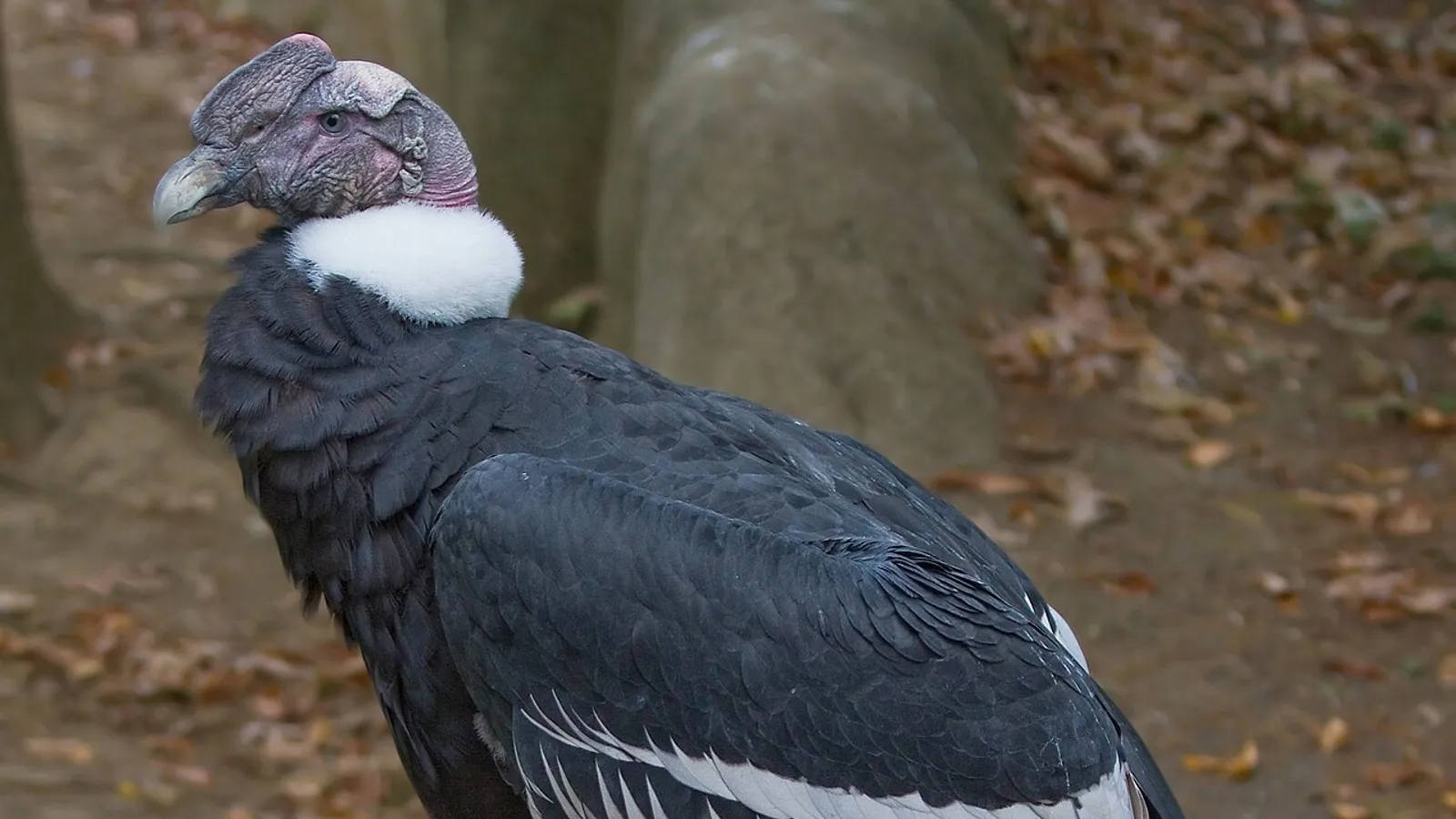
— Where the name comes from
Condor comes from the Quechua kuntur, the Andean name for the bird. Vultur is Latin, vulture; gryphus recalls the mythical griffin again. The order Cathartiformes is from the Greek kathartḗs, “the one who cleanses”: the New World vultures as scavengers who tidy up. It is among the largest flying birds on the planet.
— Facts
- Group
- Birds · Aves
- Order
- New World vultures
- Habitat
- High mountains and windswept coasts
- Range
- The Andes, from Venezuela to Tierra del Fuego
- Size
- 100–130 cm, wingspan up to 330 cm
- Diet
- Scavenger — large carcasses on land and at sea
- Lifespan
- 50–70 years
— Characteristics
- 01
With over three metres of wingspan it is among the largest birds able to fly.
- 02
It glides for hundreds of kilometres with barely a wingbeat.
- 03
Unlike Old World vultures it also finds food by smell.
— What sets it apart
The condor is so heavy that flapping flight costs it an almost unsustainable effort: it depends entirely on rising air to stay up, and on windless days it stays on the ground, unable to get airborne. To compensate, it has one of the thriftiest metabolisms among birds and can fast for weeks. It lives to seventy by gliding: an animal that has traded the labour of flight for the patience of waiting.
