
Great roundleaf bat
Hipposideros armiger
— Where the name comes from
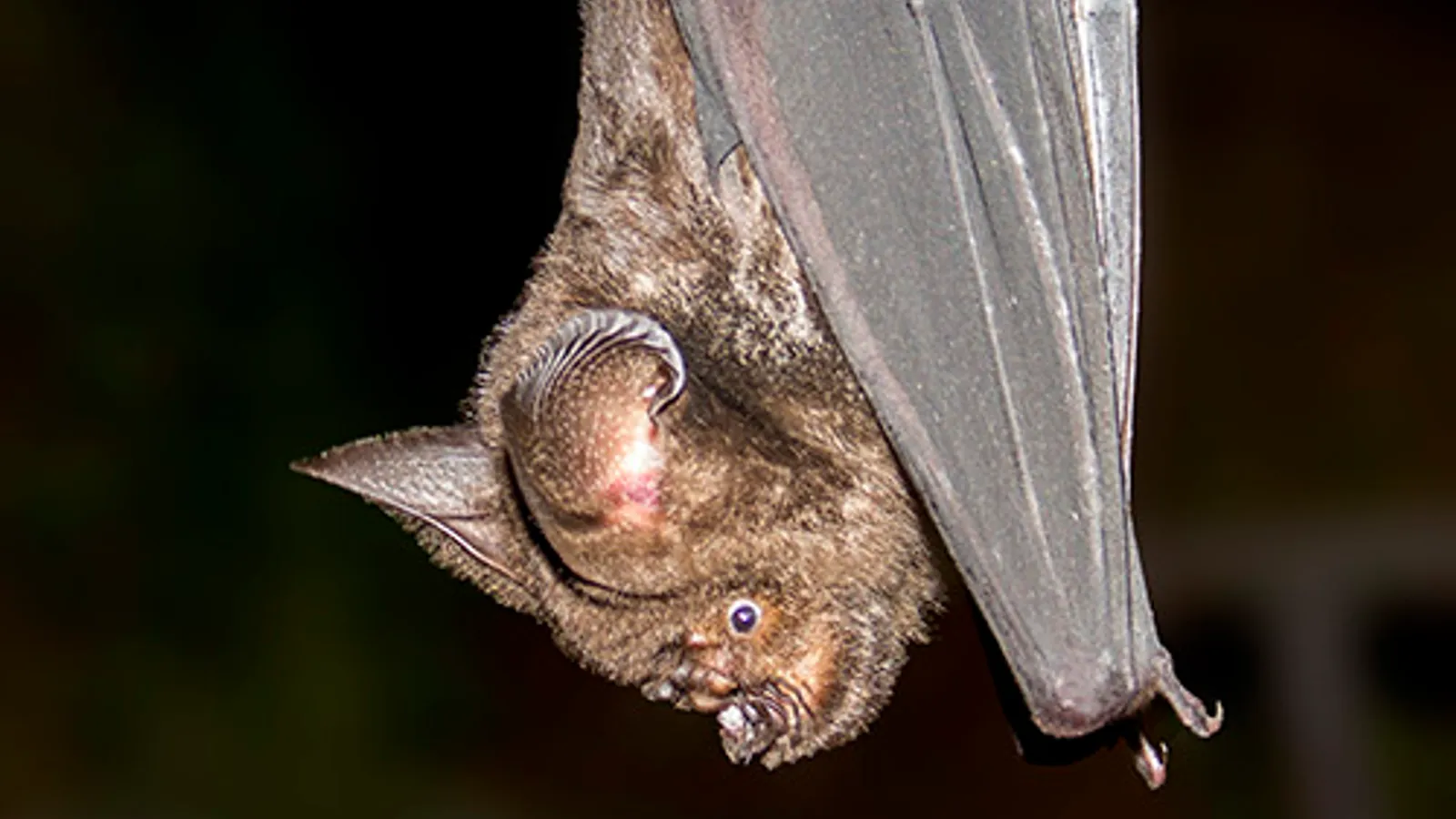
Hipposideros repeats as a genus name what in the lesser horseshoe bat was the epithet: “horseshoe”, from híppos and sídēros. Armiger is the Latin “armour-bearer”, the one who carries the weapons, and alludes to the massive squared nose leaf, which in this species looks more like a plate of armour than an ornament.
— Facts
- Group
- Mammals · Mammalia
- Order
- Bats
- Habitat
- Caves and tunnels in karst country, hunting over forest and cropland
- Range
- From the Himalaya to southern China, Indochina, Malaysia
- Size
- 8–11 cm of body, 45 cm wingspan, 40–60 g
- Diet
- Insectivore — large beetles, moths, grasshoppers
- Lifespan
- About 10 years
— Characteristics
- 01
It is the largest leaf-nosed bat in Asia.
- 02
It gives extremely loud constant-frequency calls, over 110 decibels.
- 03
It hunts from a perch, waiting for an insect to pass and dropping onto it.
— What sets it apart
It shouts louder than a pneumatic drill, and does not go deaf. Its calls pass 110 decibels measured ten centimetres from the mouth, enough to damage a human ear within minutes; the bat protects itself by contracting the middle-ear muscles with every call, briefly disengaging the chain of ossicles, and relaxing them a few milliseconds later, in time for the echo. The cycle repeats dozens of times a second, and must be synchronised with a precision that allows no lag.
