
European green crab
Carcinus maenas
— Where the name comes from
Carcinus is the Greek karkínos, the crab — the word behind the name of the disease too, because Hippocrates compared the swollen veins around a tumour to a crab’s legs, and Latin translated it as cancer. Maenas is the maenad, the follower of Dionysus seized by frenzy. The name therefore says “frenzied crab”, and it is a description of character the animal has earned in the field.
— Facts
- Group
- Crustaceans · Malacostraca · Maxillopoda
- Order
- Crabs, lobsters and shrimps
- Habitat
- Rocky and sandy shores, estuaries, brackish lagoons
- Range
- European in origin; introduced to North America, Australia, South Africa, Japan
- Size
- 6–9 cm carapace
- Diet
- Omnivorous: molluscs, worms, small crustaceans, carrion
- Lifespan
- 5–7 years
— Characteristics
- 01
It tolerates water from nearly fresh to hypersaline, and weeks out of water.
- 02
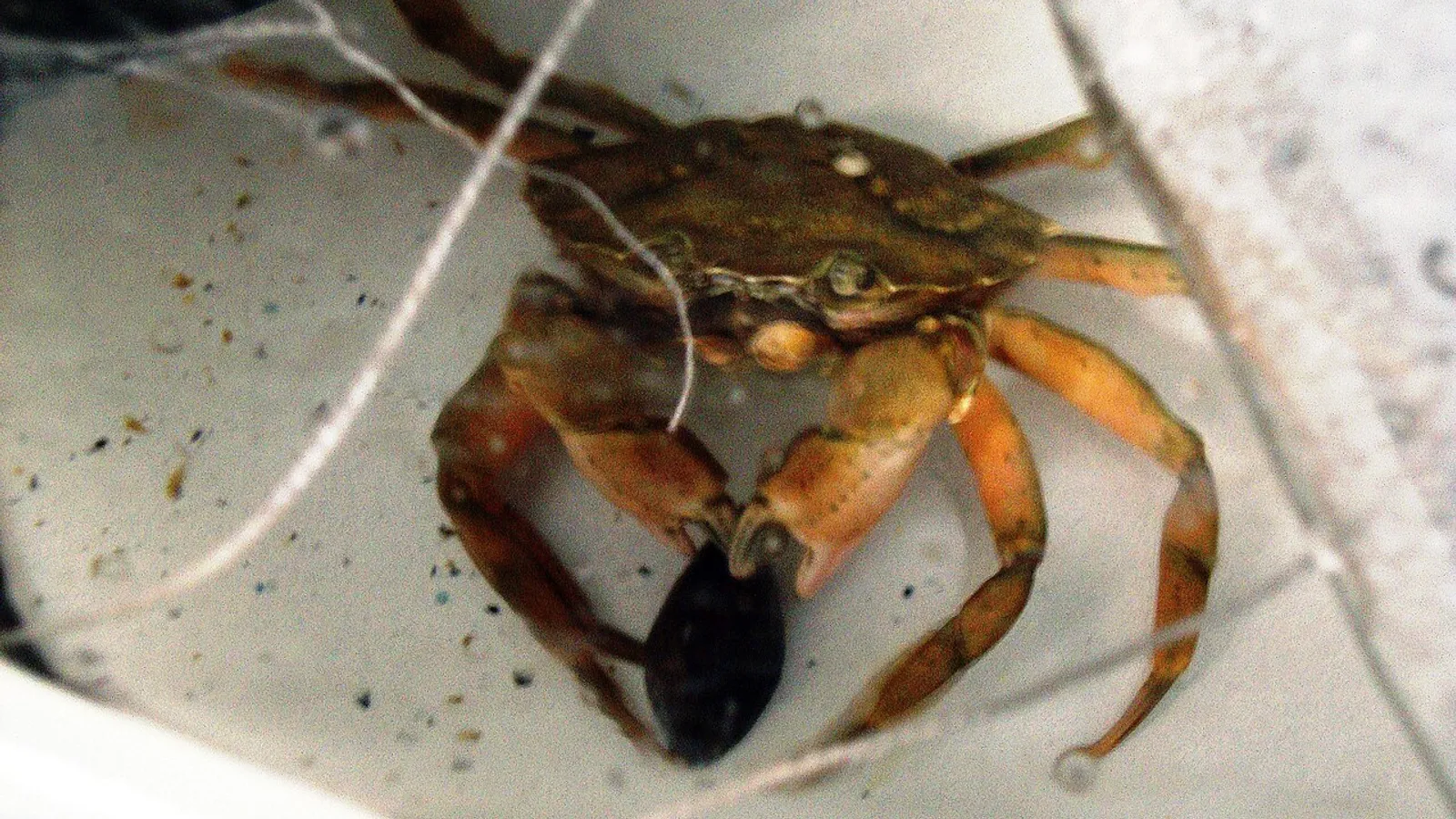
It opens mussels by levering with a claw until the shell gives way.
- 03
It is among the hundred most damaging invasive species in the world.
— What sets it apart
It is one of the few animals humans have carried around the planet without meaning to and can no longer stop: it travels in ships’ ballast water and among the seaweed used to pack fish, and survives conditions that kill almost every other crab. In North America it collapsed the clam fishery of Maine; in Australia and South Africa it is doing the same. Its weapon is not strength but tolerance: it withstands swings of salinity and temperature and days out of water, and eats practically anything.
