
European spider crab
Maja squinado
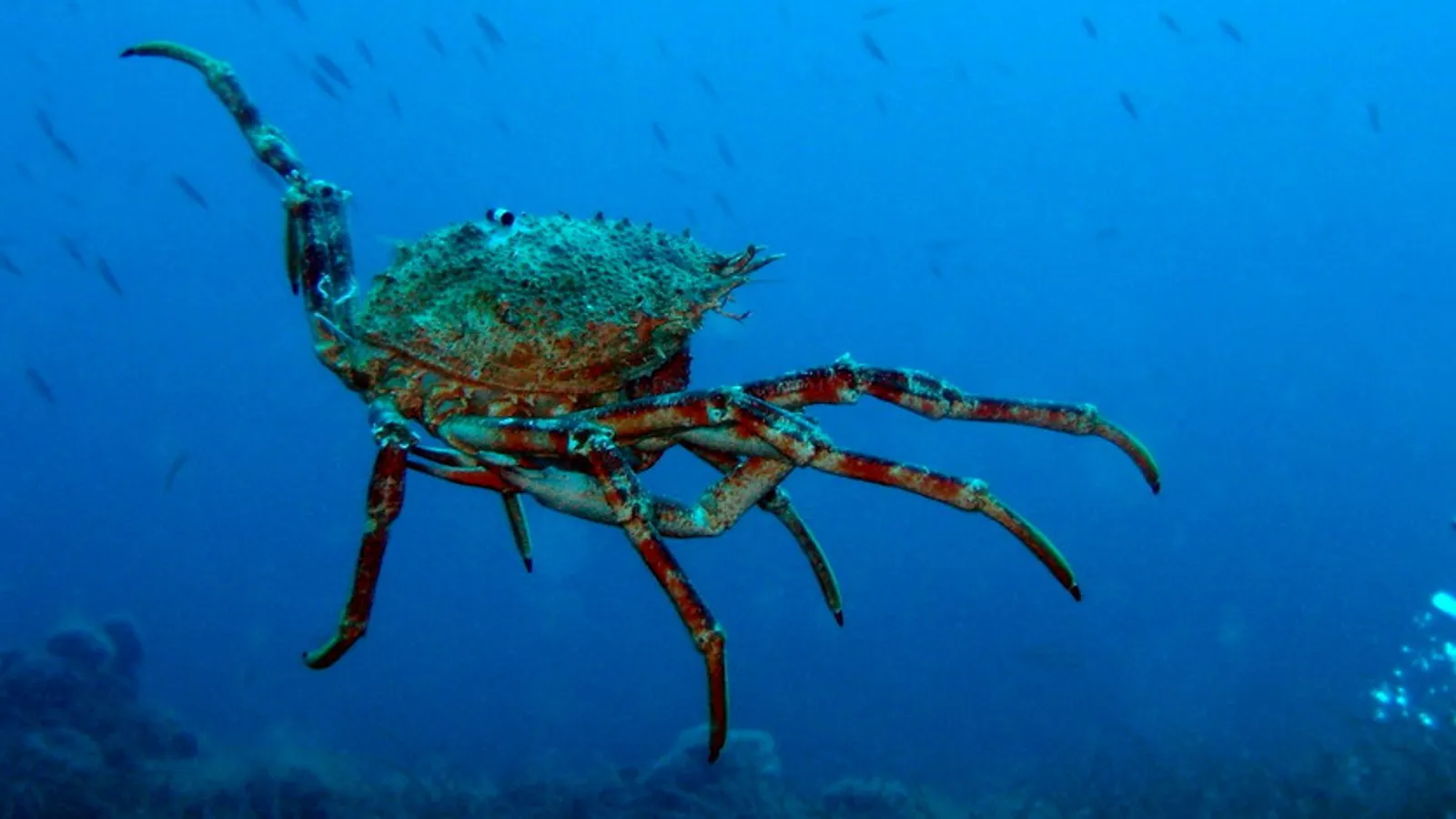
— Where the name comes from
Maja is Maia, the nymph who was Hermes’ mother, one of the Pleiades — a name eighteenth-century naturalists handed out freely for no reason beyond its sound. Squinado comes instead from the Provençal esquinado, “spiny”, and describes what one feels picking it up. The Italian name is a corruption of “crab”: in the Adriatic dialects it is granzeola, granseola, granzievola.
— Facts
- Group
- Crustaceans · Malacostraca · Maxillopoda
- Order
- Crabs, lobsters and shrimps
- Habitat
- Sandy and detrital bottoms between 5 and 100 metres
- Range
- Mediterranean and eastern Atlantic
- Size
- Carapace up to 20 cm; leg span up to 60 cm
- Diet
- Algae, molluscs, echinoderms, carrion
- Lifespan
- 4–8 years
— Characteristics
- 01
It dresses itself in algae and sponges, hooked onto the carapace.
- 02
It makes seasonal migrations of tens of kilometres in column.
- 03
After its final moult it stops growing and the shell becomes encrusted.
— What sets it apart
It camouflages itself by getting dressed. The carapace is covered with hooked bristles onto which the crab plants, by hand, algae, sponges and hydroids gathered from the bottom, pruning and replacing them as they wither: it is gardening, and it serves to disappear. Before breeding, the females gather in heaps of thousands of individuals piled on one another, and those at the centre are shielded by the ones at the edge from patrolling octopuses. It is one of the few known group defences among crustaceans.
