
Blue crab
Callinectes sapidus
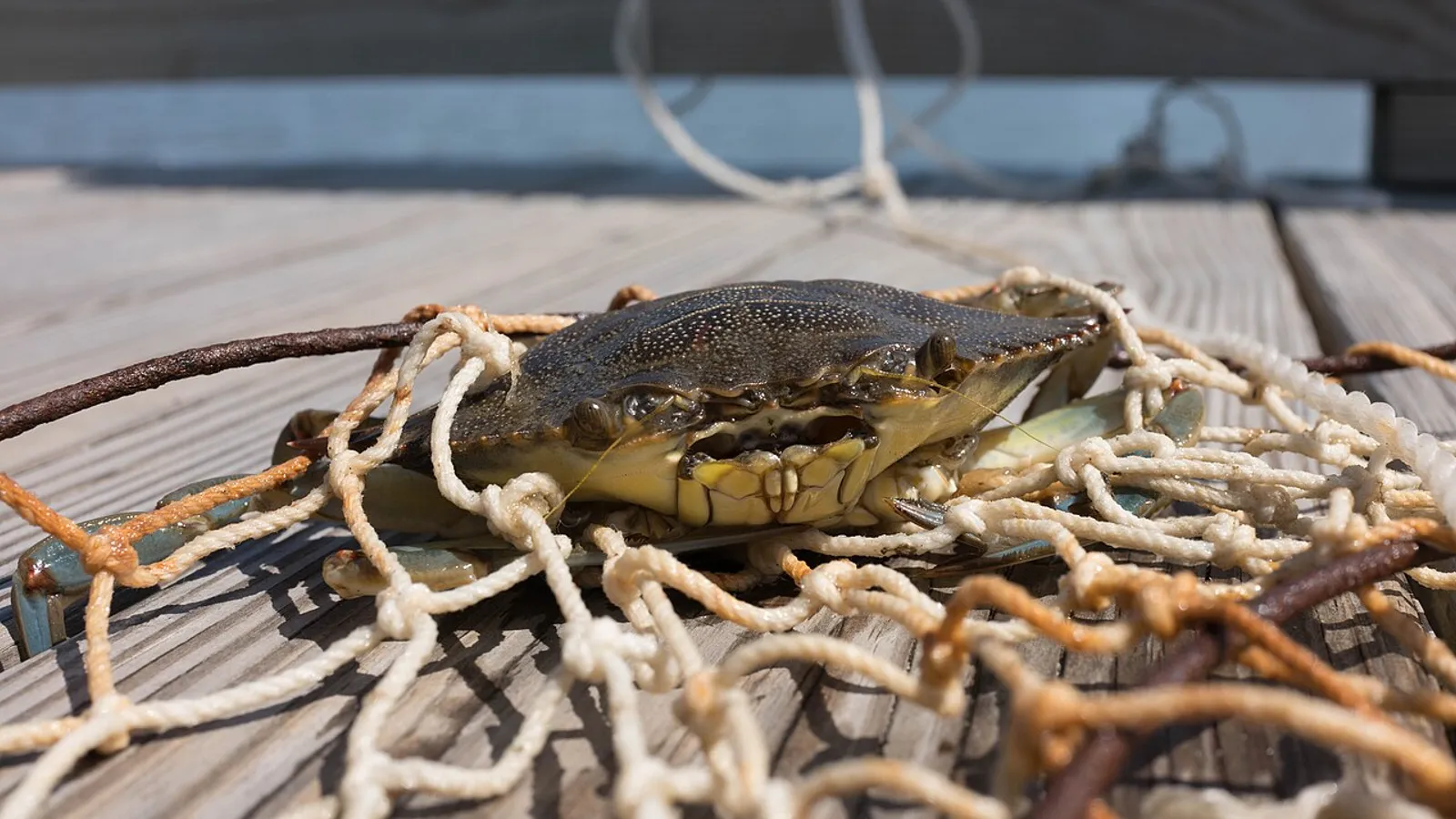
— Where the name comes from
Callinectes is “beautiful swimmer”, from kalós and nēktḗs: the last pair of legs is flattened into paddles and this crab genuinely swims, which almost no other can do. Sapidus is Latin for “tasty”. The binomial holds an aesthetic judgement and a gastronomic one — handsome and delicious — and not one word concerns the animal’s biology.
— Facts
- Group
- Crustaceans · Malacostraca · Maxillopoda
- Order
- Crabs, lobsters and shrimps
- Habitat
- Estuaries, lagoons and sandy coastal bottoms
- Range
- Western Atlantic; introduced to the Mediterranean and the Black Sea
- Size
- Up to 25 cm carapace
- Diet
- Omnivorous: molluscs, fish, worms, detritus, other crabs
- Lifespan
- 3–4 years
— Characteristics
- 01
The last pair of legs is paddle-shaped: it swims sideways at speed.
- 02
The female mates once in her life, right after her final moult.
- 03
A mature female’s claws have red tips, the male’s blue.
— What sets it apart
It reached the Mediterranean in ballast water and in recent years has exploded: in Italy it has devastated the clam farms of the Po delta, where it has too few predators and finds ever warmer water. The most practical response has ended up in the kitchen — festivals, recipes, fisheries built in haste — because that is the only known way to reduce a population already established. The female mates once only, just moulted and still soft, and the male carries her in his arms for days before and after, waiting and then standing guard until her shell hardens.
