
Long-finned pilot whale
Globicephala melas
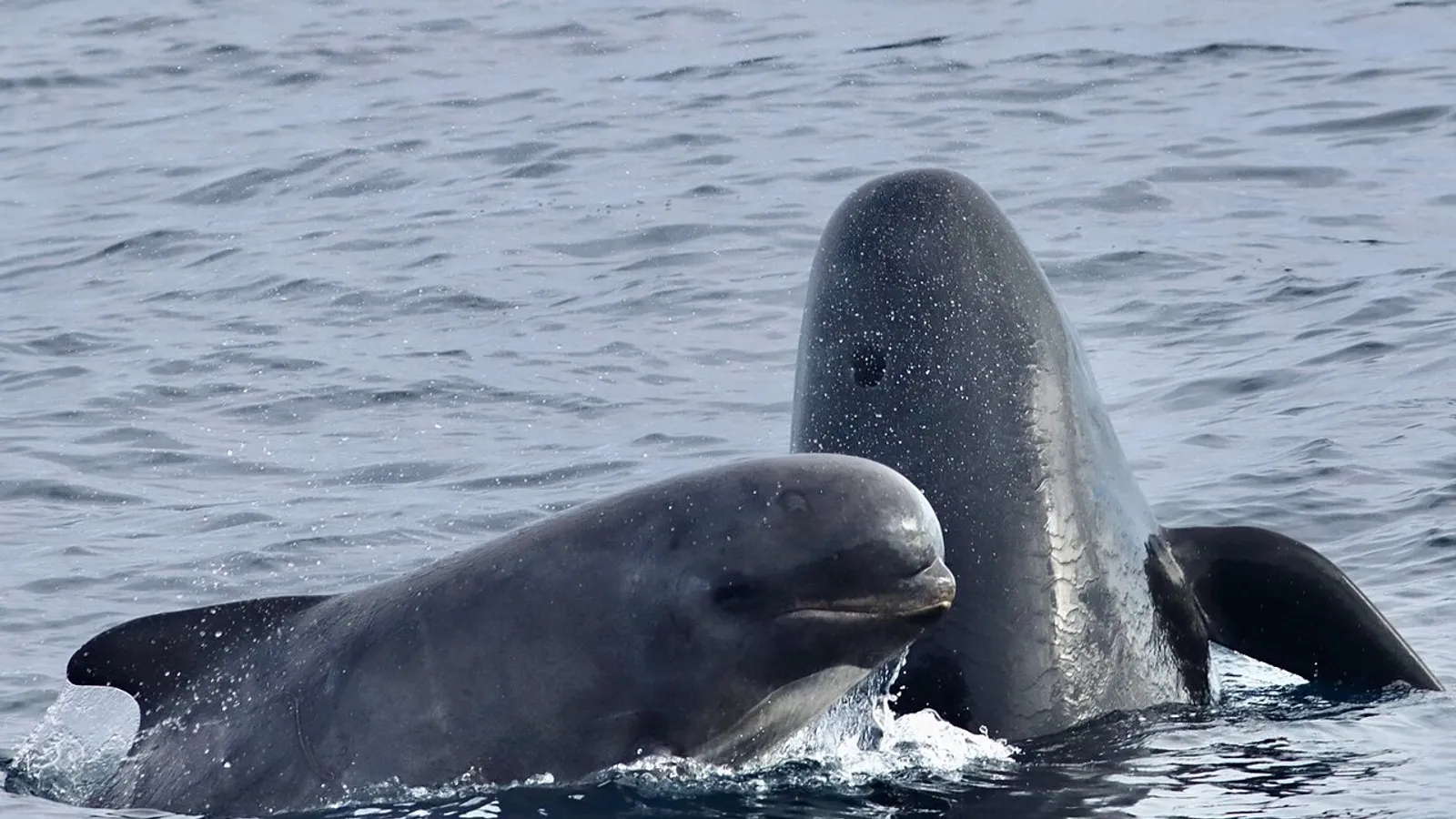
— Where the name comes from
Globicephala is “globe head”, from the Latin globus and the Greek kephalḗ, for the bulbous melon that in adults juts over the snout; melas is “black”. The English name, pilot whale, arose from the whalers’ belief that the pod followed a pilot, a leading individual — and that belief, right or wrong, explains how these animals were killed: it was enough to drive one.
— Facts
- Group
- Mammals · Mammalia
- Order
- Cetaceans
- Habitat
- Open sea and the continental slope, temperate and cold waters
- Range
- The North Atlantic and the oceans of the southern hemisphere
- Size
- 4–6.5 m, 1.3–2.3 tonnes
- Diet
- Carnivore — squid above all, then fish
- Lifespan
- 35–45 years for the male, up to 60 for the female
— Characteristics
- 01
It lives in stable groups of ten to fifty, bound by maternal kinship.
- 02
Sons and daughters stay in their mother’s group for life.
- 03
It is one of only three mammal species in which females go through menopause.
— What sets it apart
Along with the killer whale and ourselves, it is one of the very few mammals in which the females stop breeding long before they die and then live on for decades. The explanation that holds best is that those old females are worth more as grandmothers than as mothers: they know the routes, the squid shoals, the places to go when food is short, and the group is made of their descendants. In a society where nobody ever leaves, an old female’s memory is everybody’s inheritance.
