
Gyrfalcon
Falco rusticolus
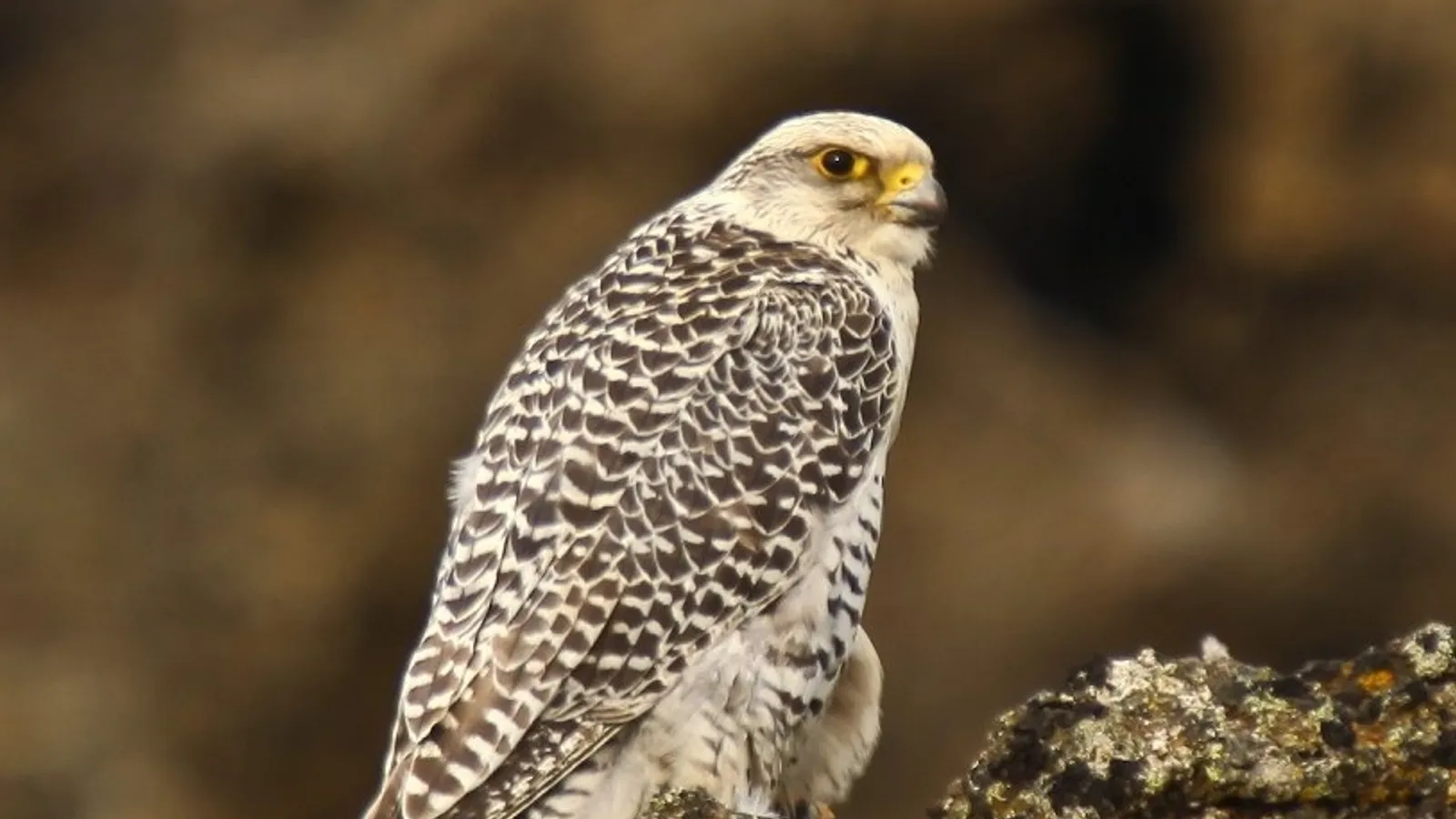
— Where the name comes from
Falco comes from falx, the sickle, for the profile of the wings in flight; rusticolus means “dwelling in the countryside”, which for an Arctic species is nearly comic. The common name comes from the Old Norse geirfalki, “spear falcon”, by way of the medieval Latin gyrofalco, where somebody reinterpreted it as “the falcon that circles”: two etymologies laid one over the other, one true and one invented afterwards.
— Facts
- Group
- Birds · Aves
- Order
- Falcons
- Habitat
- Arctic tundra, rocky coasts, treeless mountains
- Range
- Circumpolar Arctic: Greenland, Iceland, Scandinavia, Siberia, Canada
- Size
- 48–65 cm, wingspan 110–160 cm, 0.8–2.1 kg
- Diet
- Ptarmigan, ducks, gulls, lemmings
- Lifespan
- 13 years in the wild
— Characteristics
- 01
It is the largest falcon in the world.
- 02
It does not stoop from above like the peregrine: it runs prey down in level flight.
- 03
The Greenland populations are almost entirely white.
— What sets it apart
Medieval falconry had a strict hierarchy governing who might carry which bird on the glove, and at the top, above the eagle, stood this one: the gyrfalcon was the king’s falcon. White birds from Greenland and Iceland were diplomatic gifts between sovereigns, and in 1396, to ransom the son of the Duke of Burgundy taken prisoner by the Turks at Nicopolis, twelve white gyrfalcons were among the terms. In that century a bird was worth as much as a town.
