
Bearded vulture
Gypaetus barbatus
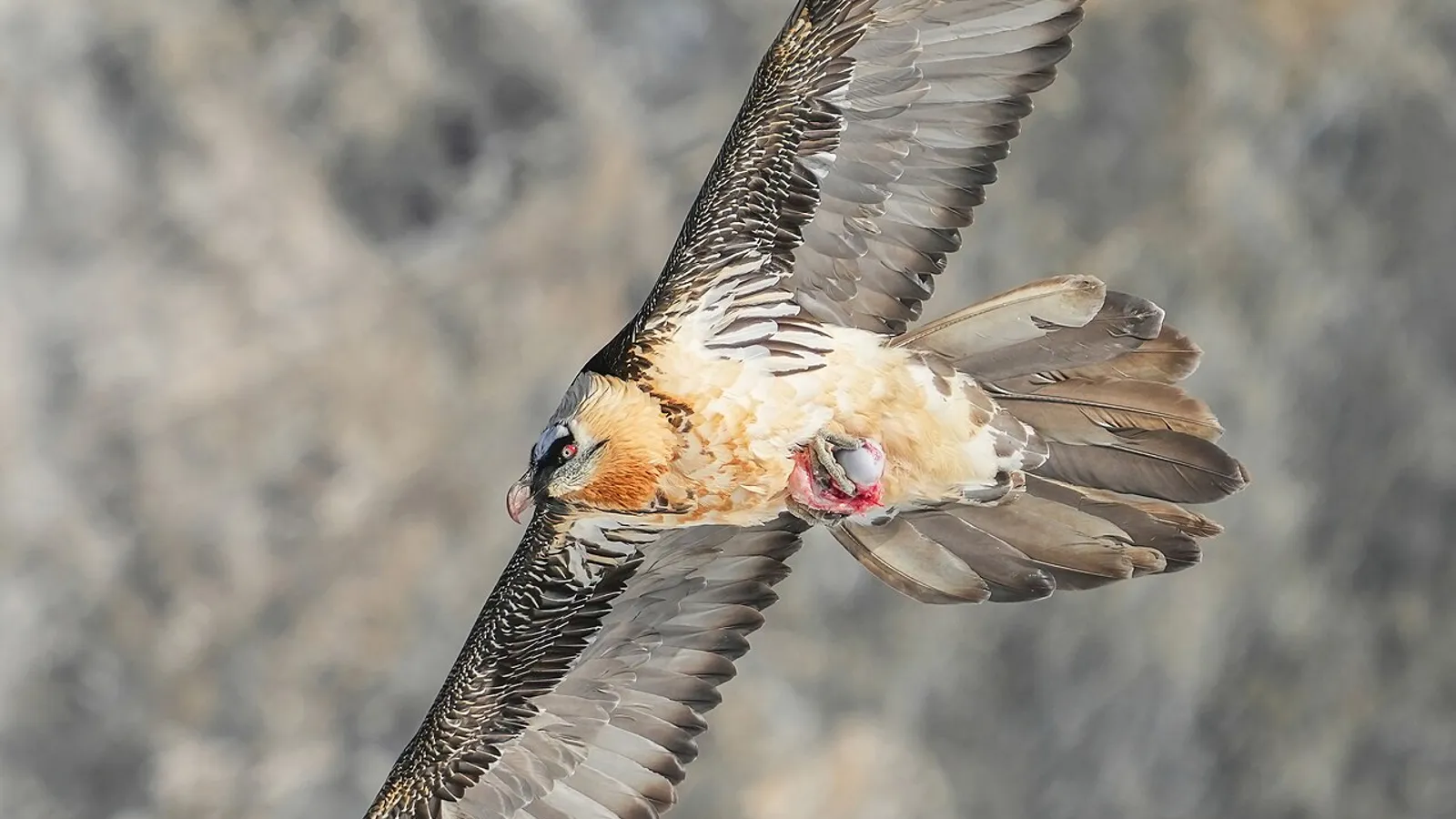
— Where the name comes from
Gypaetus is “vulture-eagle”, from gýps and aetós: whoever described it could not decide what it was, since it has a vulture’s body and an eagle’s flight. Barbatus refers to the tuft of black bristles beneath the bill. In English it was long the lammergeier, from the German Lämmergeier, “lamb-vulture”, on the false belief that it carried off lambs and children: that is why it was exterminated from the Alps.
— Facts
- Group
- Birds · Aves
- Order
- Diurnal birds of prey
- Habitat
- High-altitude rock faces, gullies, alpine grassland
- Range
- The Pyrenees, Alps, Balkans, East Africa, the Himalaya
- Size
- 94–125 cm, wingspan 231–283 cm, 4.5–7.8 kg
- Diet
- Bone, marrow, carcasses
- Lifespan
- 21 years in the wild, over 40 in captivity
— Characteristics
- 01
Up to ninety per cent of the diet is bone: no other vertebrate does this.
- 02
It drops large bones from a hundred metres onto fixed scree slopes to break them.
- 03
Its gastric juices approach the acidity of a laboratory acid.
— What sets it apart
It dyes itself. The breast and head of adults are a warm orange that has nothing to do with the plumage, which is grey-white underneath: the bird seeks out springs and muds rich in iron oxides and rubs itself in them at length, deliberately. It is not camouflage and not delousing; the firmest hypothesis is that it signals rank, because dominant birds are the reddest and at sites where ferrous mud is scarce the fights over access are frequent. It is one of very few wild animals to use a cosmetic.
