
Woodland dormouse
Graphiurus murinus
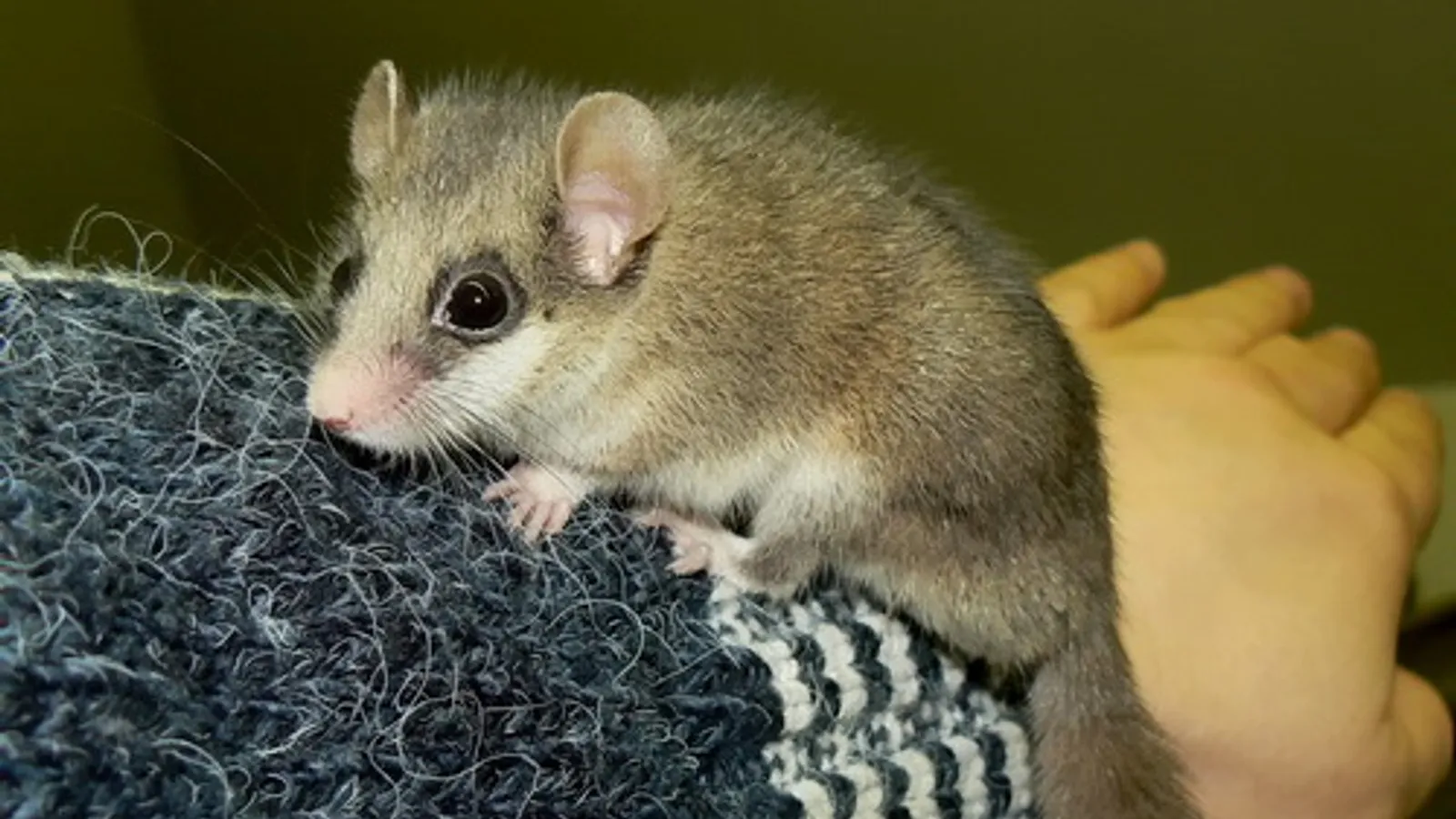
— Where the name comes from
Graphiurus means “brush tail”, from the Greek graphís, the writing stylus, and ourá: the thick flattened tail resembles a calligrapher’s brush. Murinus, “mouse-like”, is the adjective taxonomists use to mean “grey as a mouse” — and for an animal that is in fact a dormouse, not a murid, it sounds like a warning not to trust appearances.
— Facts
- Group
- Mammals · Mammalia
- Order
- Rodents
- Habitat
- Wooded savannah, gallery forest, village huts and roofs
- Range
- Sub-Saharan Africa, from Sudan to South Africa
- Size
- 8–11 cm of body, tail 6–9 cm, 20–40 g
- Diet
- Insects, spiders, fruit, seeds, eggs, small vertebrates
- Lifespan
- 6 years in captivity
— Characteristics
- 01
It is nocturnal and slips into crevices a few millimetres wide by flattening its chest.
- 02
It does not hibernate but enters daily torpor when it is cold or food is short.
- 03
It gives a far richer range of squeaks and trills than the other dormice.
— What sets it apart
It is the only dormouse living in Africa south of the Sahara, and its presence there is a relic of a time when the family was spread over half the world. Dormice have forty million years behind them and once included forms the size of rabbits, such as the giant Leithia of the Mediterranean islands, extinct along with the dwarf elephants. What is left today is a handful of small nocturnal species, and this is the group’s southern sentinel.
