
European water vole
Arvicola amphibius
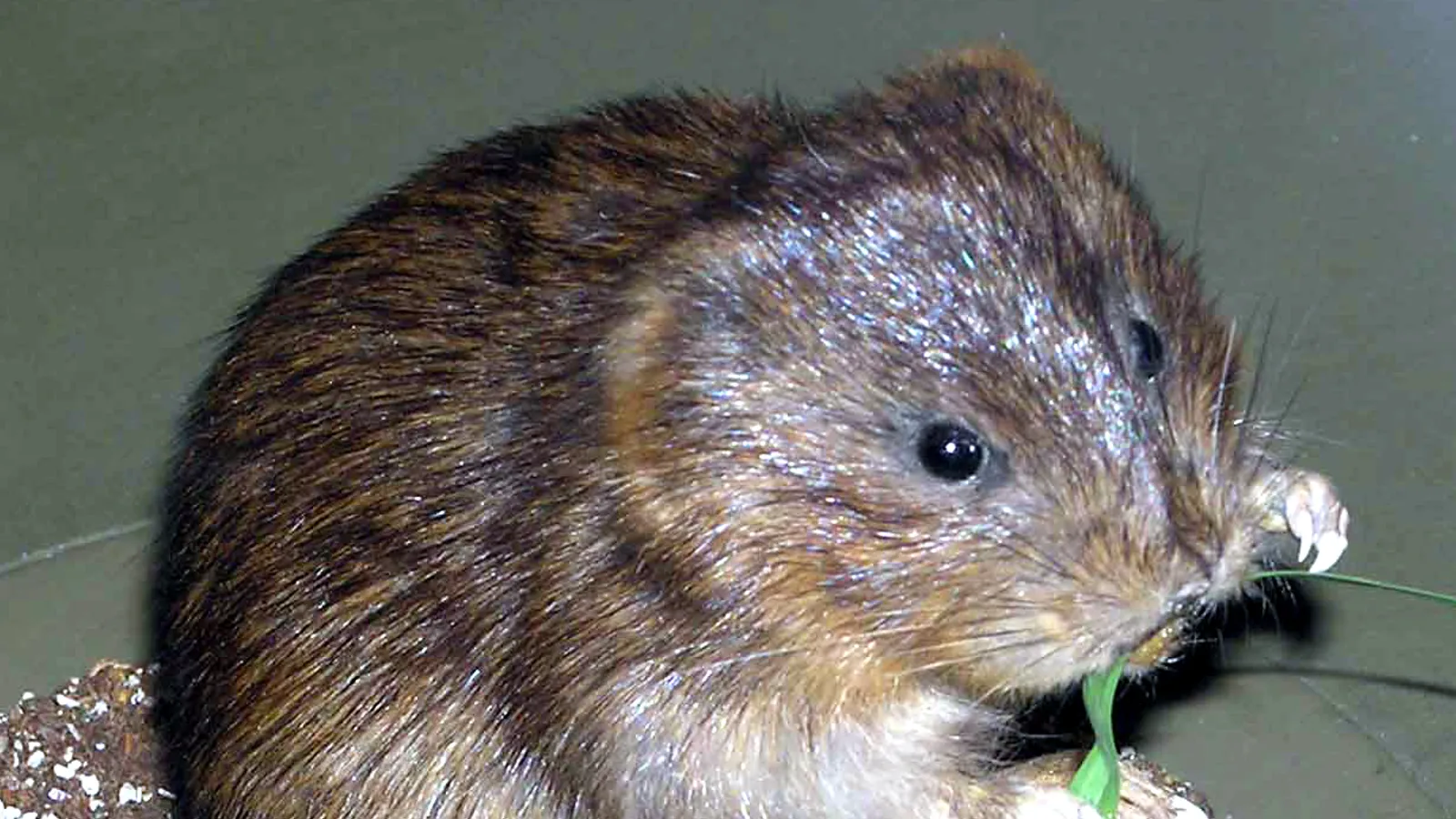
— Where the name comes from
Arvicola is “dweller of the fields”, from arvum, the ploughed field, and colere, to inhabit — the same pair inside “agricola”. Amphibius, from the Greek amphíbios, “of two lives”, states the other half of its existence: it swims, it dives, it digs tunnels in the bank. A name that combines land and water and for once does not overstate.
— Facts
- Group
- Mammals · Mammalia
- Order
- Rodents
- Habitat
- Banks of slow rivers, canals, ditches, wet meadows
- Range
- Europe and western Asia as far as Siberia
- Size
- 14–22 cm of body, tail 6–12 cm, 70–250 g
- Diet
- Grasses, roots, reeds, bark, occasionally invertebrates
- Lifespan
- 2 years in the wild
— Characteristics
- 01
It swims well without webbed feet or waterproof fur like the coypu’s.
- 02
Mountain populations live far from water, burrowing like moles.
- 03
Density swings in cycles of several years, with sudden booms and crashes.
— What sets it apart
It is Ratty from The Wind in the Willows, a character neither mouse nor rat but a vole. In Britain that book made it the country’s best-loved freshwater animal, which did not stop it collapsing by ninety per cent in thirty years: the culprit is the American mink escaped from fur farms, a predator slim enough to enter its tunnels, and its conservation today is above all a war on mink.
