
Common vole
Microtus arvalis
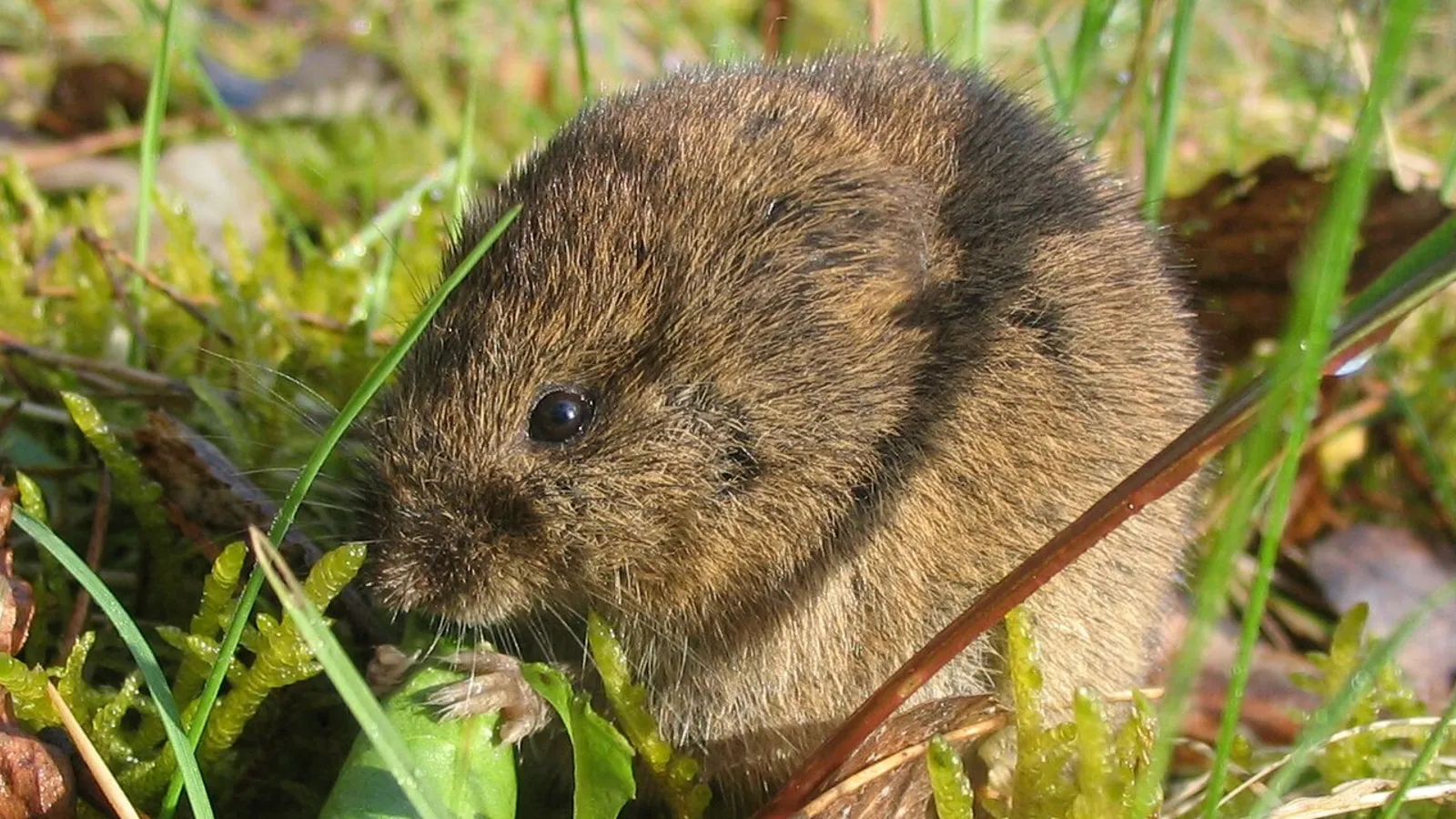
— Where the name comes from
Microtus is “small ear”, from mikrós and oûs: the ear nearly buried in the fur is what tells a vole from a mouse at a glance. Arvalis returns to arvum, the field: in Rome the Fratres Arvales were the priestly college that prayed for the harvest. The name thus sets side by side a brotherhood of priests and the animal that eats those harvests.
— Facts
- Group
- Mammals · Mammalia
- Order
- Rodents
- Habitat
- Permanent meadows, arable fields, lucerne, grassy margins
- Range
- Continental Europe and western Asia
- Size
- 9–12 cm of body, tail 3–4 cm, 18–40 g
- Diet
- Grass, roots, seeds, cereals
- Lifespan
- 4 months on average in the wild
— Characteristics
- 01
It digs networks of shallow tunnels with beaten runs through the grass.
- 02
A female can have her first litter at under forty days old.
- 03
The population can multiply a hundredfold in a single good season.
— What sets it apart
Its population booms are a phenomenon visible from space. In peak years, in Castile or eastern Germany, over a thousand voles per hectare are counted and the lucerne fields are shaved bare; then the population collapses of its own accord, and the raptors that had built a breeding season on it fail en masse. Whole agricultural ecosystems — short-eared owls, harriers, buzzards, foxes — breathe to the rhythm of these three- or four-year cycles, whose cause has still not been fully explained.
