
Bank vole
Clethrionomys glareolus
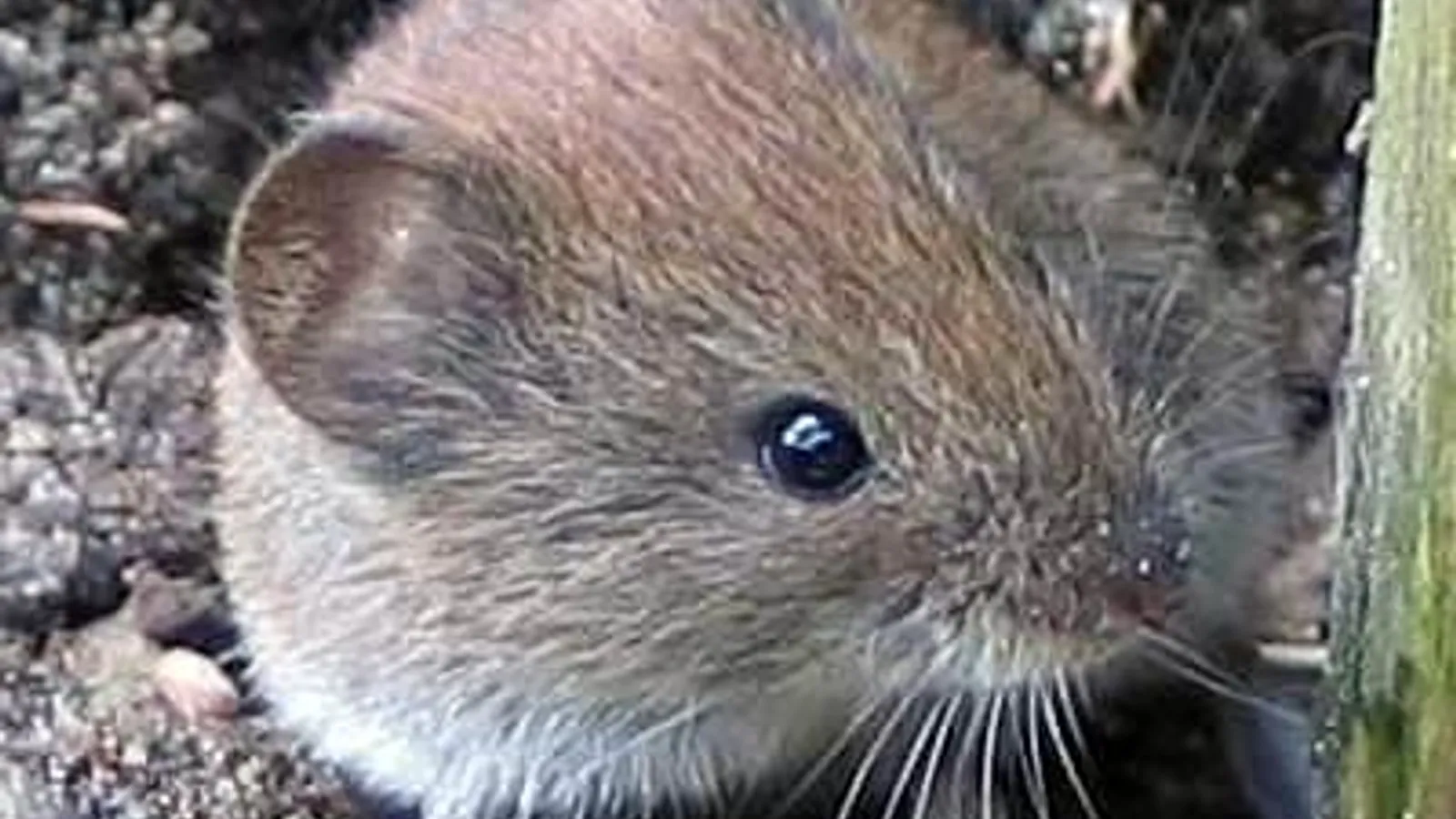
— Where the name comes from
Clethrionomys is “vole of the alders”, from klḗthra, the alder, and the usual vole-mouse pairing. Glareolus comes instead from glarea, gravel: “of the gravel”, for the loose soils it digs in. It is a rodent named twice for the ground and the plant, and never for its looks — unusual in an animal whose back is an unmistakable bright chestnut.
— Facts
- Group
- Mammals · Mammalia
- Order
- Rodents
- Habitat
- Broadleaf woodland with dense understorey, hedgerows, clearings
- Range
- Europe and western Asia as far as Lake Baikal
- Size
- 8–12 cm of body, tail 4–7 cm, 15–40 g
- Diet
- Seeds, fruit, leaves, fungi, insects
- Lifespan
- 18 months in the wild
— Characteristics
- 01
It climbs shrubs well, which other voles do not.
- 02
Its abundance follows the mast years of beech and oak.
- 03
It is the host of the Puumala hantavirus, which in humans causes a haemorrhagic fever.
— What sets it apart
Its human epidemics are forecast by counting beech mast. A mast year — when beeches and oaks fruit all together — makes the bank vole population explode the following autumn, and the winter after that cases of nephropathia epidemica rise in Scandinavia and Belgium. Epidemiologists have learnt to build risk models starting from botany: a person’s fever begins, two years earlier, with the flowers of a tree.
