
Eurasian jay
Garrulus glandarius
— Where the name comes from
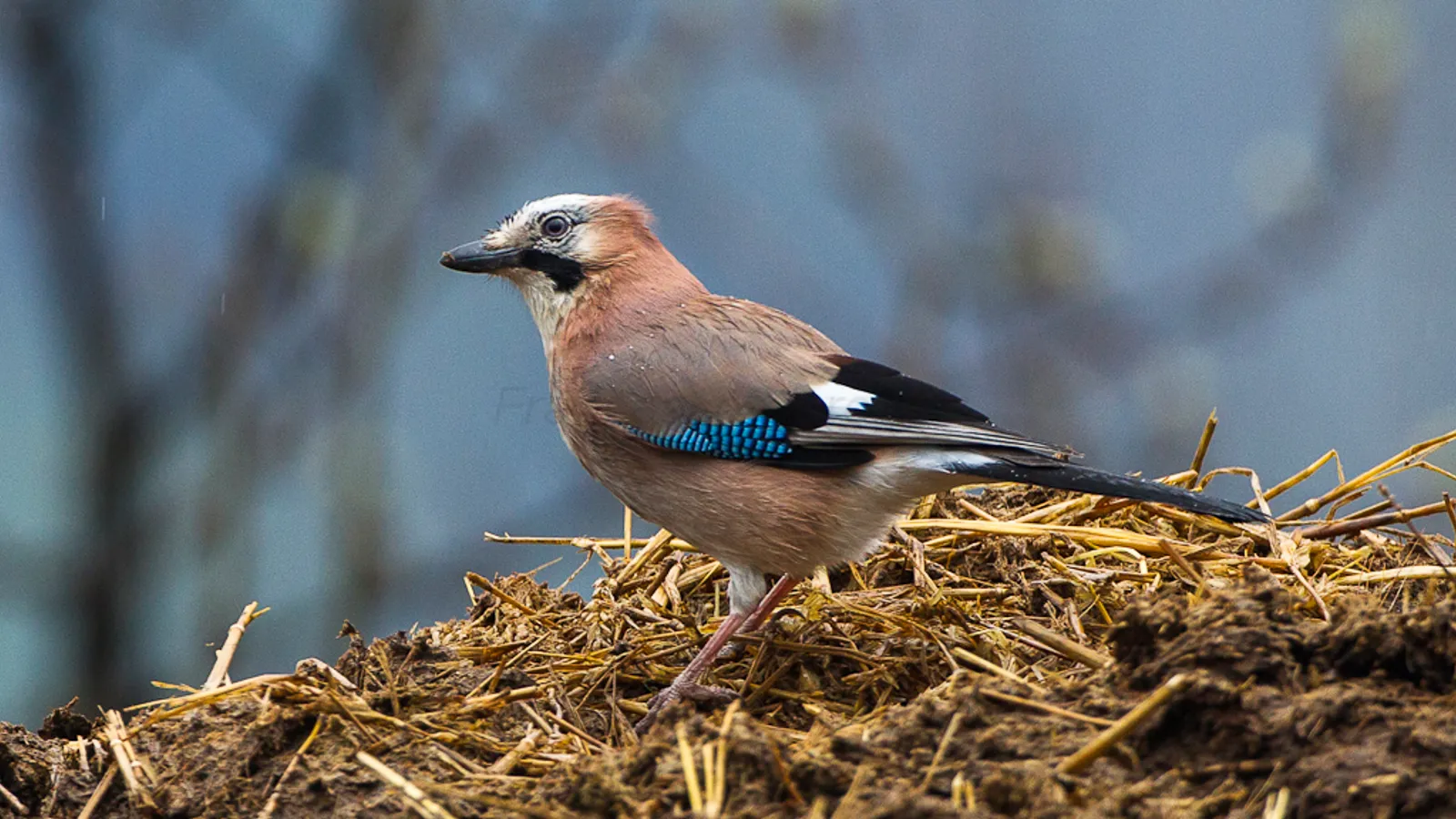
Garrulus is “chatterer”, from garrire: anyone who has heard its screech in a silent wood knows why. Glandarius comes from glans, the acorn, and says the rest — the Italian name translates exactly the second half of the binomial. It is a crow dressed as an exotic bird, with a patch of blue feathers barred with black that in the Middle Ages were used to tie fishing flies.
— Facts
- Group
- Birds · Aves
- Order
- Passerines
- Habitat
- Oak and beech woodland, parks, wooded gardens
- Range
- Europe, North Africa, Asia as far as Japan
- Size
- 32–35 cm, wingspan 45–58 cm, 140–190 g
- Diet
- Acorns, beech mast, insects, eggs and nestlings in spring
- Lifespan
- 5 years in the wild
— Characteristics
- 01
It carries as many as nine acorns at a time in its throat and bill.
- 02
It imitates the buzzard’s call to scatter other birds.
- 03
It rubs ants through its plumage to rid itself of parasites.
— What sets it apart
It is the reason Europe has oaks. A single jay buries up to five thousand acorns in one autumn, one at a time, scattered over square kilometres, and forgets a share of them: those sprout far from the mother tree, which is the only way an oak can move. When the ice retreated, oaks marched up Europe at a speed no model could explain by acorns simply falling to the ground. The explanation had wings.
