
Great jerboa
Allactaga major
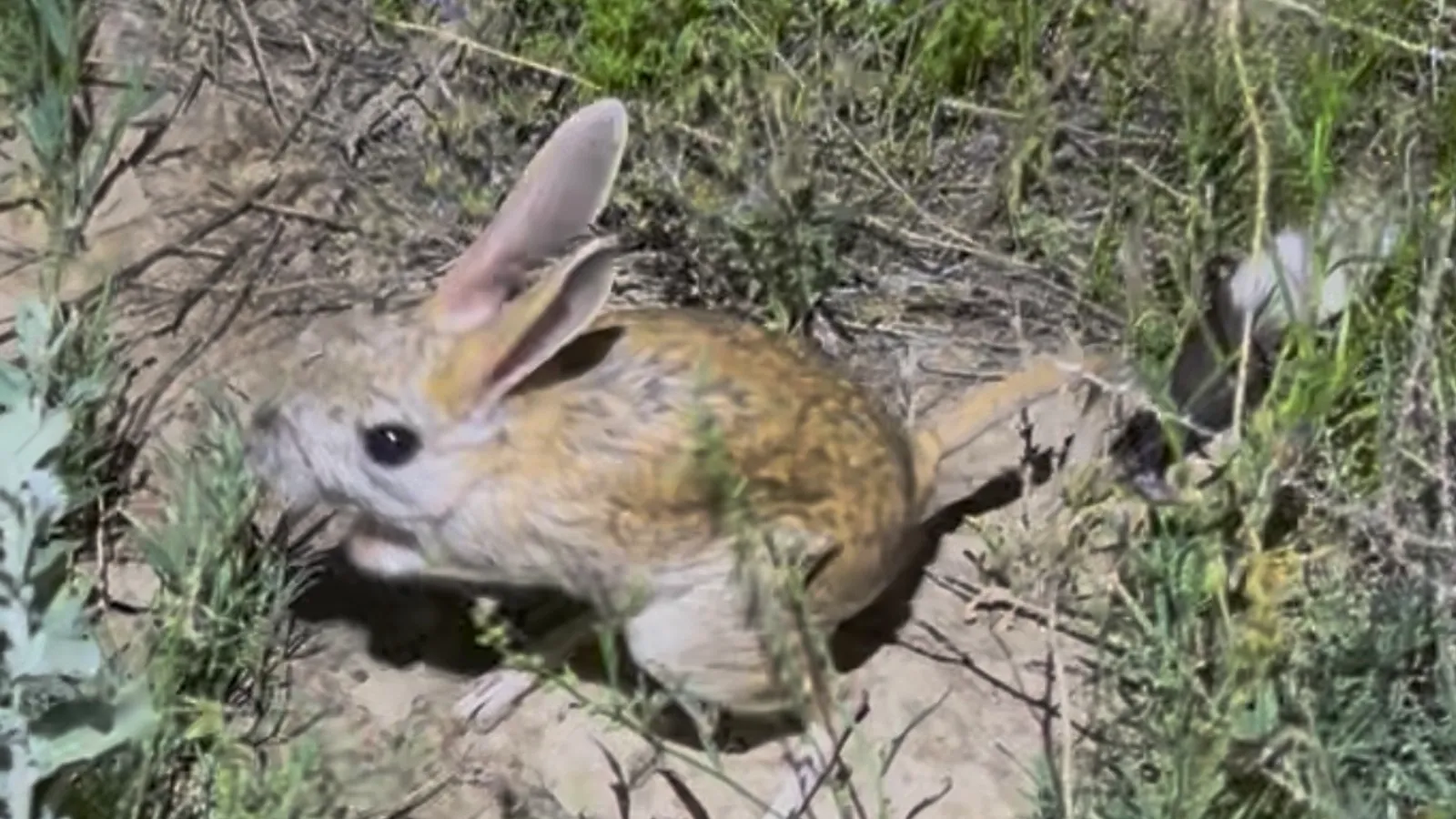
— Where the name comes from
Allactaga is a transcription of alagdaaga, the Mongolian and Tatar name for the animal, which entered science through the naturalists attached to the Russian expeditions into Central Asia in the 18th century. Major, “greater”, sets it apart from the many smaller related species. It is the largest jerboa, with a rabbit’s ears and legs that look borrowed from another animal.
— Facts
- Group
- Mammals · Mammalia
- Order
- Rodents
- Habitat
- Steppe, semi-desert, compact clay ground
- Range
- From southern Russia and Ukraine to Kazakhstan and western China
- Size
- 18–26 cm of body, tail 25–30 cm, 250–420 g
- Diet
- Seeds, bulbs, roots, insects
- Lifespan
- 3 years
— Characteristics
- 01
It leaps up to three metres in a bound, changing direction in mid-air.
- 02
It goes into true hibernation from October to April, alone among jerboas but for a few others.
- 03
It digs four different kinds of burrow: summer, winter, resting and escape.
— What sets it apart
It builds houses for different purposes, and has one that serves only for running away. Besides the permanent burrow with its nest chamber and the one it winters in, it digs shallow temporary refuges scattered across its territory, to use when caught out far from home; the entrance of the main burrow, meanwhile, is plugged every morning from inside with a wad of earth. A rodent that practises at once the residence, the second home and the air-raid shelter.
