
Meadow jumping mouse
Zapus hudsonius
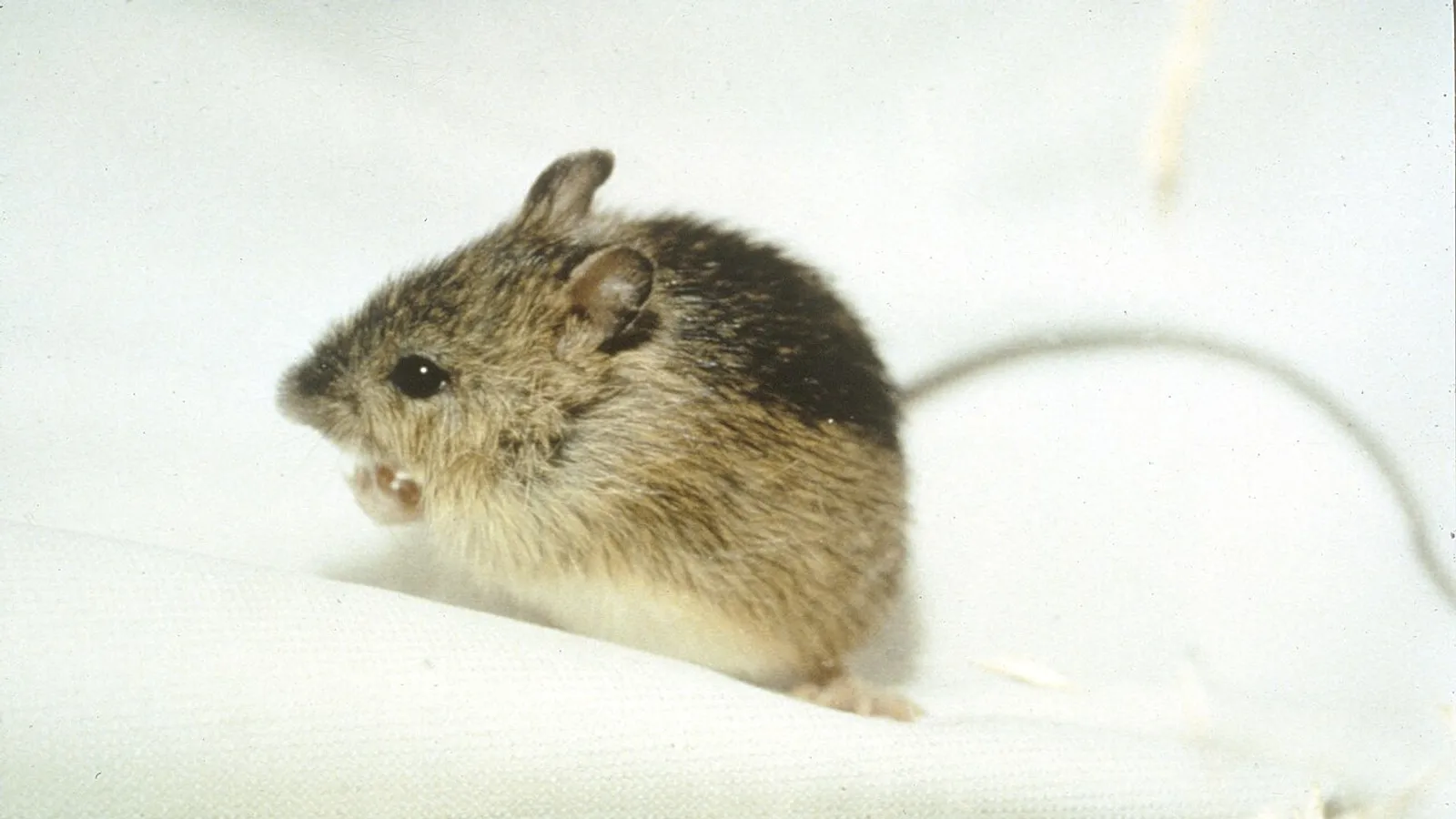
— Where the name comes from
Zapus is “very large foot”, from the intensive Greek prefix za- and poús: the hind legs are nearly as long as the body. Hudsonius points to Hudson Bay. It is a North American rodent that invented for itself the same solution as the jerboas of the Sahara, without ever having seen a desert.
— Facts
- Group
- Mammals · Mammalia
- Order
- Rodents
- Habitat
- Damp meadows, grassy banks, woodland clearings
- Range
- Canada and the northern and eastern United States
- Size
- 7–10 cm of body, tail 11–16 cm, 12–30 g
- Diet
- Seeds, fungi, berries, insects
- Lifespan
- 3 years
— Characteristics
- 01
It jumps up to a metre when startled, then freezes on the spot.
- 02
It hibernates for six to nine months, the longest of any small North American rodent.
- 03
It must double its weight in two weeks before going underground.
— What sets it apart
It spends three quarters of its life asleep, and whoever does not fatten enough does not wake up. Field measurements show that an individual entering hibernation below a precise fat threshold almost certainly dies before spring: the last fortnight of summer is a race to eat, and the population’s winter mortality depends almost entirely on how well that fortnight went. A whole life decided by two weeks.
