
Gelada
Theropithecus gelada
— Where the name comes from
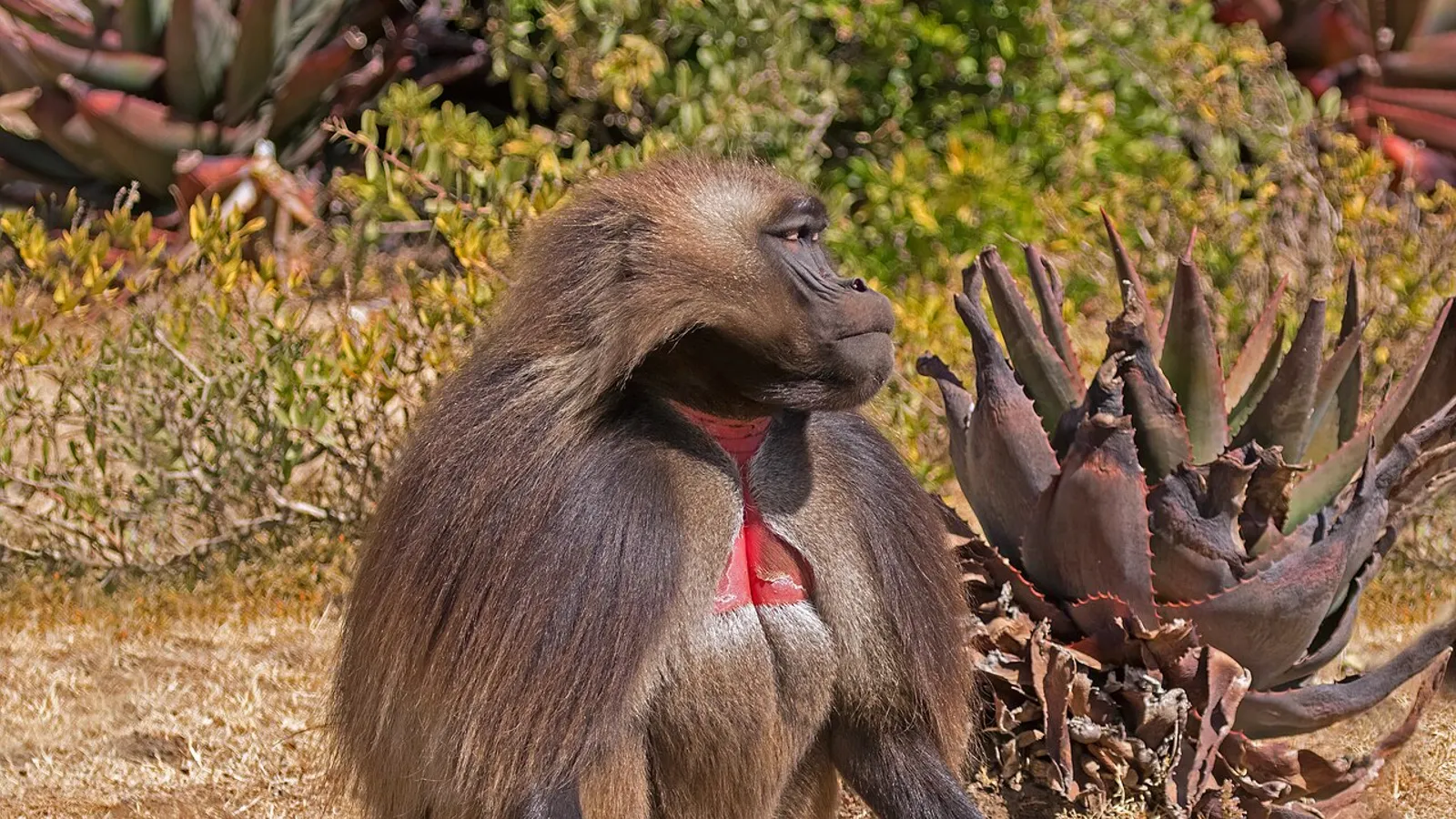
Theropithecus is “beast-monkey”, from the Greek thḗr and píthēkos, for the male’s enormous canines and leonine mane. Gelada renders the Amharic name, ጭላዳ, čəlada. In English it is the bleeding-heart monkey, for the patch of bare red skin, shaped like an hourglass, that it carries on its chest — which in females grows brighter when they are in oestrus.
— Facts
- Group
- Mammals · Mammalia
- Order
- Primates
- Habitat
- Highland grassland and gorge walls, between 1,800 and 4,400 m
- Range
- Endemic to the Ethiopian highlands
- Size
- 50–75 cm of body, 11–19 kg
- Diet
- Herbivore — over 90% grass: blades, seeds, rhizomes
- Lifespan
- 15 years in the wild, up to 30 in captivity
— Characteristics
- 01
It is the only primate in the world that feeds almost entirely on grass.
- 02
It sleeps clinging to the vertical walls of gorges, out of reach of predators.
- 03
It gathers in aggregations of up to 1,200, the largest of any primate.
— What sets it apart
It spends the day sitting down. Eating grass blade by blade, between thumb and forefinger, it must stay on the ground eight or ten hours a day and shuffles along on its backside without standing, moving its hands from one tuft to the next. Hence an enormous sitting callosity, and a red chest instead of a coloured rump: the sexual signal that in other baboons sits behind has had to migrate to the front here, because the rear is always on the ground and nobody ever sees it.
