
Madagascar day gecko
Phelsuma madagascariensis
— Where the name comes from
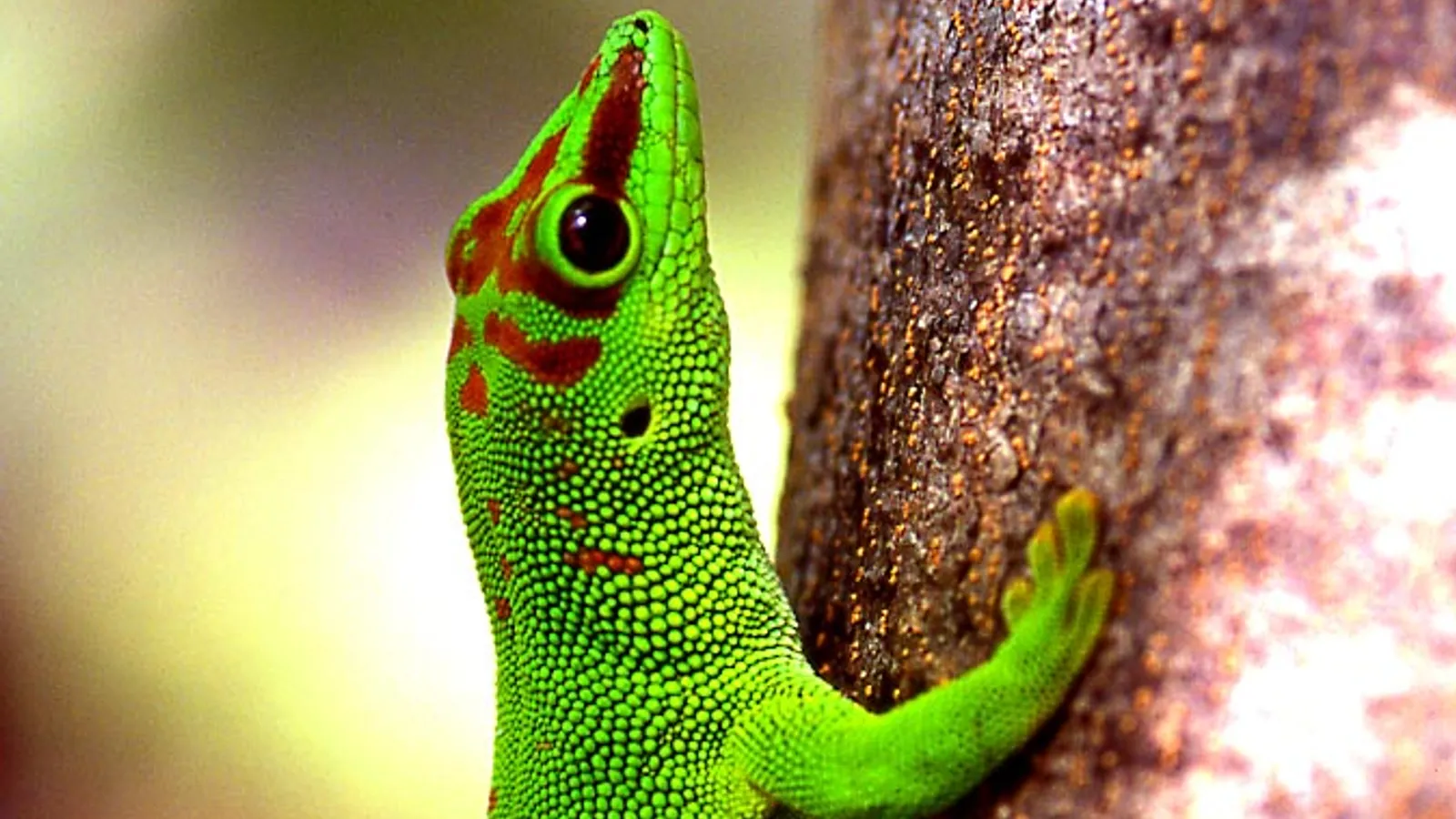
Phelsuma recalls Murk van Phelsum, an eighteenth-century Dutch physician and naturalist, and into his genus went one of the few geckos in the world with nothing nocturnal about it. The bright green and the red marks on the back would make no sense in an animal active at night: this one works in the sun, and uses colour to be seen by others.
— Facts
- Group
- Reptiles · Reptilia
- Order
- Squamates
- Habitat
- Humid forest, palms, banana plants, gardens and village houses
- Range
- Northern and eastern Madagascar
- Size
- 22–30 cm including the tail, 60–80 g
- Diet
- Insects, nectar, pollen, soft fruit
- Lifespan
- 10–15 years
— Characteristics
- 01
It is one of the very few geckos active in broad daylight.
- 02
It licks nectar from flowers and pollinates several Malagasy plants.
- 03
Its skin is extremely fragile and tears at the lightest touch.
— What sets it apart
If a predator seizes it, what stays in the mouth is the skin. These geckos have a cutaneous tissue that tears away along preformed fracture lines, leaving the animal bare and bleeding but alive: the skin regrows within weeks, usually without a scar. It is the shed-tail principle taken to its extreme, and it makes them practically impossible to handle. Those who study them in the wild have learned not to touch them at all.
