
Common flat-tail gecko
Uroplatus fimbriatus
— Where the name comes from
Uroplatus is “flat tail”, from ourá and platýs: the tail is broad, flattened and notched at the edge like a dry leaf nibbled by insects. Fimbriatus, “fringed”, refers instead to the flap of skin running the length of the body and the limbs, which serves one purpose only: to abolish the shadow.
— Facts
- Group
- Reptiles · Reptilia
- Order
- Squamates
- Habitat
- Primary rainforest, trunks covered in lichen
- Range
- Eastern Madagascar and the island of Nosy Boraha
- Size
- 25–33 cm including the tail, 30–60 g
- Diet
- Insects, spiders, small vertebrates
- Lifespan
- 10 years
— Characteristics
- 01
By day it hangs head down on a trunk, indistinguishable from the bark.
- 02
Its eyes are enormous, with a slit pupil and a net of veining.
- 03
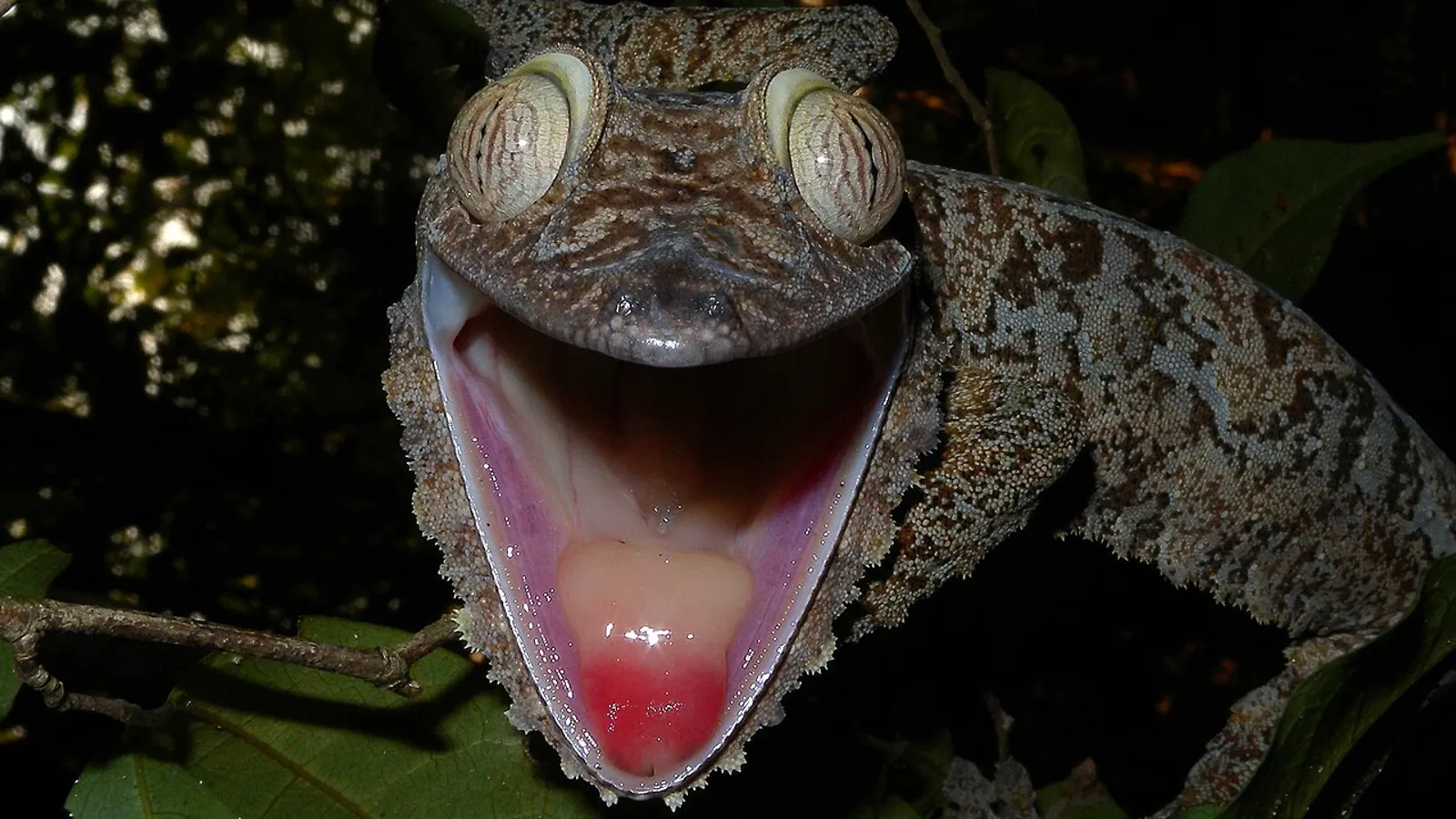
Discovered, it gapes a bright red mouth and screams.
— What sets it apart
Its camouflage does not hide the animal so much as the fact that it is an animal: the skin fringe laid against the trunk erases the shadow line that would give away its volume, and without that shadow the predator’s eye has nothing to separate from the background. It is the same principle stage designers use to make an object vanish on stage, and the genus Uroplatus counts among the world’s summits of camouflage. Every few years new species are described, found beside paths walked for decades.
