
Eurasian magpie
Pica pica
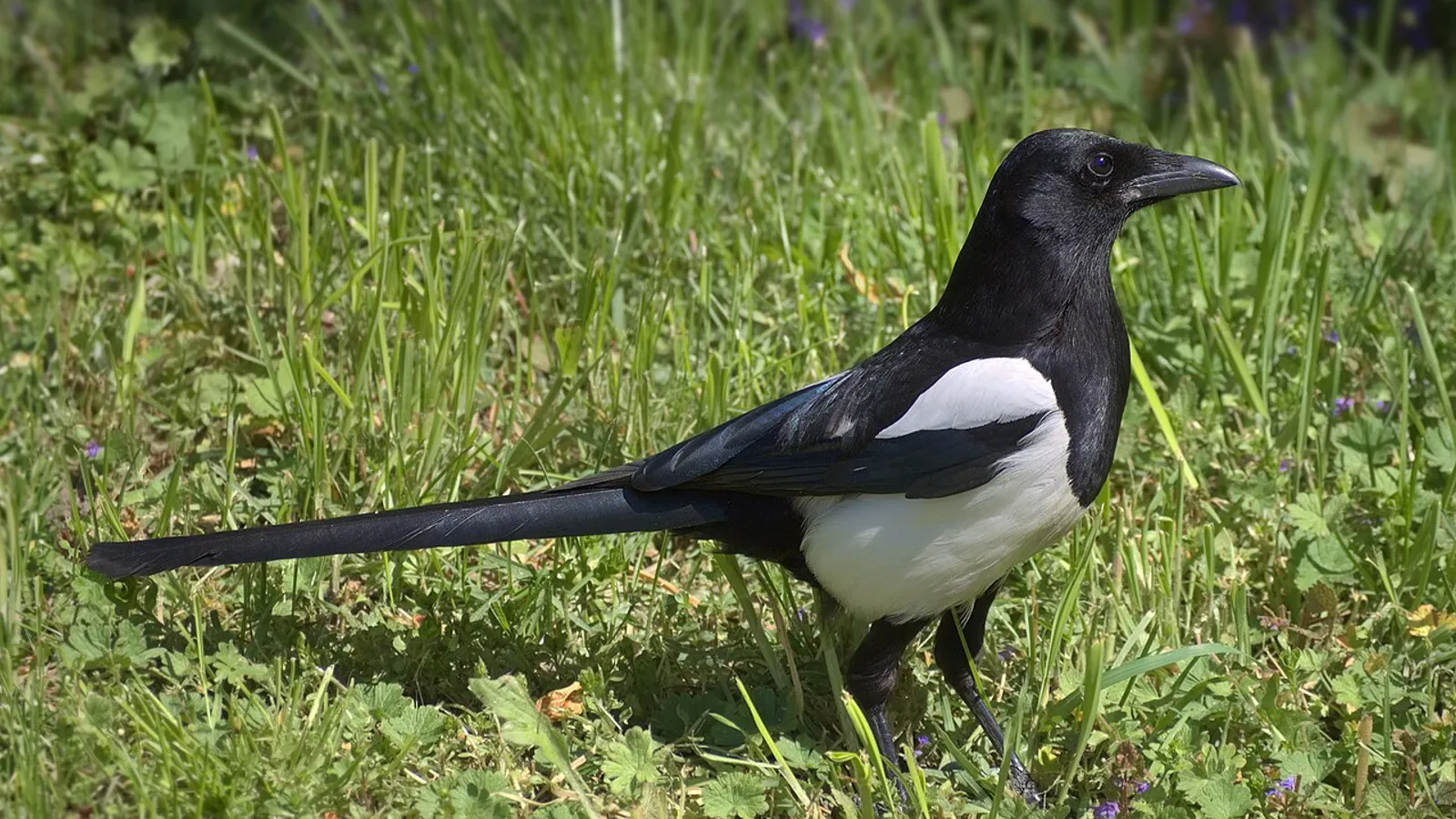
— Where the name comes from
Pica is the magpie in Latin, and from the same word comes the medical term pica, the urge to eat things that are not food: the Romans believed this bird would swallow anything at all. The Italian name comes instead from Lombardic, and survives across half of Italy in dialect forms — checca, cecca, pica.
— Facts
- Group
- Birds · Aves
- Order
- Passerines
- Habitat
- Wooded farmland, town parks, gardens, tree lines
- Range
- Europe, North Africa, temperate Asia
- Size
- 44–46 cm including the tail, wingspan 52–62 cm, 200–250 g
- Diet
- Omnivorous — insects, carrion, eggs, fruit, scraps
- Lifespan
- 5 years in the wild
— Characteristics
- 01
The tail is as long as the rest of the bird and glances green and violet.
- 02
It builds a domed nest with a roof of thorny twigs.
- 03
It hides food in hundreds of small caches and remembers where they are.
— What sets it apart
It does not steal shiny objects. The reputation has stuck to it for centuries — Rossini wrote an opera about it and an innocent man goes to gaol — but when researchers in 2014 set piles of shiny screws beside piles of dull ones in front of both wild and captive magpies, the birds avoided the shiny ones in the great majority of trials: they treated them as a suspicious novelty. In the same period the magpie became the first non-mammal to pass the mirror test, recognising as its own the coloured mark stuck under its bill.
