
Small-spotted catshark
Scyliorhinus canicula
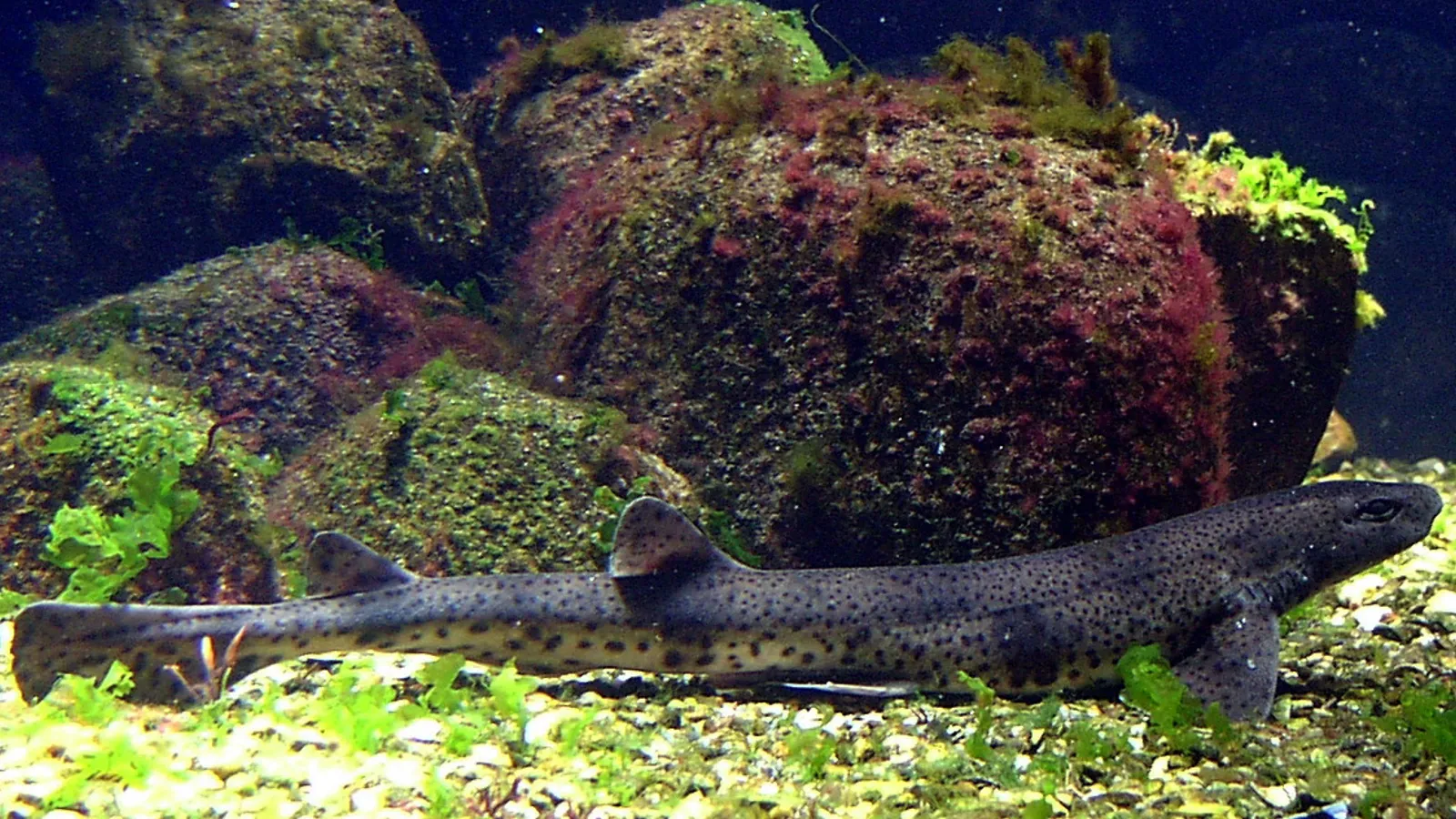
— Where the name comes from
Scyliorhinus joins skýlion, a small shark in Greek, to rhínē, the rasp, for the rough skin; canicula means “little bitch”. The ancients saw sea dogs in these small sharks, and the Italian name picked the other domestic animal: gattuccio, little cat. Of all Mediterranean sharks it is the one everybody has seen at least once at the fishmonger’s.
— Facts
- Group
- Fish · Actinopterygii · Chondrichthyes
- Order
- Ground sharks
- Habitat
- Sandy and muddy bottoms between 10 and 400 metres
- Range
- The eastern Atlantic from Norway to Senegal, and the Mediterranean
- Size
- 60–75 cm, up to 100 cm; 1–2 kg
- Diet
- Molluscs, crustaceans, worms, small fish
- Lifespan
- 12 years
— Characteristics
- 01
The skin is so rough it was once used as sandpaper.
- 02
It lays rectangular eggs with four long tendrils at the corners.
- 03
By day it lies still on the bottom and hunts at night.
— What sets it apart
Its eggs are the “mermaid’s purses” found washed up after storms: translucent horny capsules with four tendrils that the female winds around gorgonians and weed to anchor them. Inside, the embryo takes up to eleven months, and in the final months it can be seen with the naked eye through the case, the yolk shrinking day by day. That is why the small-spotted catshark has for a century been the animal on which vertebrate development is taught in European laboratories.
