
Pacific cleaner shrimp
Lysmata amboinensis
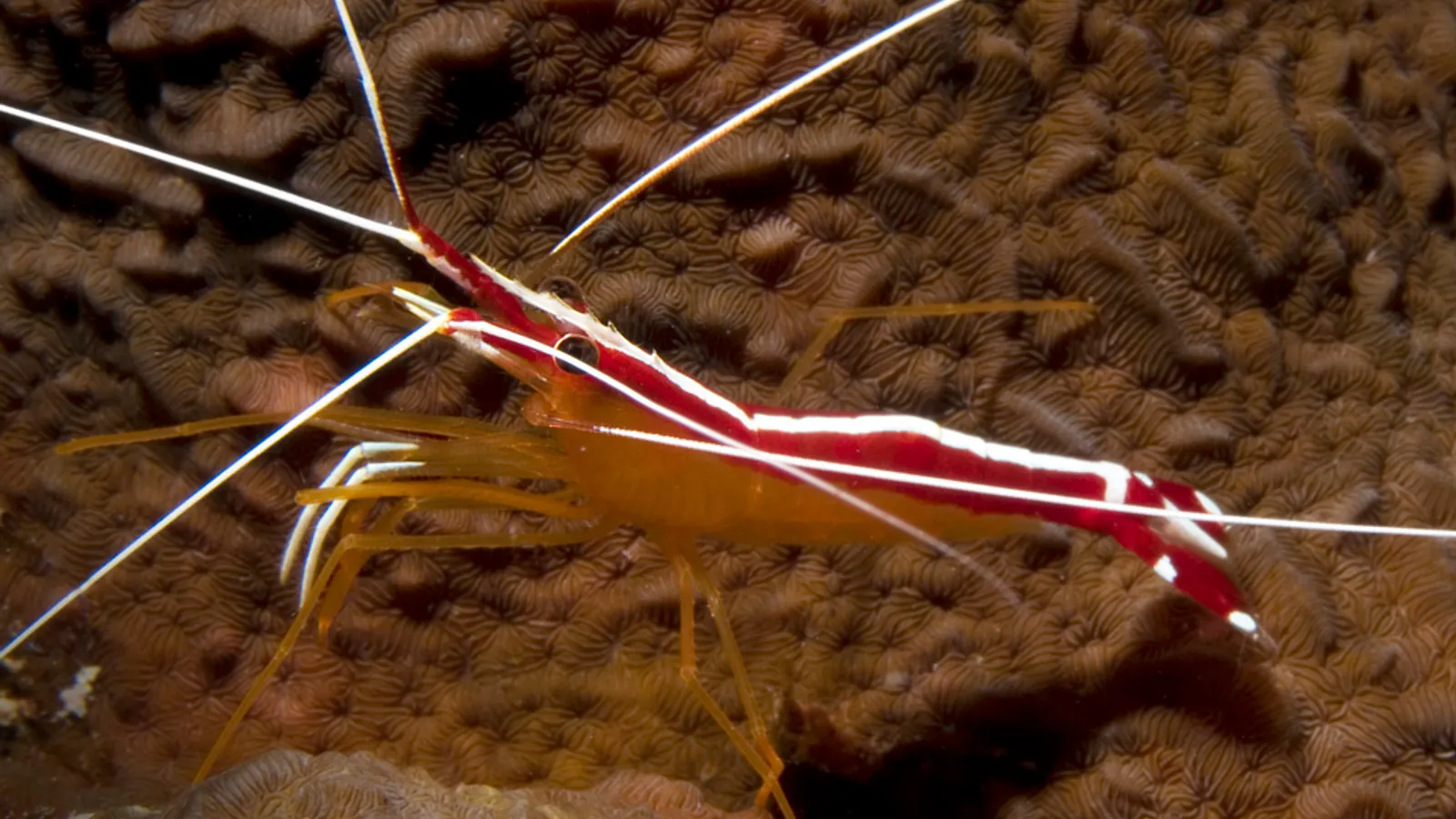
— Where the name comes from
The epithet comes from Ambon, the island in the Moluccas that Europeans called Amboina and that was for two centuries the centre of the spice trade: a great many species described in the nineteenth century carry that name because that is where the collections bound for Europe passed through. The common name gives the trade instead, which is the only genuinely remarkable thing about this animal.
— Facts
- Group
- Crustaceans · Malacostraca · Maxillopoda
- Order
- Crabs, lobsters and shrimps
- Habitat
- Coral reefs, in crevices held as fixed stations
- Range
- Indo-Pacific and Red Sea
- Size
- 5–6 cm
- Diet
- Parasites and dead tissue taken from fish
- Lifespan
- 2–3 years
— Characteristics
- 01
It keeps a fixed station, and fish queue up there to wait their turn.
- 02
It enters the open mouths of fish that could swallow it whole.
- 03
It is a simultaneous hermaphrodite: every individual is both sexes at once.
— What sets it apart
It keeps a shop. It holds a fixed station on the reef, advertises it by waving white antennae, and fish come on purpose and line up: the shrimp climbs aboard, removes parasites, dead skin and food residues, enters the mouths and gills of predators that could take it in one bite, and comes out unharmed. It is a contract both sides honour, and on reefs from which cleaners are removed the resident fish grow sicker and leave. Every individual, moreover, is both male and female, so that any two can breed: convenient, for an animal that never leaves its own station.