
Spottail mantis shrimp
Squilla mantis
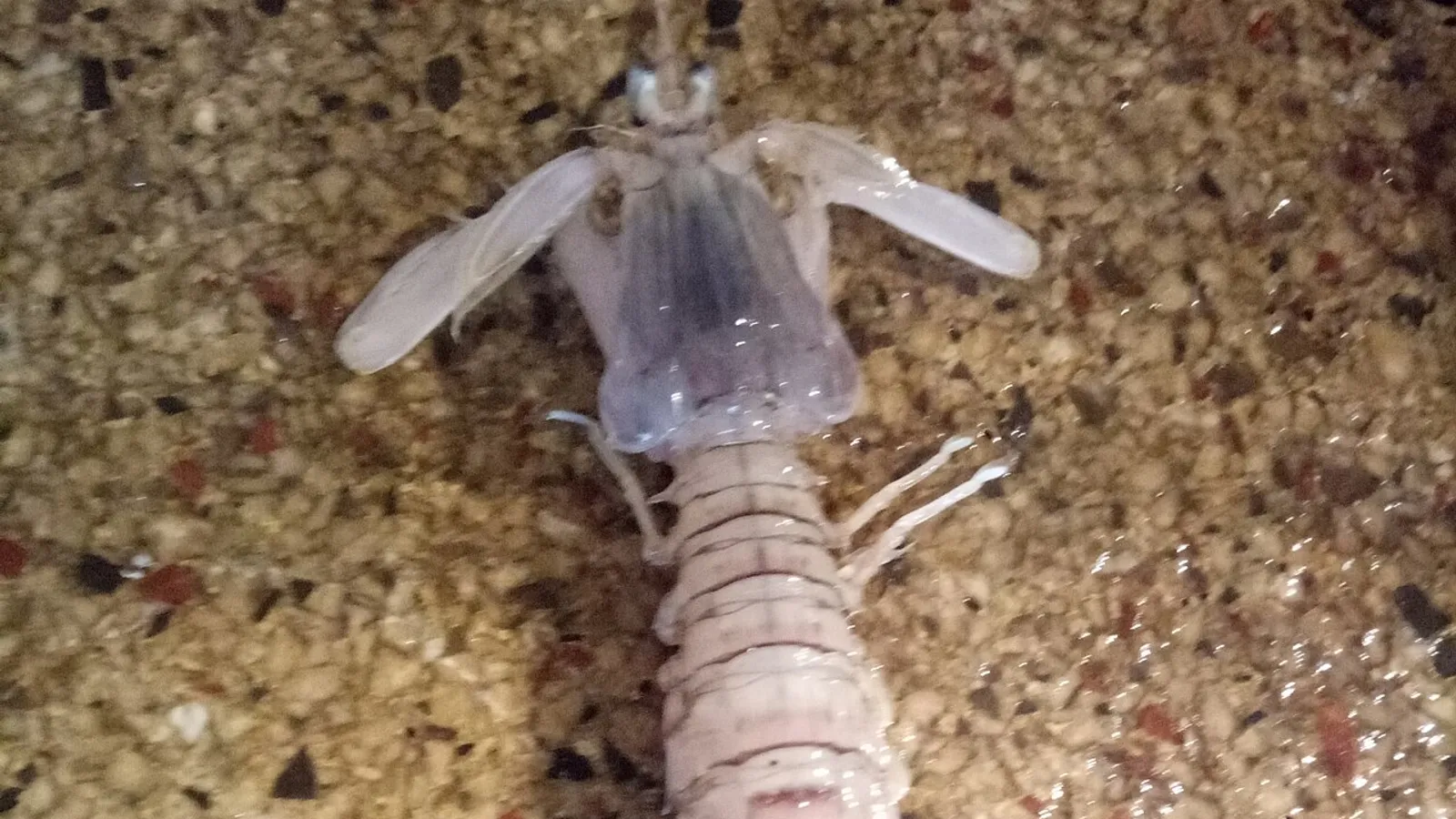
— Where the name comes from
Mantis is the same word as the praying mantis, the Greek “diviner”: the two raptorial limbs folded in front of the head are identical, and two utterly unrelated animals earned the same name for the same pose. Squilla is a Latin name for a crustacean, surviving in the Adriatic dialects as squilla and cannocchia — from which comes also the idea of a spyglass, a tube one looks down.
— Facts
- Group
- Crustaceans · Malacostraca · Maxillopoda
- Order
- Mantis shrimps
- Habitat
- Muddy coastal bottoms, in U-shaped burrows dug in the sediment
- Range
- Mediterranean and eastern Atlantic, from Portugal to Angola
- Size
- 10–20 cm
- Diet
- Fish, shrimps and molluscs taken from ambush
- Lifespan
- 3–4 years
— Characteristics
- 01
Two dark spots on the tail look like eyes and mislead predators.
- 02
It waits at the burrow mouth and strikes at whatever passes.
- 03
Its eyes are on mobile stalks and swivel independently.
— What sets it apart
It strikes with its forelimbs at a speed the water struggles to follow. Among mantis shrimps there are two schools — those that spear and those that smash — and this one belongs to the first: the appendages are armed with spines and impale the prey rather than shatter it. In the Venice lagoon and along the Adriatic it is a traditional dish, and the dialect name canocia has followed the fishermen to the table. The two spots on the telson do none of what they appear to do: they are false eyes aimed at whoever comes from behind.
