
Brown shrimp
Crangon crangon
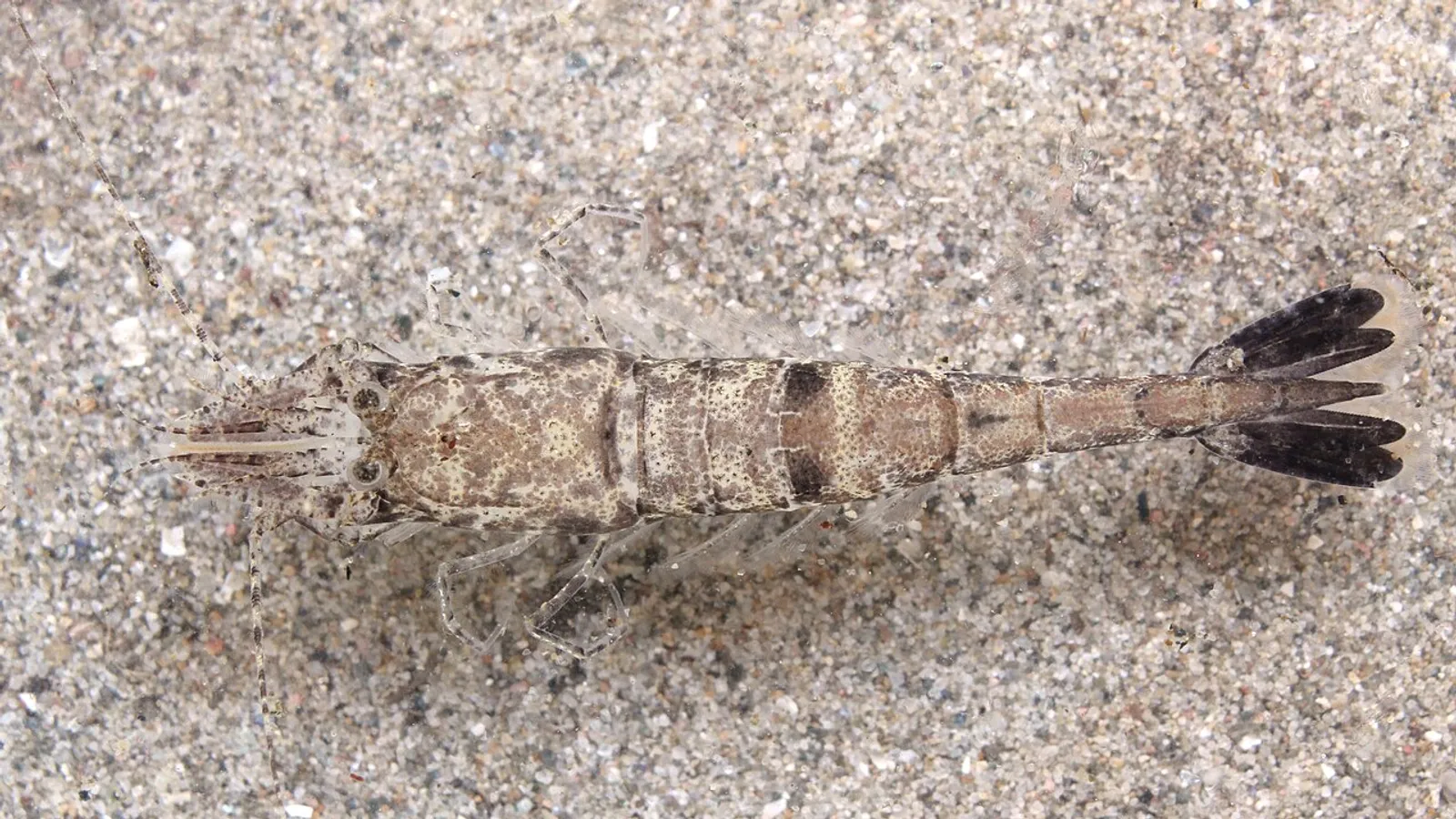
— Where the name comes from
Crangon is the Greek krangṓn, the name the ancients gave to a sand shrimp; repeated twice it marks the type species of the genus. It is one of those words that describe nothing — not the colour, not the habit — and testify only that the animal was common enough on Mediterranean beaches to have had a name of its own two and a half thousand years ago.
— Facts
- Group
- Crustaceans · Malacostraca · Maxillopoda
- Order
- Crabs, lobsters and shrimps
- Habitat
- Sandy coastal bottoms and estuaries, down to 20 metres
- Range
- North-eastern Atlantic, North Sea, Baltic, Mediterranean
- Size
- 5–9 cm
- Diet
- Worms, small crustaceans, fish larvae, detritus
- Lifespan
- 3–5 years
— Characteristics
- 01
It buries itself in the sand leaving only the eyes exposed.
- 02
It changes colour within hours to match the bottom it sits on.
- 03
At night it rises into the water column to hunt.
— What sets it apart
It changes colour like a chameleon, but by a different mechanism: in its skin are branched cells full of pigment that gathers into a point or spreads through the branches, lightening or darkening the animal in a couple of hours. Set on dark or pale sand, a shrimp matches it within a day. It is the invisible mainstay of the North Sea fishery: tens of thousands of tonnes are caught each year, and for decades they were shipped to Morocco to be peeled by hand and brought back to Europe, because no machine did it better.
