
Red junglefowl
Gallus gallus
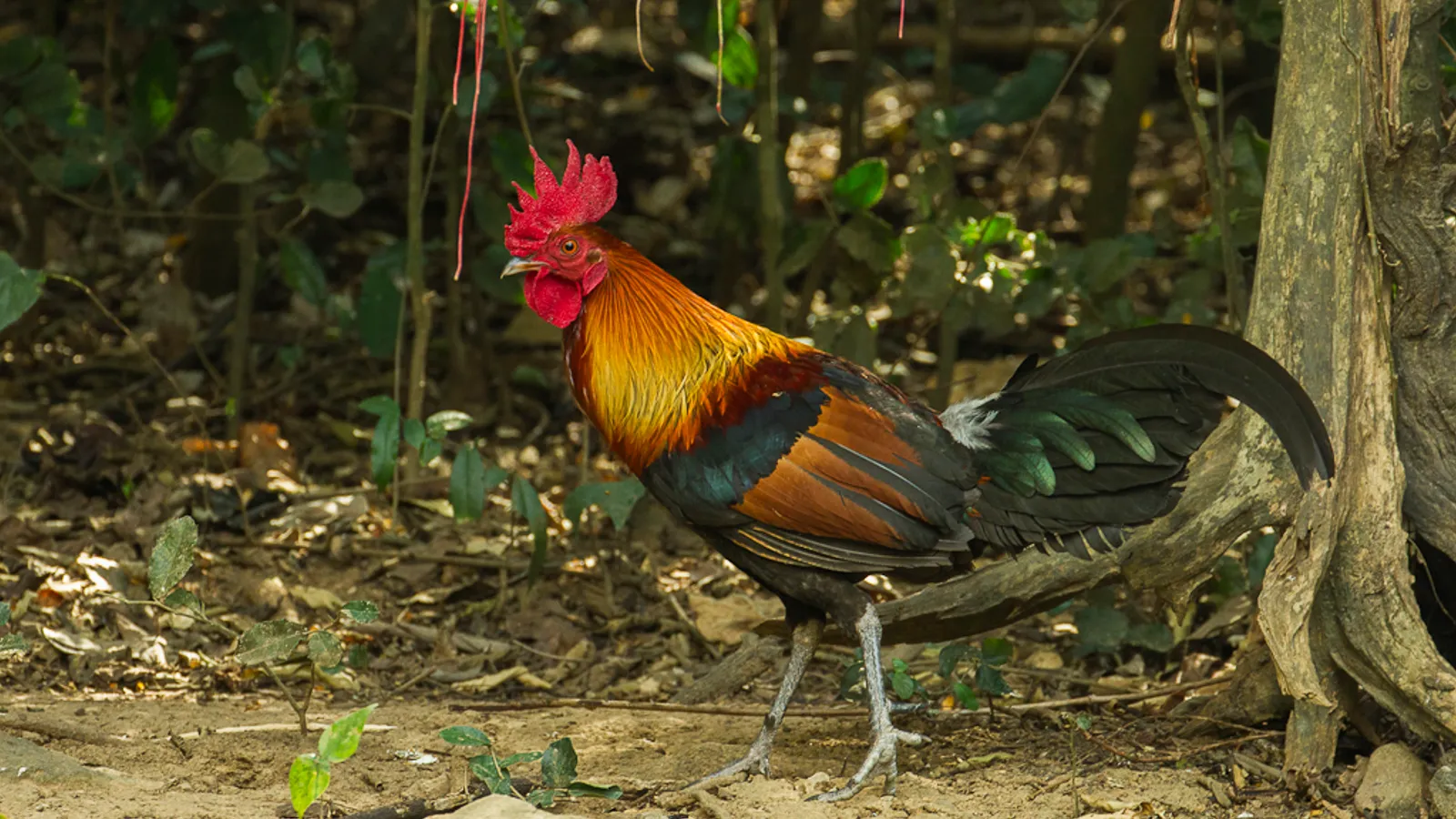
— Where the name comes from
Gallus in Latin means both “cockerel” and “a Gaul”, and the Romans played on it constantly: it is the reason the symbol of France is a chicken. Bankiva comes instead from the name of a region of Java, and it is the common name by which Europe distinguishes the wild species from its domestic descendants.
— Facts
- Group
- Birds · Aves
- Order
- Gamebirds
- Habitat
- Secondary forest, scrub, edges of cultivation
- Range
- South and South-East Asia, from India to Indonesia
- Size
- 41–78 cm, 0.5–1.5 kg
- Diet
- Seeds, shoots, insects, earthworms
- Lifespan
- 10 years in the wild
— Characteristics
- 01
The wild male is smaller and slimmer than any domestic breed.
- 02
It flies well for short distances and sleeps in trees.
- 03
In summer it sheds the long neck feathers and turns drab, which chickens do not.
— What sets it apart
From this animal descend all the chickens in the world, and there are about twenty-five billion of them: no other bird comes close, and the biomass of living chickens exceeds that of all the wild birds on the planet combined. Since we slaughter tens of billions a year and the bones end up in landfill, geologists have proposed the domestic chicken’s skeleton as the index fossil of the Anthropocene: a million years from now, the layer marking our passage will consist largely of the descendants of a Javanese pheasant.
