
Yellow-legged gull
Larus michahellis
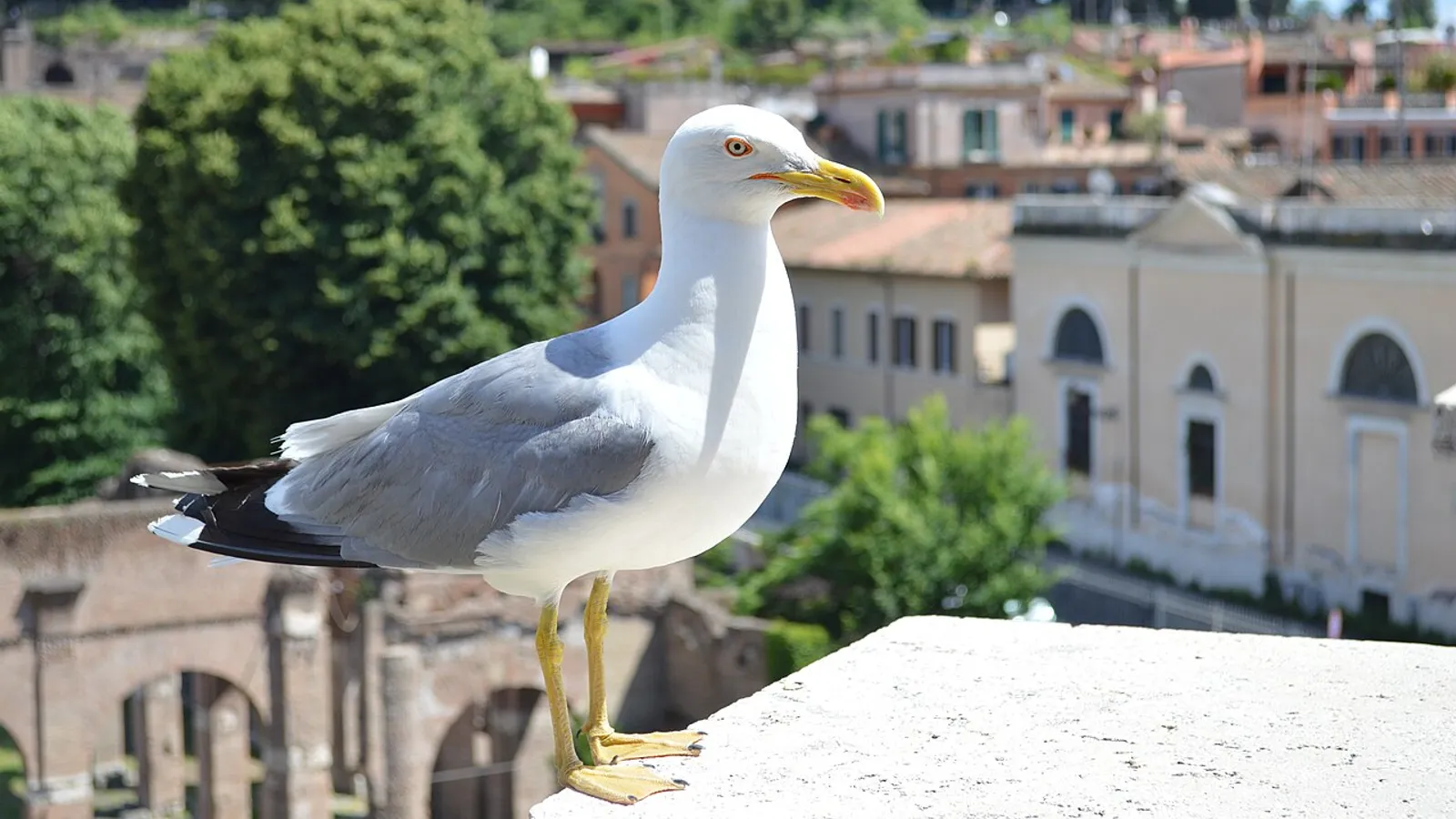
— Where the name comes from
Larus comes from the Greek láros, an ancient term for any voracious seabird. The epithet michahellis is a dedication: it honours Karl Michahelles, a German physician and zoologist of the 19th century, in whose memory the species was described. The Italian adjective reale, royal, alludes to the imposing size and dominant bearing of this large Mediterranean gull, long confused with its northern European relatives.
— Facts
- Group
- Birds · Aves
- Order
- Shorebirds
- Habitat
- Coasts, harbours, rocky islands and coastal urban settings.
- Range
- The Mediterranean basin and adjoining Atlantic coasts, spreading inland.
- Size
- 52–68 cm, wingspan 120–155 cm; 800–1,500 g
- Diet
- Omnivore — fish, molluscs, refuse and other birds
- Lifespan
- Commonly 15–25 years
— Characteristics
- 01
It has yellow legs, which distinguish it from the pink-legged northern herring gull.
- 02
It is an aggressive opportunist, able to take eggs, chicks and even adults of other species.
- 03
It has colonised the cities, nesting on roofs and ledges far from the sea.
— What sets it apart
For a long time the Mediterranean yellow-legged gull was considered a mere variety of the northern species, and only recently has genetics granted it full standing as a species of its own. Its rise is a story of adaptation to the margins of human life: landfills, harbours and rooftops have offered food and nest sites in abundance, and the populations have grown enormously. The chick pecks at a red spot on its parent’s bill to prompt it to regurgitate food: an innate target, famous in the study of animal behaviour.
