
Great red sedge
Phryganea grandis
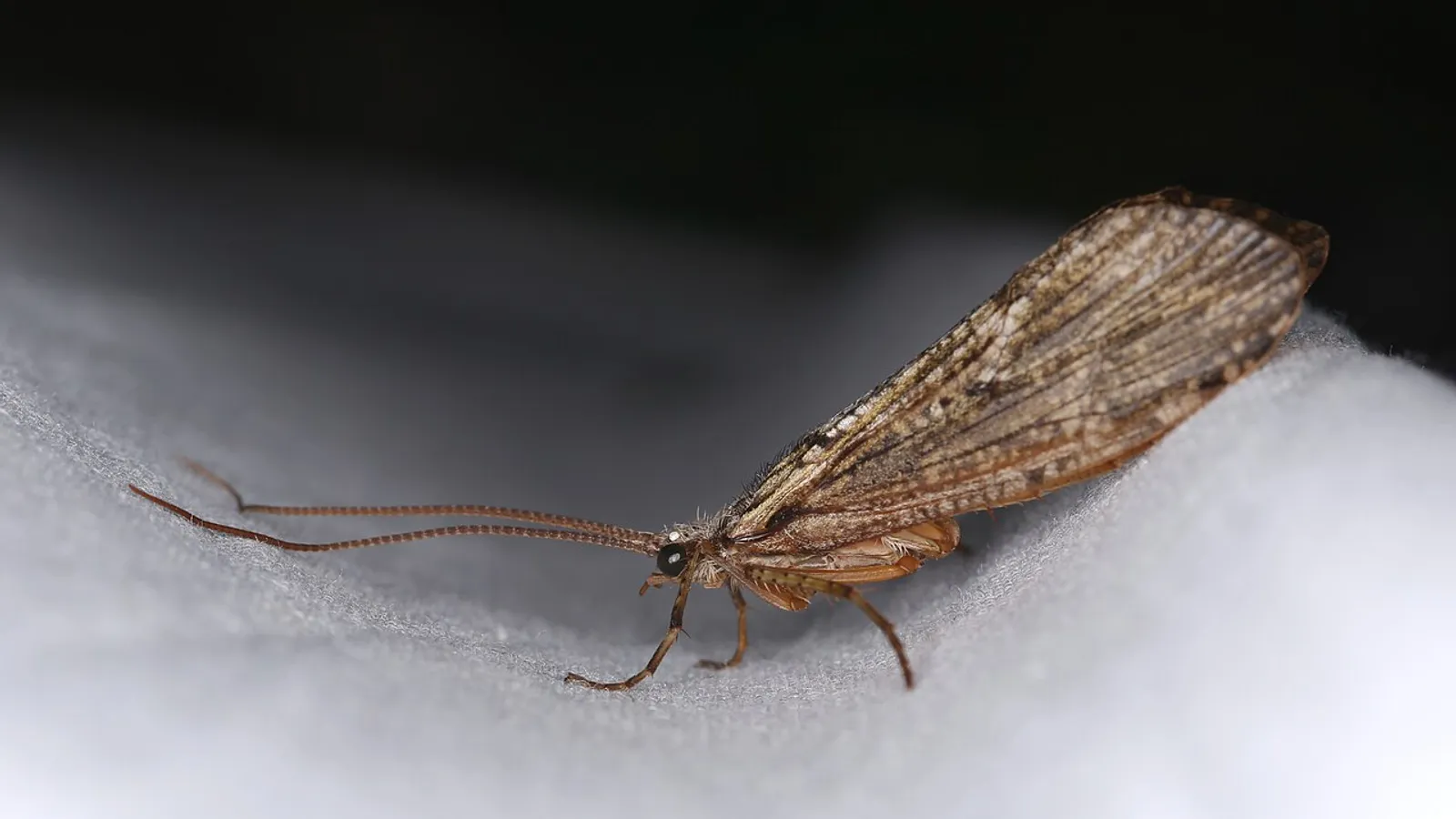
— Where the name comes from
Phryganea comes from the Greek phrýganon, the dry twig, the faggot: it is the material with which the larva builds the case it lives in. The name of the order, Trichoptera, says instead “hairy wings”, from thríx, trichós, hair — because unlike the butterflies they are related to, their wings are covered in hairs rather than scales.
— Facts
- Group
- Insects · Insecta
- Order
- Caddisflies
- Habitat
- Ponds, lakes and slow rivers with vegetation
- Range
- Europe and northern Asia
- Size
- 40–60 mm wingspan, the largest in Europe
- Diet
- Plants and small invertebrates as a larva; nothing as an adult
- Lifespan
- 1 year, almost all of it underwater
— Characteristics
- 01
The larva builds a tube of plant fragments cut to length.
- 02
It lives in the case and drags it along, showing only head and legs.
- 03
The adult flies at night and holds its wings roofwise over the body.
— What sets it apart
The larva is an architect: it cuts pieces of leaf and stem to a regular length and glues them with silk in a spiral, producing a tube that it widens as it grows and carries with it like a house. Different species use different materials — sand, pebbles, snail shells — and the choice is so consistent that the species can be identified from the empty case. In the 1980s the French artist Hubert Duprat put larvae in a tank together with flakes of gold and turquoise: the larvae built their cases from those, and the results are jewellery made by an insect.
