
Giant anteater
Myrmecophaga tridactyla
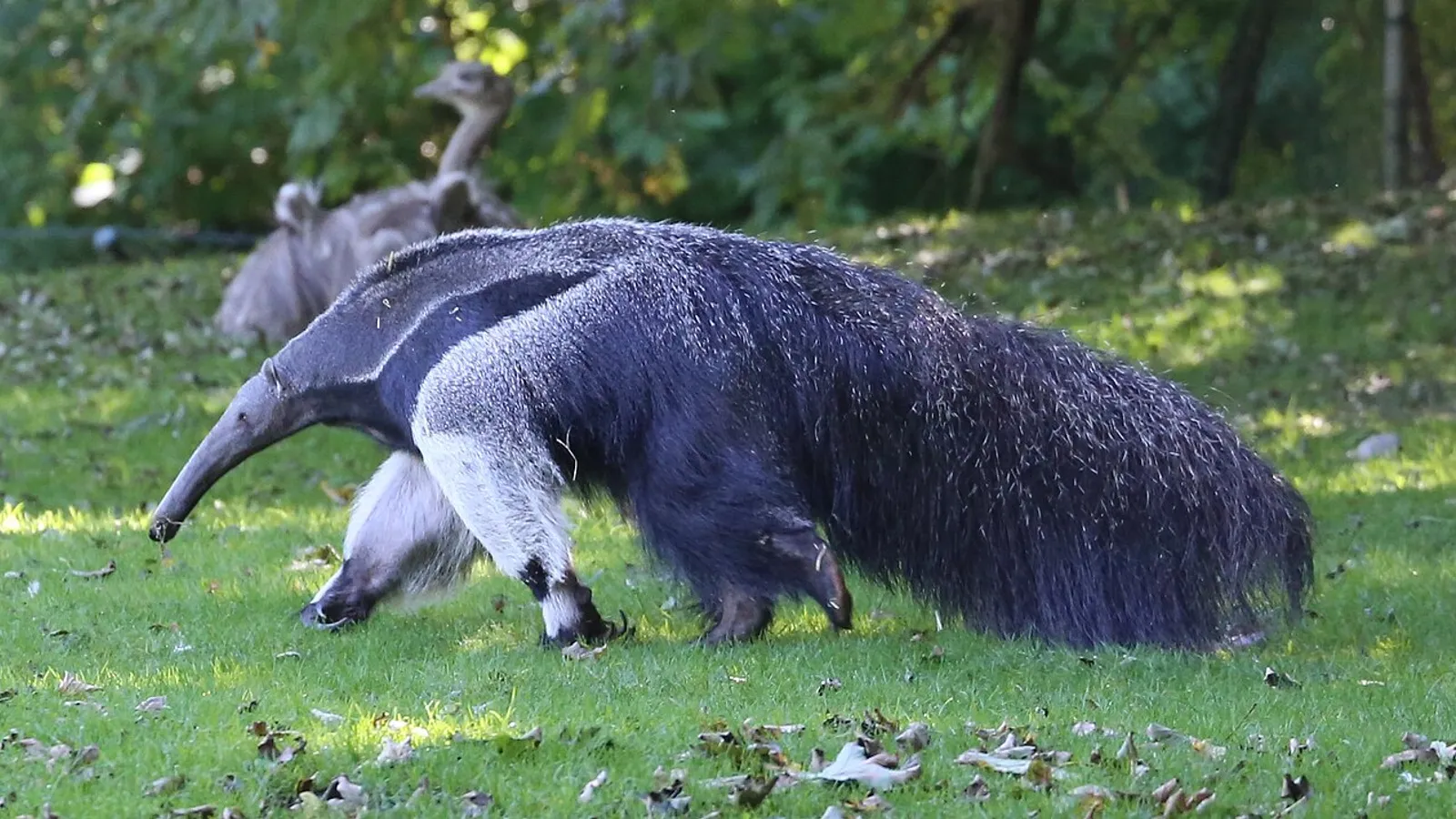
— Where the name comes from
Myrmecophaga joins the Greek mýrmex, “ant”, and phageîn, “to eat”: literally “ant eater”. The epithet tridactyla, “three-fingered”, refers to the three developed claws of the forefoot, although the digits are in fact five. The Italian common name translates the Greek faithfully, while Brazilian Portuguese calls it tamanduá-bandeira, “flag anteater”, for the broad fringed tail it carries aloft like a banner.
— Facts
- Group
- Mammals · Mammalia
- Order
- Sloths and anteaters
- Habitat
- Grassy savannah, tropical grassland and open forest
- Range
- Central and South America, from Honduras to northern Argentina, with strongholds in the Brazilian Cerrado and Pantanal
- Size
- 180–220 cm from snout to tail, 25–45 kg
- Diet
- Insectivore — ants and termites, up to 30,000 a day
- Lifespan
- 14–16 years in the wild, up to 26 in captivity
— Characteristics
- 01
The tongue is up to 60 cm long and can be flicked out more than 150 times a minute.
- 02
It has no teeth at all: the insects are ground up in a muscular stomach along with swallowed grit.
- 03
It walks on the knuckles of its forefeet so as not to wear down claws as long as a human finger.
— What sets it apart
The giant anteater has one of the lowest body temperatures of any placental mammal, around 32.7 degrees, a direct consequence of a diet extremely poor in energy. For that reason it cannot afford to destroy the colonies it lives on: it stays barely a minute at each nest, takes a few thousand insects and leaves before the soldiers can mount an effective defence. It visits as many as two hundred nests in a day, and exhausts none of them. It is a predator that survives because it has learnt not to take too much.
