
Antlion
Myrmeleon formicarius
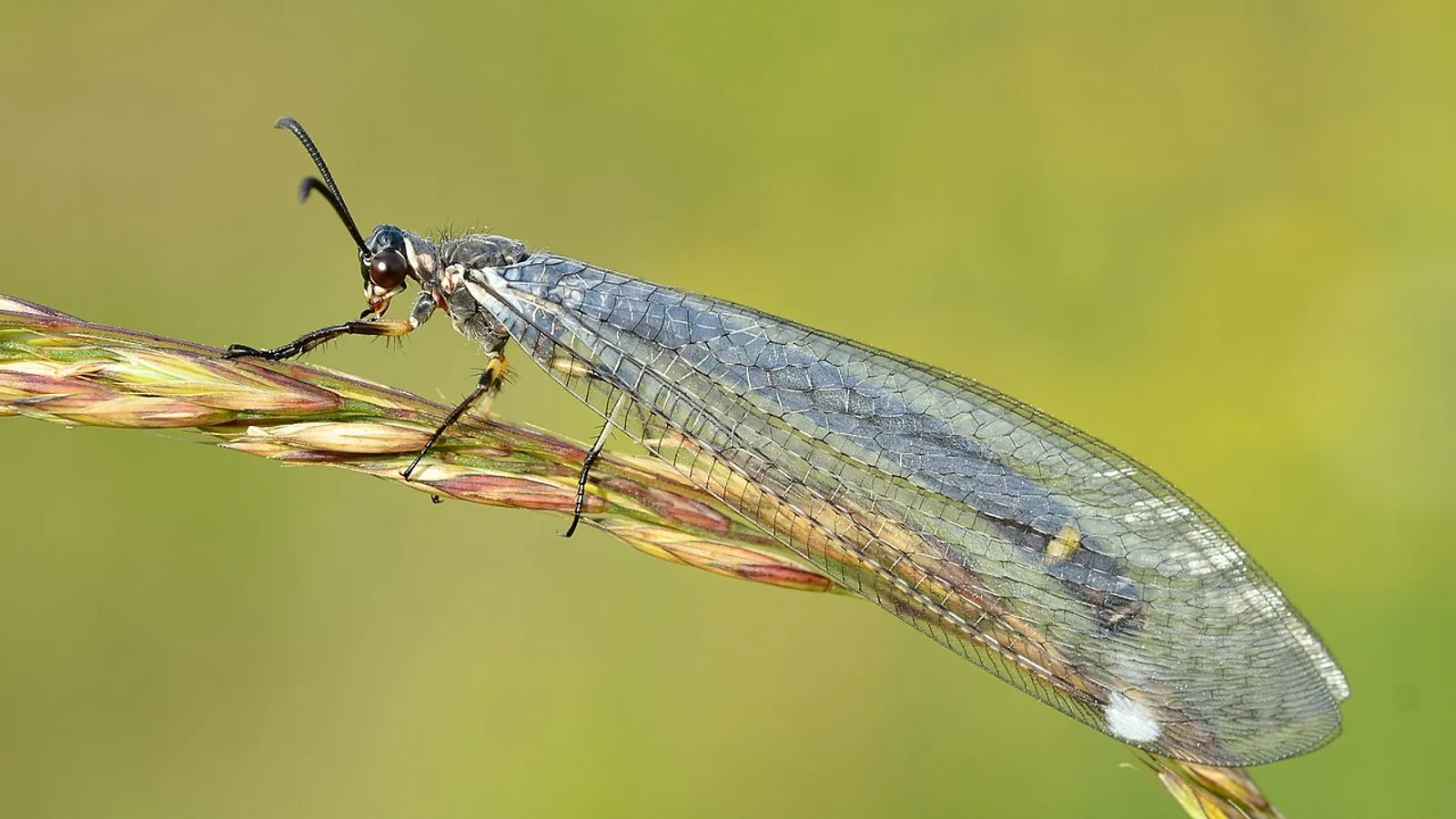
— Where the name comes from
Myrmeleon is Greek: mýrmēx, the ant, and léōn, the lion. Formicarius repeats the first half in Latin. The name therefore says the same thing twice in two different languages — “ant lion, of the ants” — and for once the redundancy is earned: the larva really is a predator lying in wait, and ants really are its almost exclusive prey.
— Facts
- Group
- Insects · Insecta
- Order
- Lacewings and antlions
- Habitat
- Dry sand sheltered from rain: dunes, roof spaces, cave mouths
- Range
- Europe and temperate Asia
- Size
- Adult 30–40 mm wingspan; larva 10–12 mm
- Diet
- The larva ants and small arthropods; the adult little or nothing
- Lifespan
- 1–3 years as a larva, a few weeks as an adult
— Characteristics
- 01
The larva digs a conical trap in the sand and buries itself at the bottom.
- 02
It walks only backwards: its legs will not let it go forward.
- 03
The adult resembles a damselfly, but flies slowly and has clubbed antennae.
— What sets it apart
The trap is a physics problem solved by a larva with nothing worth calling a brain: the funnel is dug at a slope exactly equal to the angle of repose of the sand, that is, the steepest the slope can hold before it collapses. The weight of one ant is enough to start the avalanche. If the prey tries to climb out, the larva throws sand at it with a flick of the head and knocks its footing away. It has no anus: for the whole of larval life, which can last three years, it stores its waste inside its body and voids it once only, as an adult, on emerging from the cocoon.
