
Common green lacewing
Chrysoperla carnea
— Where the name comes from
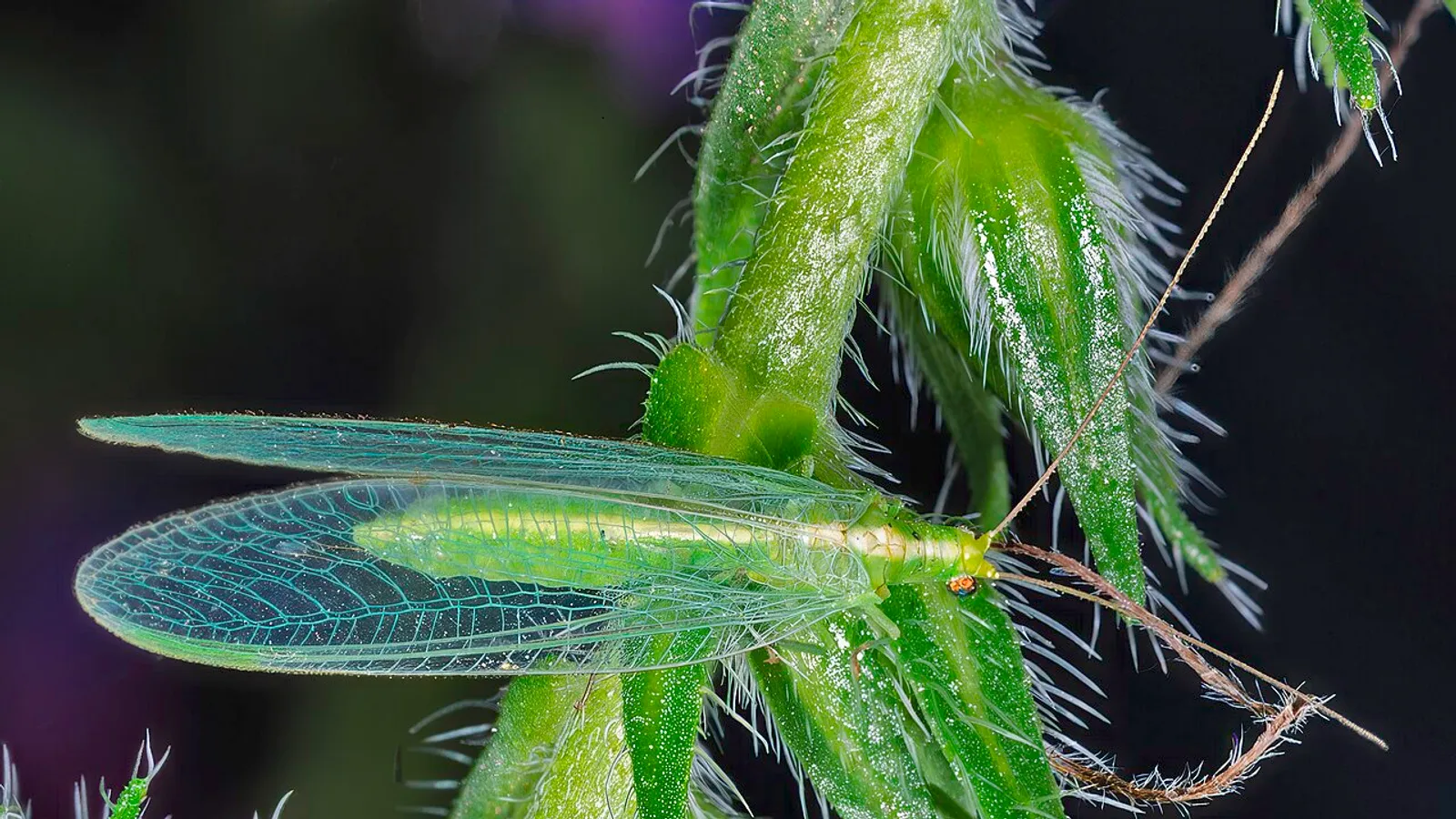
The family is called Chrysopidae, “golden eyes”, from chrysós and ṓps: the eyes of this translucent green insect are two drops of gilt metal, and they are the first thing one notices. Carnea means “flesh-coloured”, which sounds wrong for an emerald-green animal — but it is not: before overwintering the insect loses its green and turns pinkish, and whoever described it had one in hand in autumn.
— Facts
- Group
- Insects · Insecta
- Order
- Lacewings and antlions
- Habitat
- Vegetable plots, hedges, orchards, gardens
- Range
- Europe, Asia, North Africa; related species worldwide
- Size
- 15–20 mm wingspan
- Diet
- Pollen and honeydew as an adult; aphids as a larva
- Lifespan
- Several months; the adult overwinters indoors or under bark
— Characteristics
- 01
It lays each egg atop a fine thread, suspended in the air.
- 02
The larva devours up to five hundred aphids before pupating.
- 03
It hears bat ultrasound and drops like a stone.
— What sets it apart
The eggs hang. The female sets a drop of secretion on the leaf, raises her abdomen drawing out a thread that hardens in the air, and lays the egg on top. It protects them from their own elder sisters — lacewing larvae are so voracious that they would eat the eggs of their own species as soon as they hatched, and the stalk keeps them out of reach. The adult also has an ear at the base of its wings that hears ultrasound: when a bat’s sonar arrives it folds its wings and drops, a reflex with less than a tenth of a second of latency.
