
Red wood ant
Formica rufa
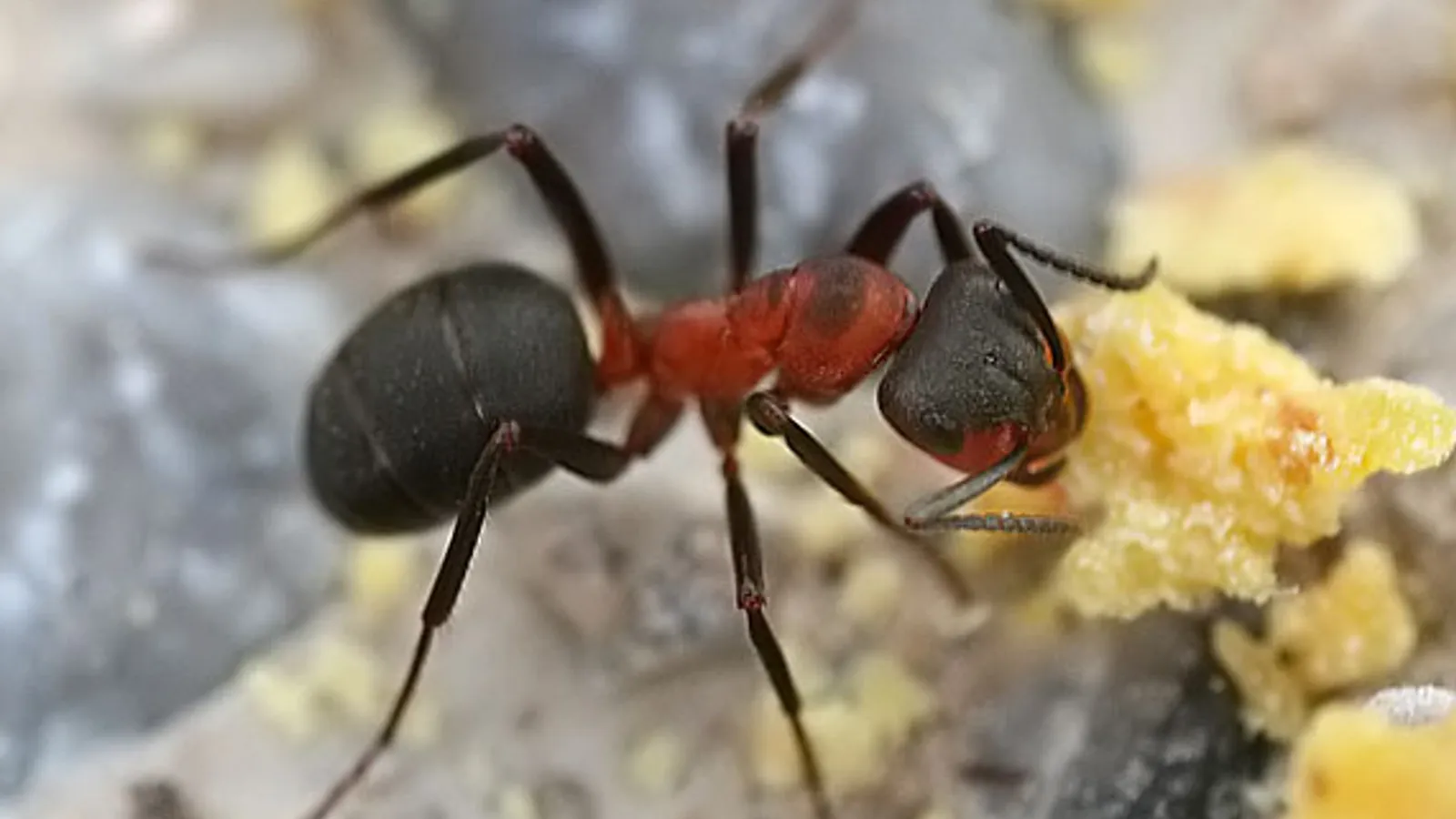
— Where the name comes from
Formica is the Latin word, and it has bequeathed a whole family of compounds to chemistry: in 1671 the naturalist John Ray distilled a heap of these ants and obtained an acid liquid, which was named formic acid after them. Rufa means red. It is one of the few animals to have given its name to a molecule before the formula was even known.
— Facts
- Group
- Insects · Insecta
- Order
- Bees, wasps and ants
- Habitat
- Coniferous woodland; domes of needles up to a metre and a half high
- Range
- Europe and northern Asia
- Size
- Workers 4.5–9 mm
- Diet
- Aphid honeydew and captured insects
- Lifespan
- The colony decades; a queen up to 15 years
— Characteristics
- 01
It has no sting: it sprays formic acid half a metre.
- 02
The nest is a dome of pine needles oriented towards the sun.
- 03
A colony consumes millions of harmful insects in a season.
— What sets it apart
The dome of needles is a heating system. It is built with its long axis facing south-east, to catch the morning sun, and the fermentation of the damp needles inside produces heat: the result is that the temperature of the brood chamber stays around twenty-five degrees even when it is near zero outside, and the colony starts work weeks before species without such a nest. Workers returning from the sun come in loaded with heat and give it up inside, acting as living radiators. In Italy and half of Europe these ants are protected for the part they play in holding down the defoliating insects of conifers.
