
Bullet ant
Paraponera clavata
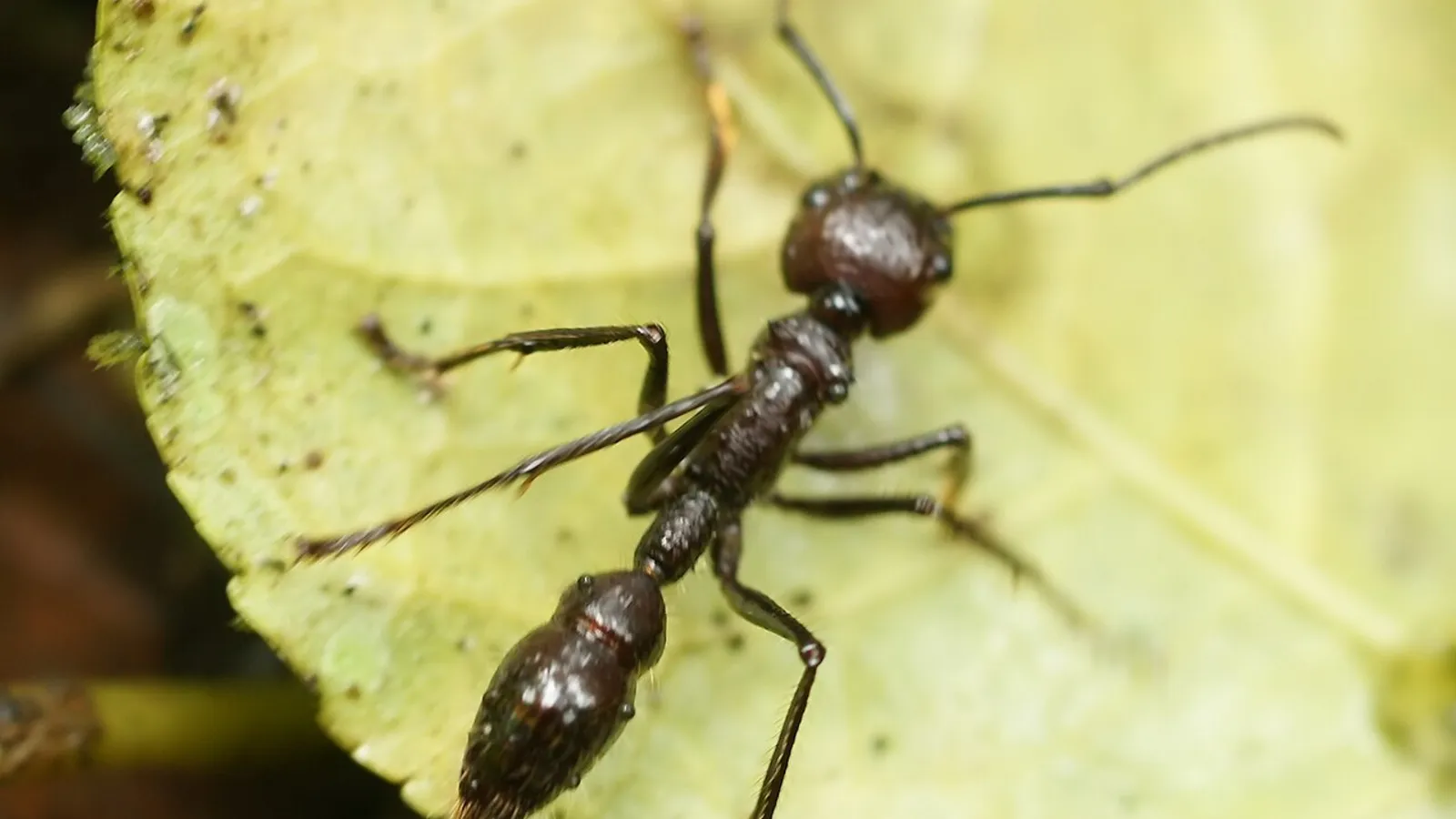
— Where the name comes from
Ponera, the genus this one stands beside, comes from the Greek ponērós, “painful, wicked”, which in turn is born of pónos, toil and bodily pain. Clavata is Latin for “armed with a club”. The common name comes from the testimony of those who have been stung: the pain has been likened to a gunshot wound, and it stands first on the Schmidt scale, the index that ranks the pain of hymenopteran stings.
— Facts
- Group
- Insects · Insecta
- Order
- Bees, wasps and ants
- Habitat
- Lowland rainforest; nests at the base of large trees
- Range
- From Nicaragua to Paraguay, throughout Amazonia
- Size
- Workers 18–30 mm
- Diet
- Nectar and small arthropods
- Lifespan
- The colony many years; the workers a few months
— Characteristics
- 01
The sting causes pain that lasts up to twenty-four hours.
- 02
The venom contains poneratoxin, which blocks sodium channels.
- 03
It gives an audible stridulation when disturbed.
— What sets it apart
Among the Sateré-Mawé of Amazonia, the passage to adulthood consists of putting one’s hands into a glove woven of leaves into which dozens of these ants have been sewn, stings turned inwards, and holding it for ten minutes without crying out. The ordeal is repeated twenty times over the years. The venom is not lethal but acts on the sodium channels of the nerves, causing involuntary contractions and a pain that throbs in waves for a whole day: those who study it in the laboratory describe it as qualitatively different from that of any other insect.
