
Saharan silver ant
Cataglyphis bombycina
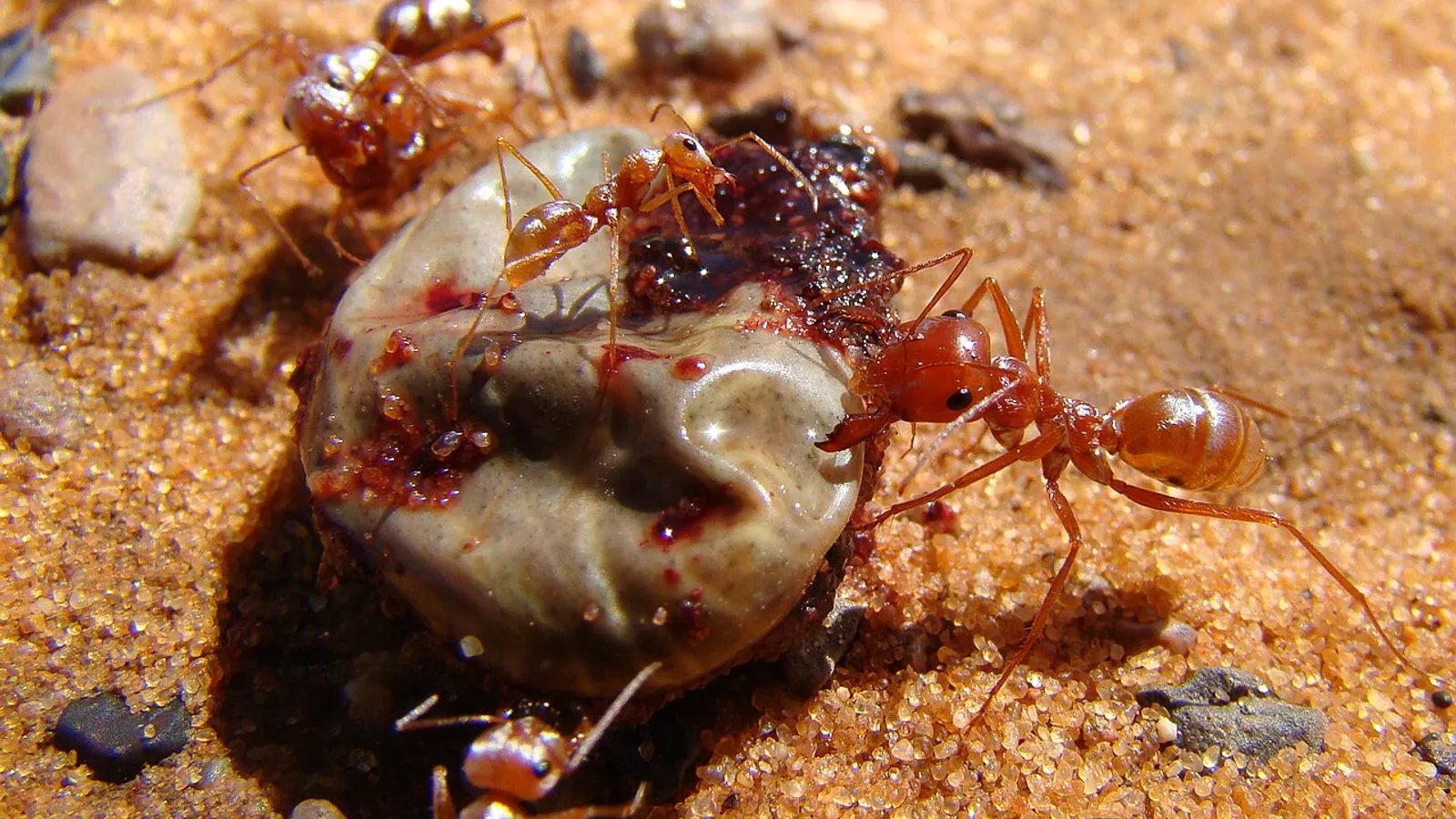
— Where the name comes from
Bombycina is the Latin adjective from bombyx, the silkworm: “silken”. The name looks at the hairs covering the body, which are smooth, flattened and so glossy that the animal looks like a drop of mercury running over the sand. Nobody, when the name was coined, suspected that those hairs were not an ornament but a cooling system.
— Facts
- Group
- Insects · Insecta
- Order
- Bees, wasps and ants
- Habitat
- Dunes and hammada of the desert, at the hottest hours of the day
- Range
- The Sahara, from Morocco to Egypt
- Size
- 4–10 mm
- Diet
- Insects that have died of heat on the surface of the sand
- Lifespan
- Workers a few weeks; the colony years
— Characteristics
- 01
It comes out at midday, when the sand is above sixty degrees.
- 02
It runs at a metre a second, a hundred body lengths a second.
- 03
It returns to the nest in a straight line, without retracing its outward path.
— What sets it apart
It comes out when everything else is dead or hidden, and survives for three combined reasons. The triangular hairs covering it reflect visible and near-infrared light and radiate heat in the mid-infrared: they lower body temperature by almost ten degrees compared with a shaved individual. Its very long legs hold the body up where the air is less scorching. And its navigation system — an internal step counter coupled to a compass that reads the polarisation of the sky — lets it return to the burrow in a straight line after a zig-zag run of two hundred metres, because stopping to look for the entrance would mean cooking.
