
Leopard seal
Hydrurga leptonyx
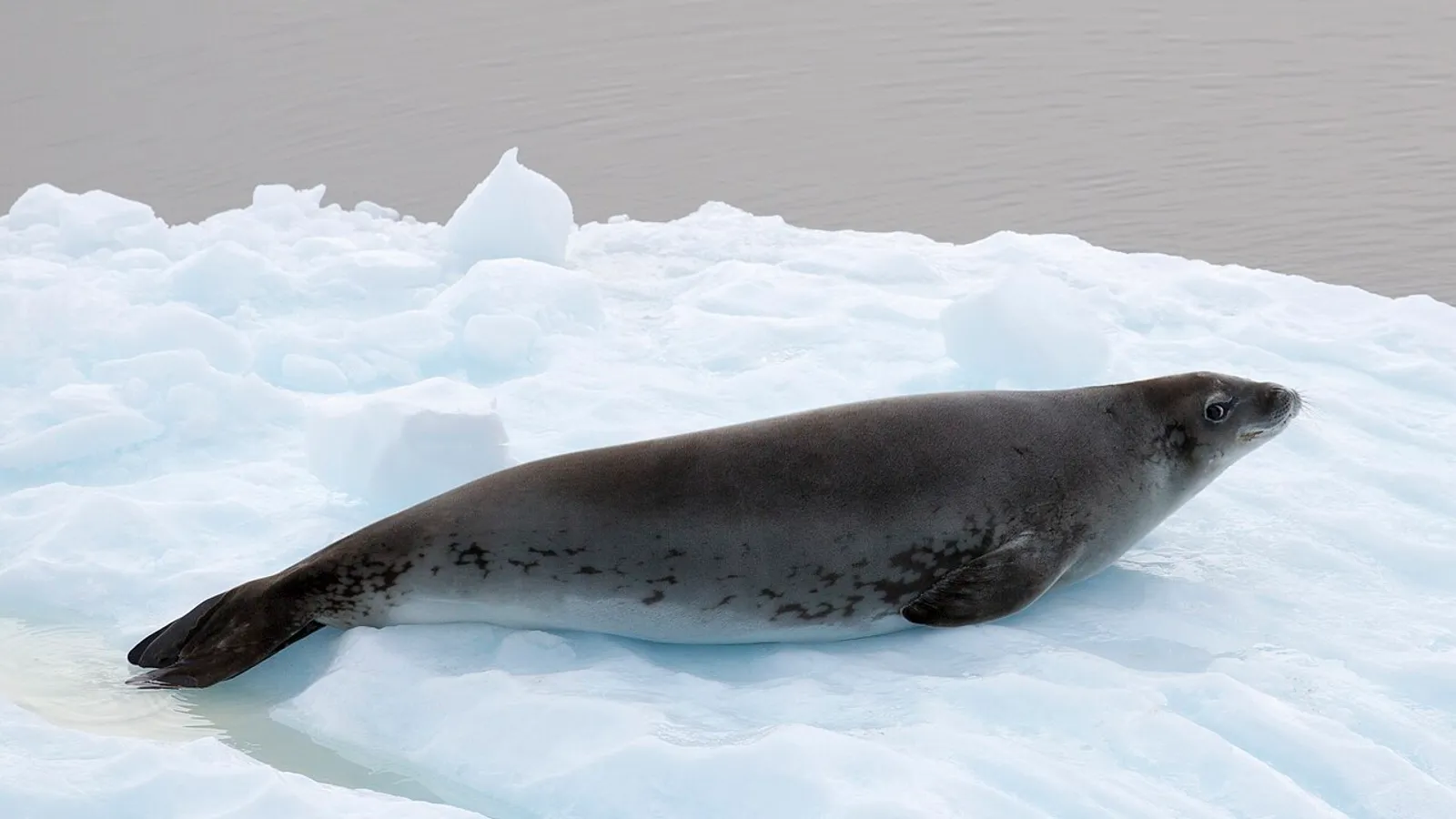
— Where the name comes from
Hydrurga is Greek built to order: hýdōr, “water”, and érgon, “work” — the worker of the water. Leptonyx joins leptós, “slender”, and ónyx, “claw”, for the tiny claws that all but vanish into the flipper. The common name comes instead from the spotted coat and, still more, from the reputation: it is the only pinniped that habitually hunts other warm-blooded mammals.
— Facts
- Group
- Mammals · Mammalia
- Order
- Carnivores
- Habitat
- Antarctic pack ice and the seas around it
- Range
- The Southern Ocean, with wanderers as far as New Zealand and southern Australia
- Size
- 250–350 cm long, 300–500 kg
- Diet
- Carnivore — penguins, seal pups, fish and, for half the diet, krill
- Lifespan
- About 25 years
— Characteristics
- 01
The three-pointed molars interlock into a sieve with which it strains krill from the water.
- 02
Its jaw opens past 160 degrees, out of all proportion to any other seal.
- 03
It sings for hours beneath the ice during the breeding season, hanging upside down in the water.
— What sets it apart
The most feared predator in Antarctica spends half its feeding life eating krill, and does it with the same teeth it uses to dismember a penguin: the trident molars, closing, leave gaps through which water escapes and the crustaceans stay. It is the same solution as the whales’, in miniature and improvised on a carnivore’s dentition. The leopard seal is at once the wolf and the whale of its sea, and neither image alone will describe it.
