
Harbor seal
Phoca vitulina
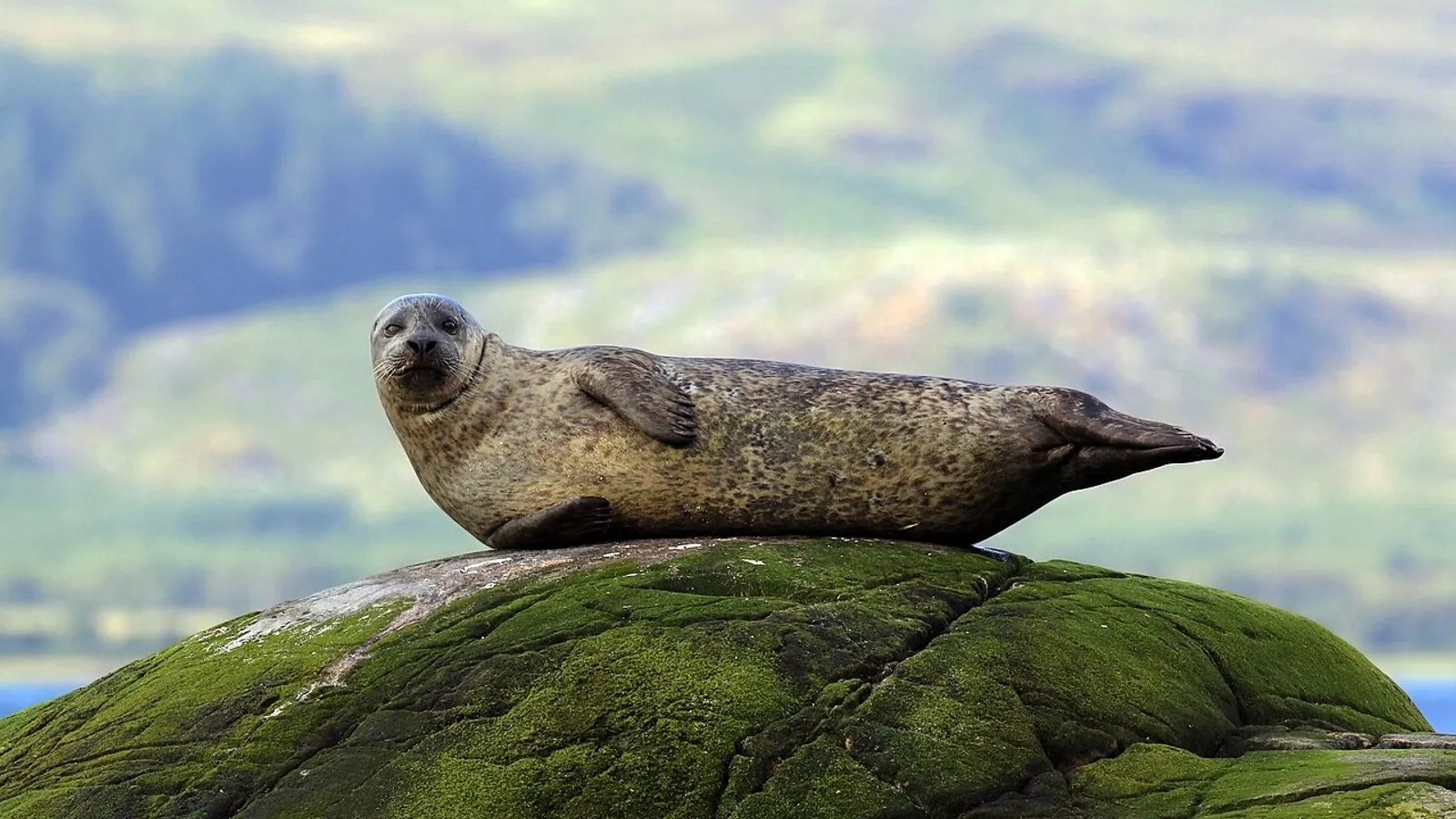
— Where the name comes from
The Greek phṓkē, “seal”, passes into the Latin phoca and from there into Italian almost unchanged: it is one of the oldest sea words we use. The epithet vitulina is pure Latin, from vitulus, “calf”: the Romans called this animal the sea calf, for the round face and the plaintive cry of the pups. The same image survives in the English sea calf and the German Seehund, “sea dog”.
— Facts
- Group
- Mammals · Mammalia
- Order
- Carnivores
- Habitat
- Temperate and cold coasts, estuaries, sandbanks and rocks uncovered at low tide
- Range
- The northern coasts of the Atlantic and Pacific, from Portugal to the Arctic and from California to Japan
- Size
- 150–190 cm long, 70–150 kg
- Diet
- Carnivore — bottom fish, cephalopods, crustaceans
- Lifespan
- 25–30 years
— Characteristics
- 01
The whiskers on the muzzle sense the hydrodynamic wake a fish leaves for up to thirty seconds after it has passed.
- 02
It dives for twenty to thirty minutes, slowing the heart from 100 to under 10 beats a minute.
- 03
Every individual has a unique pattern of spots, which researchers use as a fingerprint.
— What sets it apart
The harbour seal does not hold its breath as we do: before diving it empties its lungs. The oxygen it needs is not in inhaled air but in blood and muscle, where the myoglobin is so concentrated that the flesh is almost black. Empty lungs mean no nitrogen entering the blood under pressure, and so no decompression sickness: the animal solves by subtraction a problem that costs human divers tables, stops and hyperbaric chambers.
