
Mediterranean monk seal
Monachus monachus
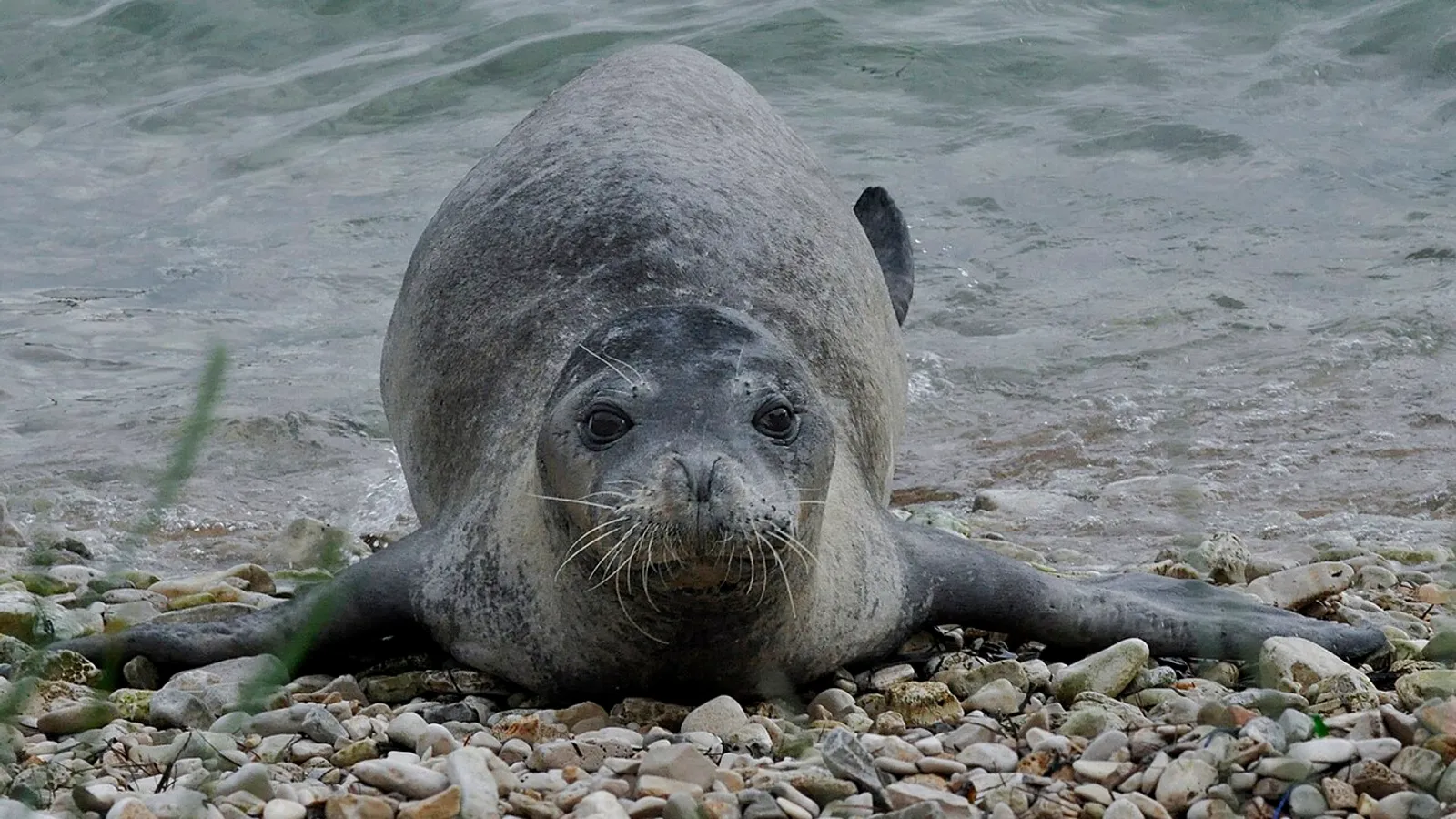
— Where the name comes from
From the Greek monachós, “solitary”, the same word that gave “monk”: a name chosen twice, in the genus and in the species, as though the naturalist wanted to insist. Two explanations have come down and do not exclude one another: the folds of skin behind the head that recall a lowered hood, and the habit of living apart, far from the clamorous colonies of other seals. Homer already called it phṓkē, and had Proteus pasture it on the beaches of the Nile.
— Facts
- Group
- Mammals · Mammalia
- Order
- Carnivores
- Habitat
- Sea caves with submerged entrances, isolated rocky coasts
- Range
- The eastern Mediterranean, the Aegean, the coasts of Mauritania and Madeira; in Italy sightings are sporadic and increasing
- Size
- 240–280 cm long, 250–300 kg
- Diet
- Carnivore — octopus, cephalopods, fish
- Lifespan
- 20–25 years
— Characteristics
- 01
It gives birth inside sea caves reachable only by swimming underwater, the one strategy left against human disturbance.
- 02
A single pup per birth, every two years: among the slowest reproductive rates of any carnivore.
- 03
The world population is estimated at around seven hundred, against some five hundred in 2015.
— What sets it apart
It once basked on open beaches, as northern seals still do. This is not biology but memory: the choice to give birth in dark, awkward caves is behaviour learnt over two thousand years of hunting and human use of the coasts. The seals that stayed in the open were killed, those that hid left offspring. It is one of the few cases in which we can watch an entire species-wide behaviour rewritten by our presence, and read it as a scar.
