
Forest giant owl butterfly
Caligo eurilochus
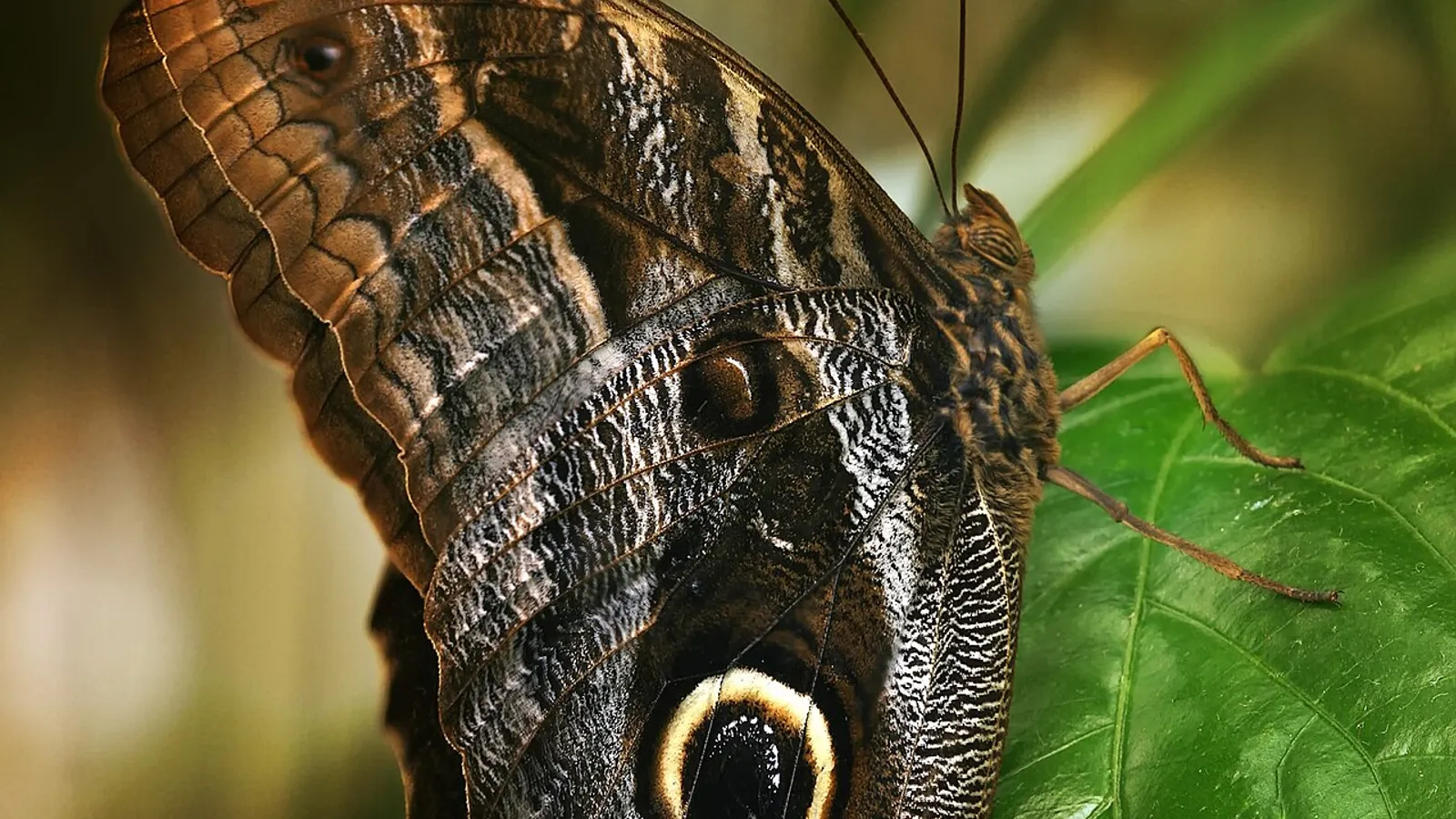
— Where the name comes from
Caligo is Latin for darkness, mist, gloom: these butterflies fly at dawn and dusk, when there is not light enough for the birds that would hunt them. Eurilochus is Eurylochus, the companion of Odysseus who alone did not enter Circe’s house and was not turned into a pig — the only one who did not fall for the trick, for a butterfly that lives by tricks.
— Facts
- Group
- Insects · Insecta
- Order
- Butterflies and moths
- Habitat
- Rainforest understorey and banana plantations
- Range
- From Mexico to Amazonia
- Size
- 13–16 cm wingspan
- Diet
- Rotting fruit and fermenting sap; banana leaves as a caterpillar
- Lifespan
- 2–3 months
— Characteristics
- 01
Each hindwing carries an enormous yellow and black eye.
- 02
It flies only in the half-hour of dawn and that of dusk.
- 03
It does not drink nectar: it feeds on fermenting fruit.
— What sets it apart
The great mark on the wing can be read two ways, and biology argued for a century over which is right. From a distance and with the butterfly settled it looks like an owl’s eye, and would frighten insect-eating birds; but the explanation now favoured is less romantic and perhaps more effective — a conspicuous target far from the body, inviting a peck at the wing margin rather than the thorax. Wings torn at the edges are extremely common in captured specimens, and a butterfly with a hole in its wing still flies; one with a punctured thorax does not.
