
Heart-nosed bat
Cardioderma cor
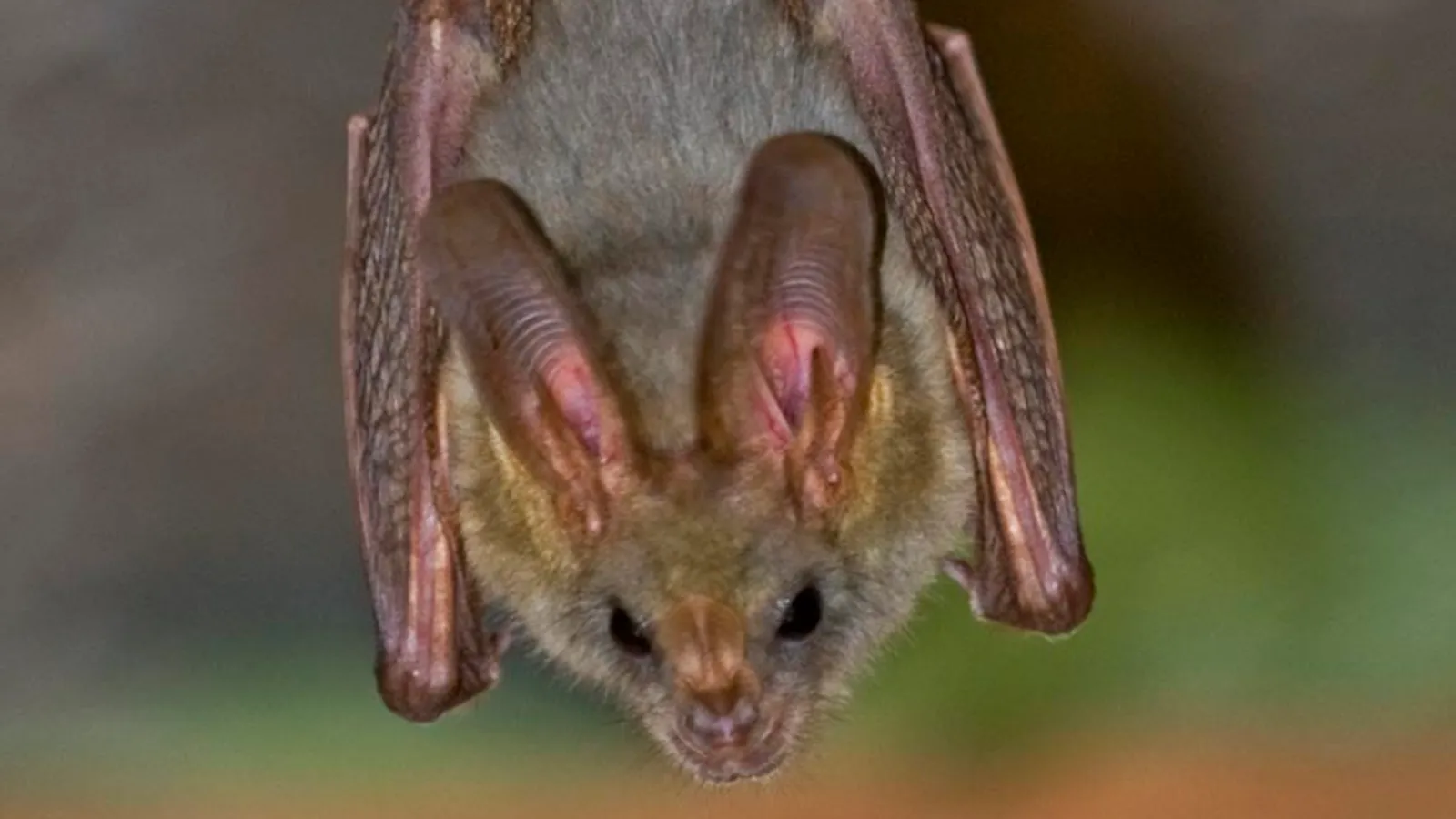
— Where the name comes from
The name says “heart” twice, in two languages: Cardioderma is “heart skin”, from the Greek kardía and dérma, and cor is the Latin heart. The reason is the base of the nose leaf, which seen from the front has exactly the outline of the stylised heart on playing cards. When a binomial repeats the same image in Greek and Latin, it usually means the describer had nothing else distinctive to report.
— Facts
- Group
- Mammals · Mammalia
- Order
- Bats
- Habitat
- Arid bushland and acacia savannah, near caves and hollow baobabs
- Range
- The Horn of Africa and East Africa: Ethiopia, Somalia, Kenya, Tanzania
- Size
- 7–7.7 cm of body, 35 cm wingspan, 21–35 g
- Diet
- Carnivore — large insects, scorpions, centipedes, small frogs and lizards
- Lifespan
- Little known
— Characteristics
- 01
It sings from perches to defend its hunting territory, which is rare among bats.
- 02
It locates prey on the ground by the noise they make, without using sonar.
- 03
Every individual returns each night to the same set of perches, for years.
— What sets it apart
It sings like a bird, and for the same reason. On wet-season nights the males take up fixed perches around their territory and give calls audible even to us, repeated for hours: they announce ownership of a piece of bush to whoever holds the neighbouring ground. Territorial song from established perches is passerine behaviour, not bat behaviour, and this is one of the very few bat species in which it has been properly documented.
