
Peregrine falcon
Falco peregrinus
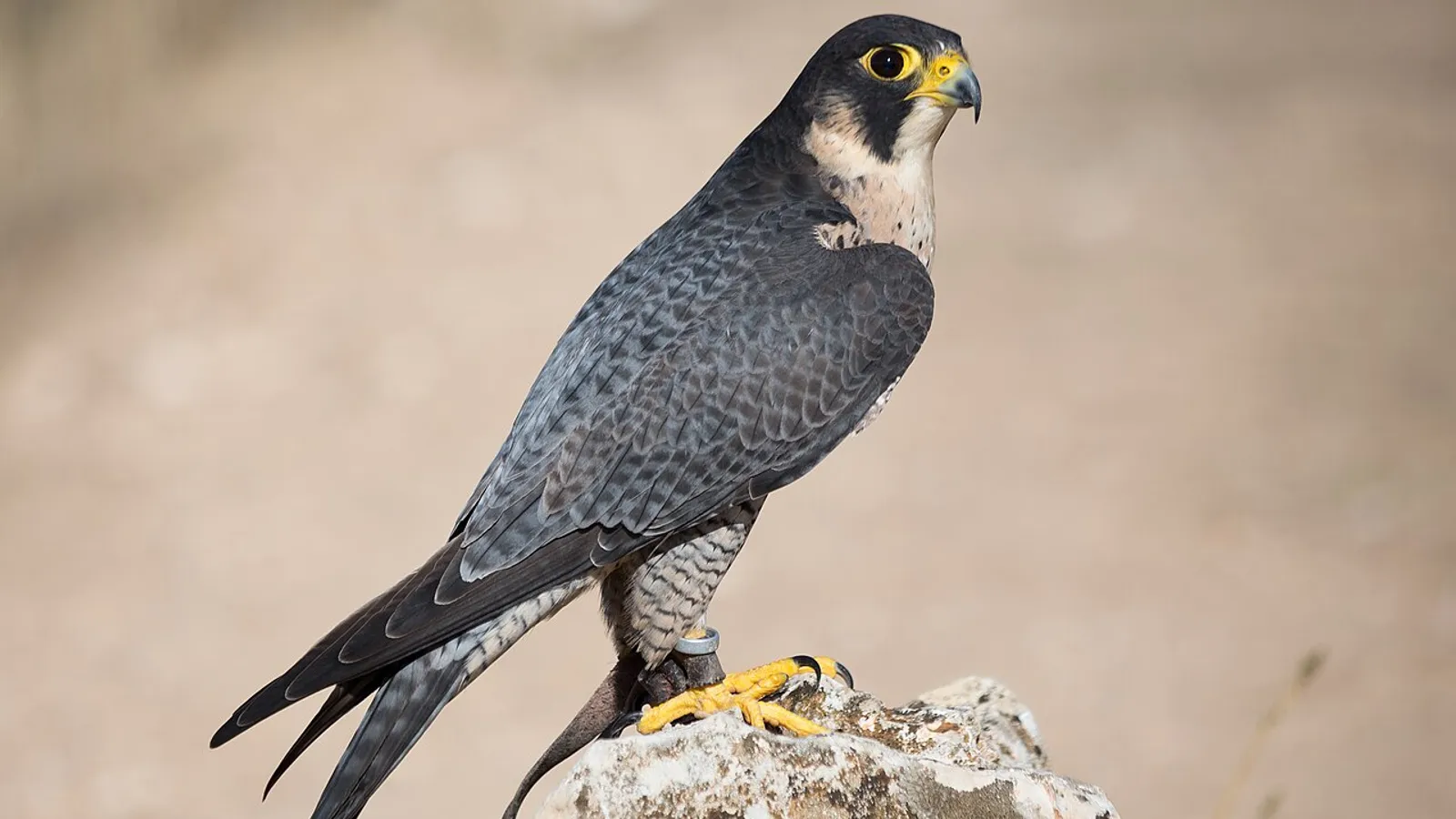
— Where the name comes from
Falco is Latin, perhaps from falx, the sickle, for the curved profile of the wings or the talons. Peregrinus is “pilgrim”, the traveller: medieval falconers caught young birds on migration, never at the nest, because they seemed to come from nowhere. It is the fastest animal on the planet.
— Facts
- Group
- Birds · Aves
- Order
- Falcons
- Habitat
- Rock faces, coasts, and increasingly skyscrapers and city bridges
- Range
- Every continent but Antarctica: among the most widespread birds in the world
- Size
- 34–58 cm, wingspan 74–120 cm
- Diet
- Carnivore — almost exclusively other birds, taken in flight
- Lifespan
- 12–15 years
— Characteristics
- 01
In a stoop it passes 350 km/h: the fastest living thing there is.
- 02
A bony baffle in the nostrils deflects the air and keeps it from suffocating at that speed.
- 03
It kills by striking prey in mid-air with closed talons, as a fist, before seizing it.
— What sets it apart
The peregrine has found a new rock face in the city: it nests on skyscrapers, bell towers and bridge pylons, and hunts urban pigeons in stoops between the buildings. In New York, London and Milan there are pairs that have never seen a mountain. The fastest bird in the world has adapted to make the metropolis its cliff, and finds more prey and fewer rivals there than in the wild.
