
Bald eagle
Haliaeetus leucocephalus
— Where the name comes from
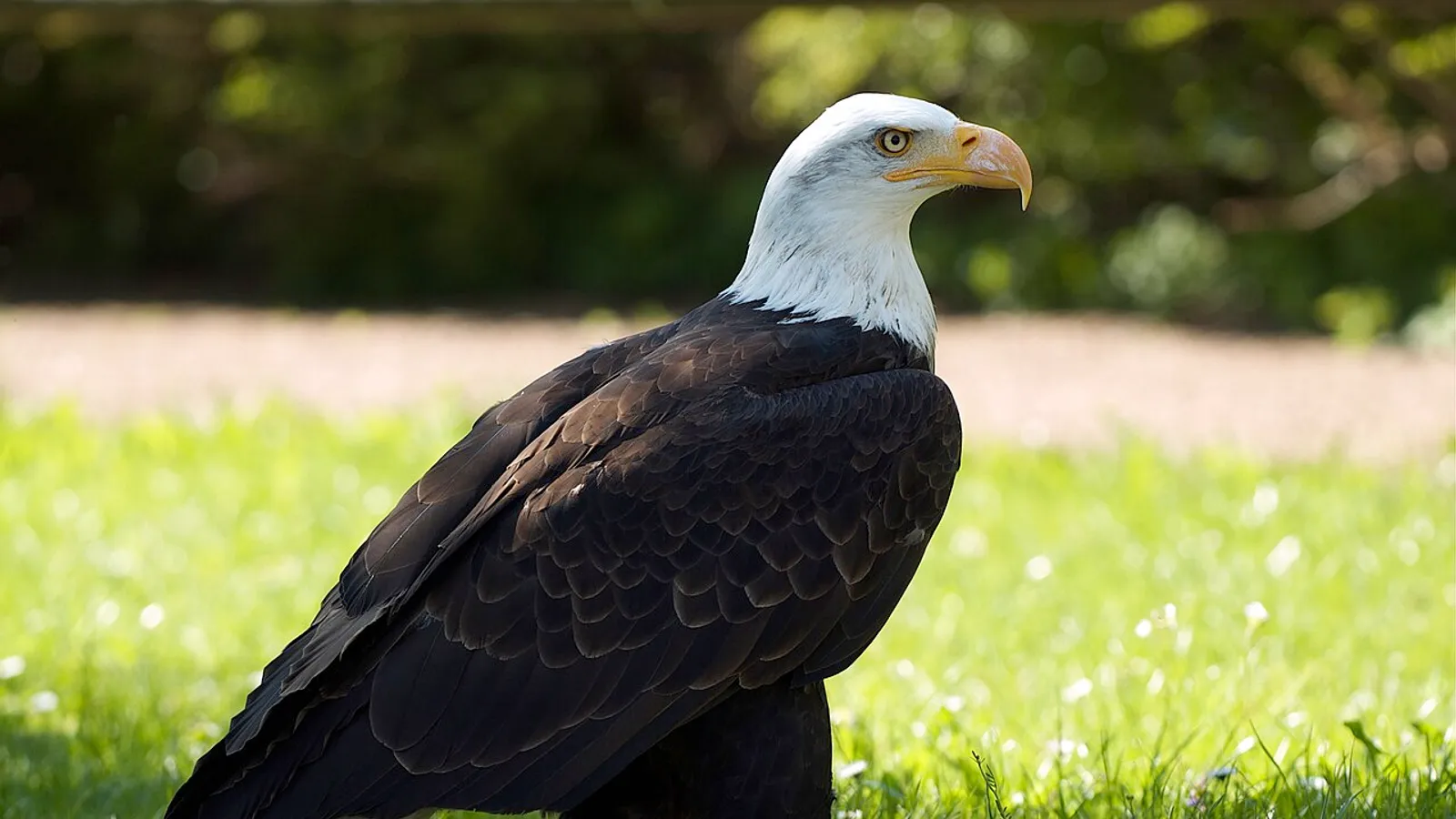
Haliaeetus is Greek for “sea eagle”, from háls, sea, and aetós, eagle; leucocephalus, “white-headed”, from leukós and kephalḗ. “Bald” is a misunderstanding: the Old English balde did not mean hairless but “white”, referring to the shining head. It is not featherless at all. It is the national emblem of the United States.
— Facts
- Group
- Birds · Aves
- Order
- Diurnal birds of prey
- Habitat
- Coasts, great lakes and fish-rich rivers
- Range
- North America, from Alaska to northern Mexico
- Size
- 70–102 cm, wingspan 180–230 cm
- Diet
- Carnivore and scavenger — mostly fish, with waterbirds and carrion
- Lifespan
- 20–30 years
— Characteristics
- 01
It builds the largest nests of any North American bird: up to a tonne of branches.
- 02
It often robs other predators, herons and ospreys, rather than catching fish itself.
- 03
The white head appears only at maturity, around five years; the young are brown and mottled.
— What sets it apart
Chosen as the symbol of the United States in 1782, the bald eagle then came close to vanishing from the very country that bore it on its seal: DDT, a pesticide, thinned the eggshells until they broke under the weight of the incubating bird, and by the 1960s a few hundred pairs were left. Banning DDT saved it. Today it is common again — a national emblem pulled back from extinction by its own citizens.
