Malleefowl
Leipoa ocellata
— Where the name comes from
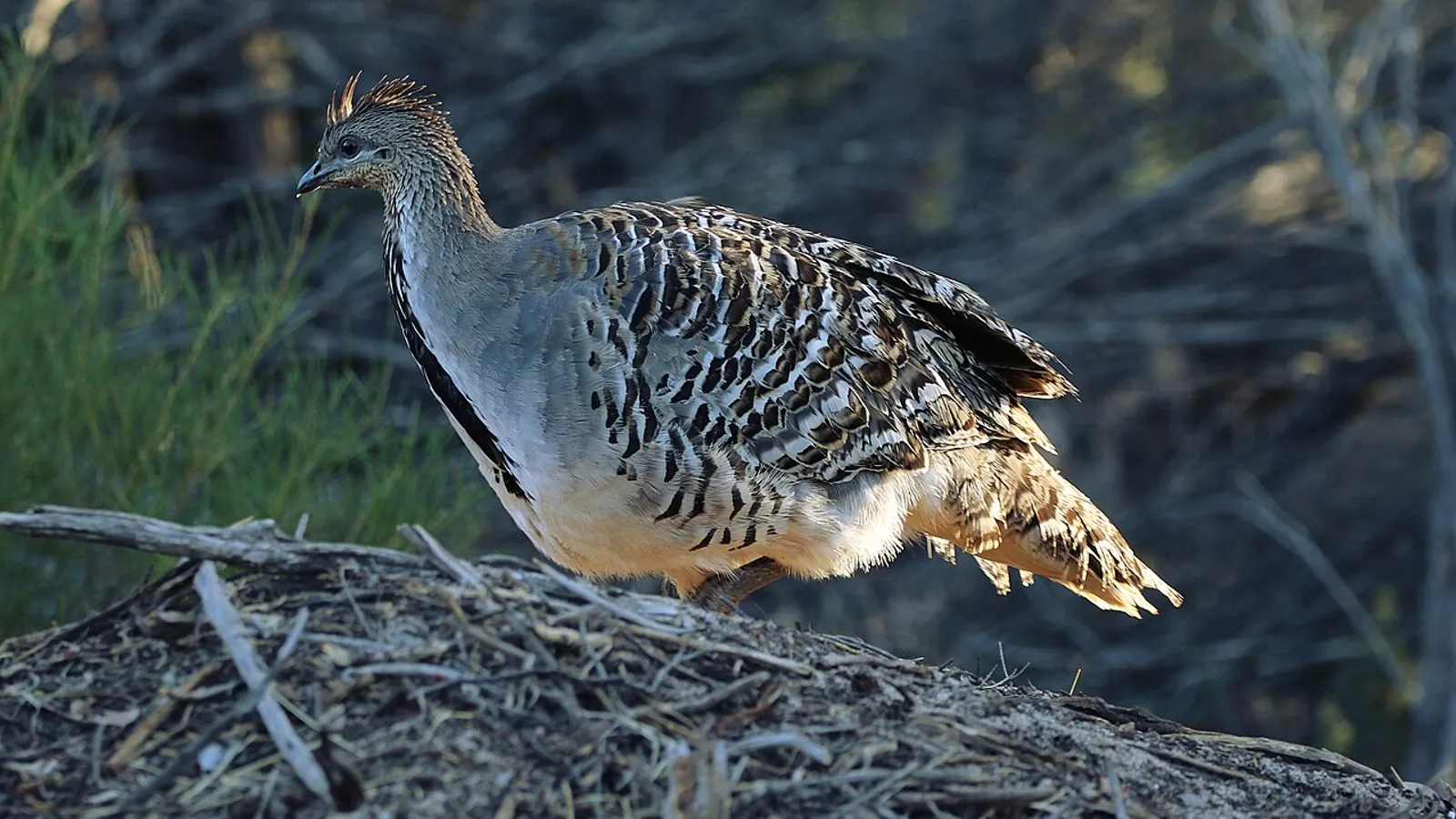
Leipoa joins the Greek leípō, “to leave, to abandon”, and ōón, “egg”: “the one that abandons its eggs”, because it never broods them. Ocellata means “covered in little eyes”, for the pale, dark-edged spots on its wings. The Italian name, “Australian pheasant”, is misleading: it is not a pheasant but a megapode, an Australian relative of the gamebirds that does not use its own body to warm its eggs. In English it is the malleefowl.
— Facts
- Group
- Birds · Aves
- Order
- Gamebirds
- Habitat
- Mallee, the semi-arid scrub of low eucalypts
- Range
- Southern Australia
- Size
- 55–61 cm, 1.5–2.5 kg
- Diet
- Seeds, flowers, shoots, insects
- Lifespan
- Over 20 years
— Characteristics
- 01
The male builds a mound of sand and leaves a metre high and several metres wide.
- 02
The eggs are laid inside the mound, days apart.
- 03
The chicks never meet their parents.
— What sets it apart
It is a living incubator. The male spends almost the whole year working his mound: in winter he fills it with wet leaves whose rotting gives off heat, in summer he covers it with sand to shield it from the sun, and every day he pushes his beak into the mass to test the temperature, opening or closing layers until the inside holds at about 33 degrees. The chick hatches buried, digs its way to the surface on its own for hours, and within a day can already fly: neither parent is waiting for it.