Ruby-throated hummingbird
Archilochus colubris
— Where the name comes from
Archilochus is Archilochus, the Greek lyric poet of the seventh century BC: the German naturalist Reichenbach named many hummingbird genera after figures of antiquity, with no particular link to the bird. Colubris is the Latinised form of colibri, a word that reached Europe through French and whose origin is uncertain, perhaps from a Caribbean language.
— Facts
- Group
- Birds · Aves
- Order
- Hummingbirds and swifts
- Habitat
- Edges of broadleaf woodland, clearings, flower gardens
- Range
- Breeds in eastern North America, winters in Central America
- Size
- 7–9 cm, 3–4 g
- Diet
- Nectar, small insects and spiders, tree sap
- Lifespan
- 3–5 years, 9 the record
— Characteristics
- 01
It is the only hummingbird that breeds in eastern North America.
- 02
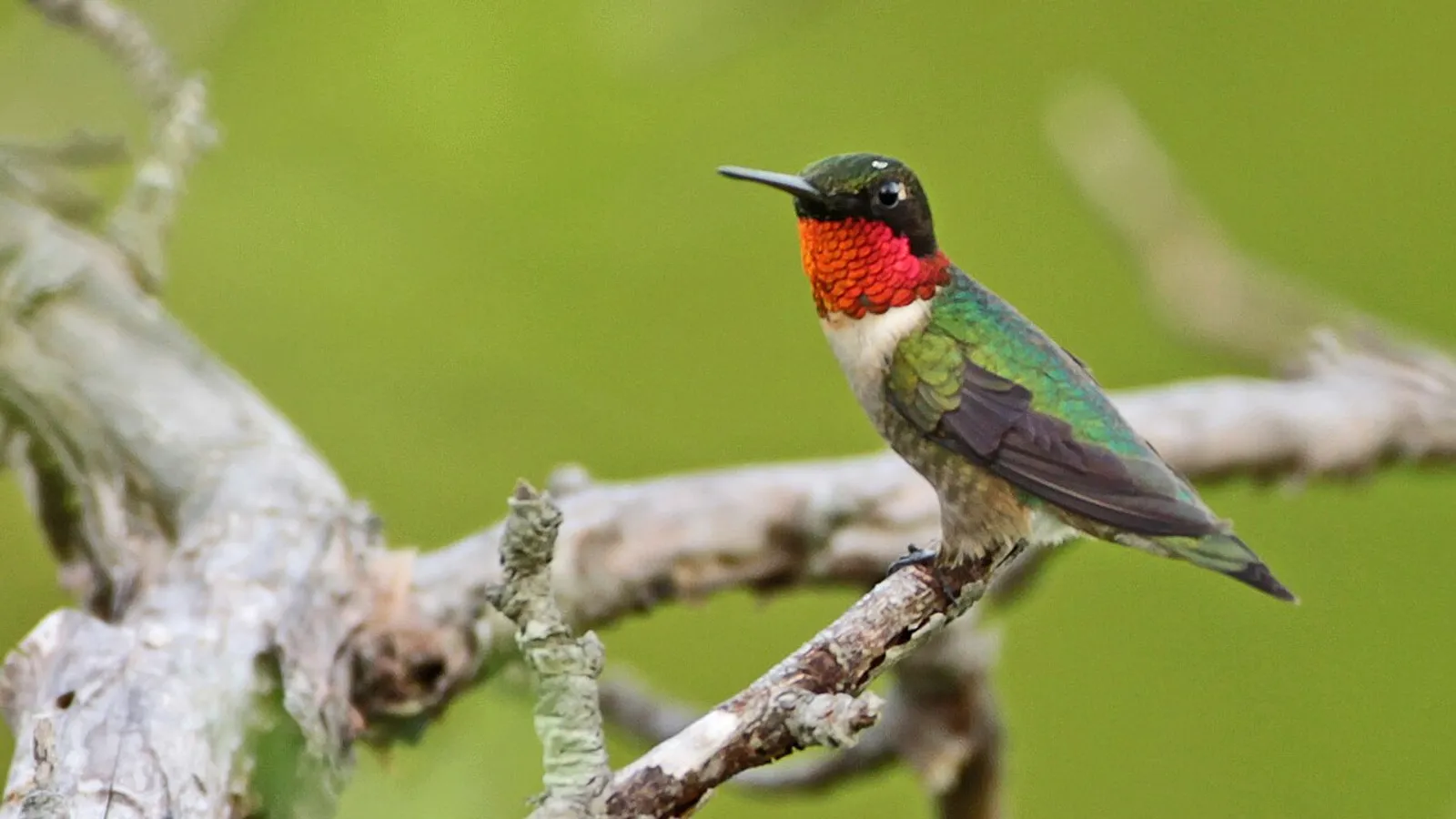
The male’s throat looks black, and turns ruby red only when the light strikes it head-on.
- 03
It beats its wings more than fifty times a second.
— What sets it apart
It weighs as much as a small coin, and every autumn it crosses the Gulf of Mexico without stopping: eight hundred kilometres of open sea, twenty hours of flight with nowhere to land and nothing to eat. To manage it, in the weeks before departure it fattens until it has almost doubled its weight, and that fat is its only fuel. Returning in spring it often arrives before the flowers, and survives by drinking the sap that oozes from holes drilled in tree trunks by a sap-feeding North American woodpecker, which it follows from tree to tree.