Rufous hummingbird
Selasphorus rufus
— Where the name comes from
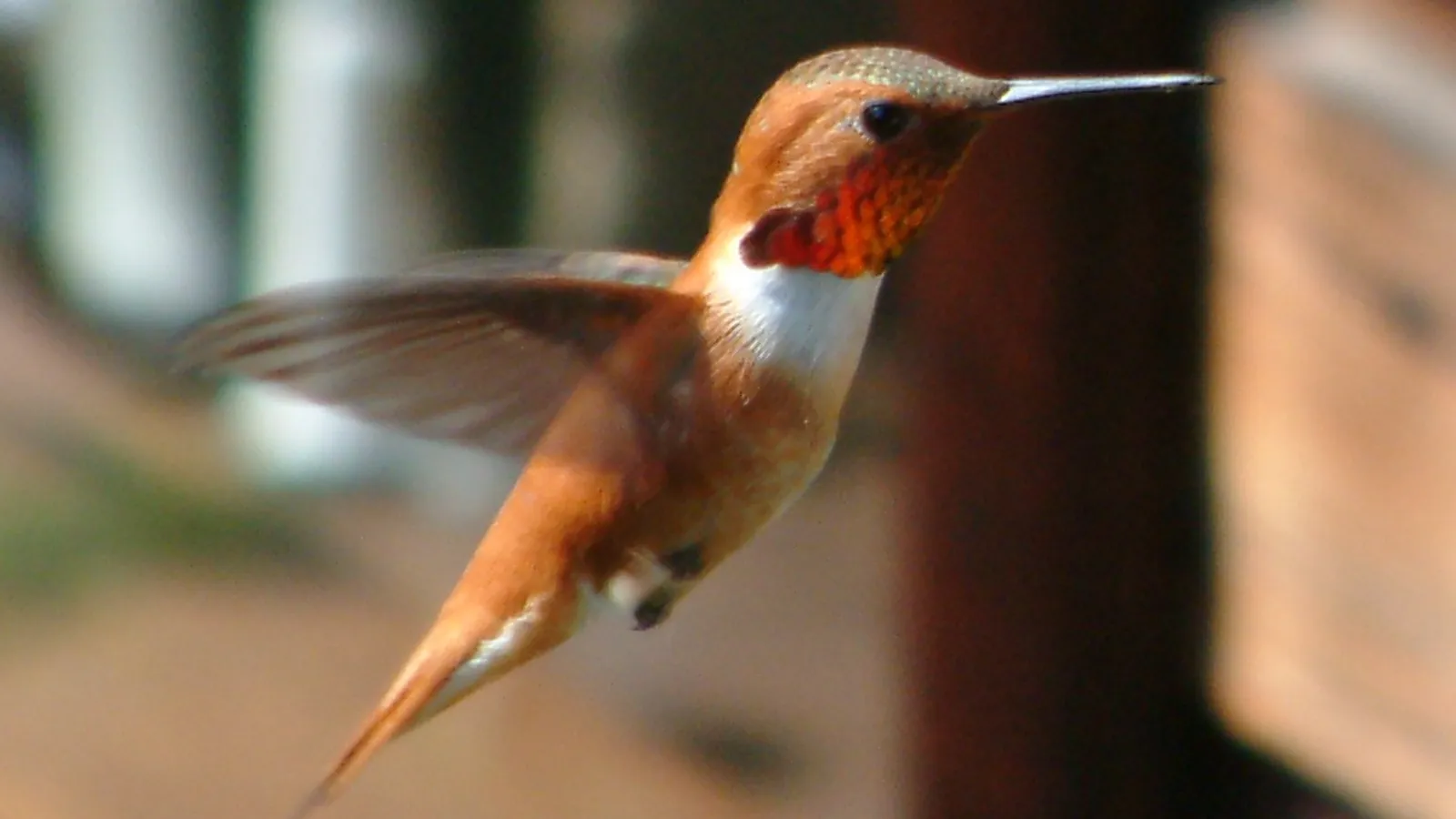
Selasphorus is Greek, sélas, “light, gleam”, and phorós, “bearing”: “light-bearer”, for the male’s throat, which glows like an ember as the angle of the sun changes. Rufus in Latin means “reddish”, the colour of its back and flanks.
— Facts
- Group
- Birds · Aves
- Order
- Hummingbirds and swifts
- Habitat
- Conifer forest, flowering mountain meadows, gardens
- Range
- Breeds from Oregon to Alaska, winters in Mexico
- Size
- 7–9 cm, 3–4 g
- Diet
- Nectar, small insects caught in flight
- Lifespan
- 3–5 years, over 8 the record
— Characteristics
- 01
It defends flowers with an aggression that spares not even larger hummingbirds.
- 02
At night it goes into torpor, lowering its body temperature to save energy.
- 03
It breeds farther north than any other hummingbird, as far as Alaska.
— What sets it apart
Relative to its body length it makes one of the longest migrations of any bird: from Mexico to Alaska and back, almost six thousand kilometres each way for an animal eight centimetres long. So as not to waste energy it has a surprising memory. Experiments with artificial flowers have shown that it remembers which flowers it has already emptied, where they are, and even how long the nectar takes to refill: it comes back to them when it pays, without wasting time on those still empty.