
Naked mole-rat
Heterocephalus glaber
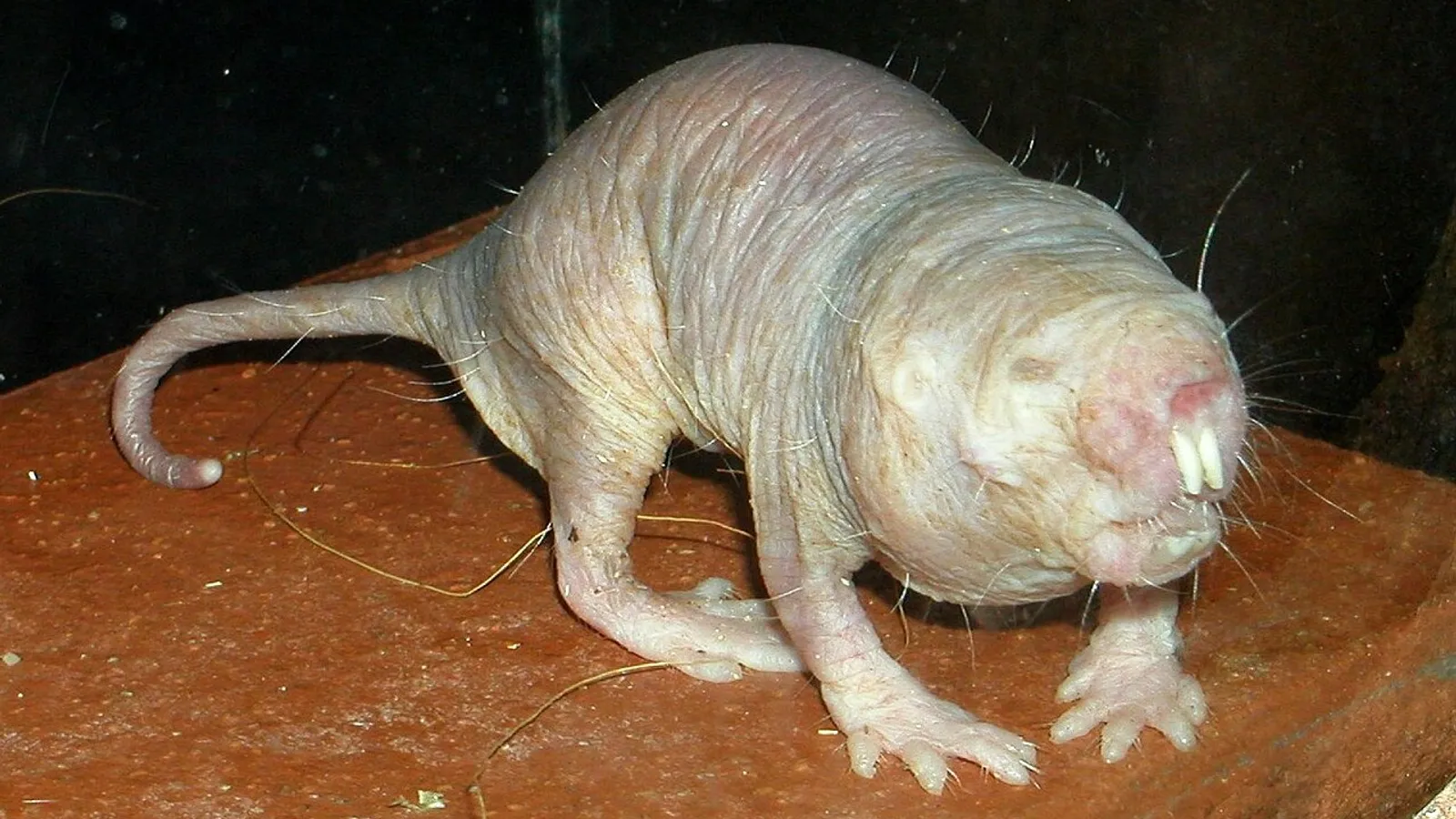
— Where the name comes from
Heterocephalus is Greek: héteros, “different”, and kephalḗ, “head” — the odd head, out of proportion, almost all jaw. Glaber is Latin and means “hairless”. The English name, naked mole-rat, piles up three wrong animals in three words: it is not entirely naked, it is not a mole and it is not a rat.
— Facts
- Group
- Mammals · Mammalia
- Order
- Rodents
- Habitat
- Underground tunnels in arid ground, up to two kilometres of network per colony
- Range
- The Horn of Africa: Ethiopia, Somalia, Kenya
- Size
- 8–10 cm long, 30–35 g
- Diet
- Herbivore — tubers and roots dug out underground
- Lifespan
- Over 30 years
— Characteristics
- 01
It is one of only two eusocial mammals: one queen breeds, all the others work or defend.
- 02
It does not regulate its body temperature, a case unique among mammals: it warms itself by huddling.
- 03
The incisors move independently like pincers, and a quarter of its musculature serves to chew earth.
— What sets it apart
It lives thirty years, against three for a mouse of similar size, and its chance of dying does not rise with age: it breaks the Gompertz law, which describes ageing in almost every animal known. It practically never develops tumours, endures eighteen minutes of zero oxygen by switching to a fructose-fuelled metabolism like a plant, and is insensitive to acid pain. A blind rodent living in the dark on roots has become, for these reasons, one of the most studied animals in the biology of ageing.
