
Common eland
Taurotragus oryx
— Where the name comes from
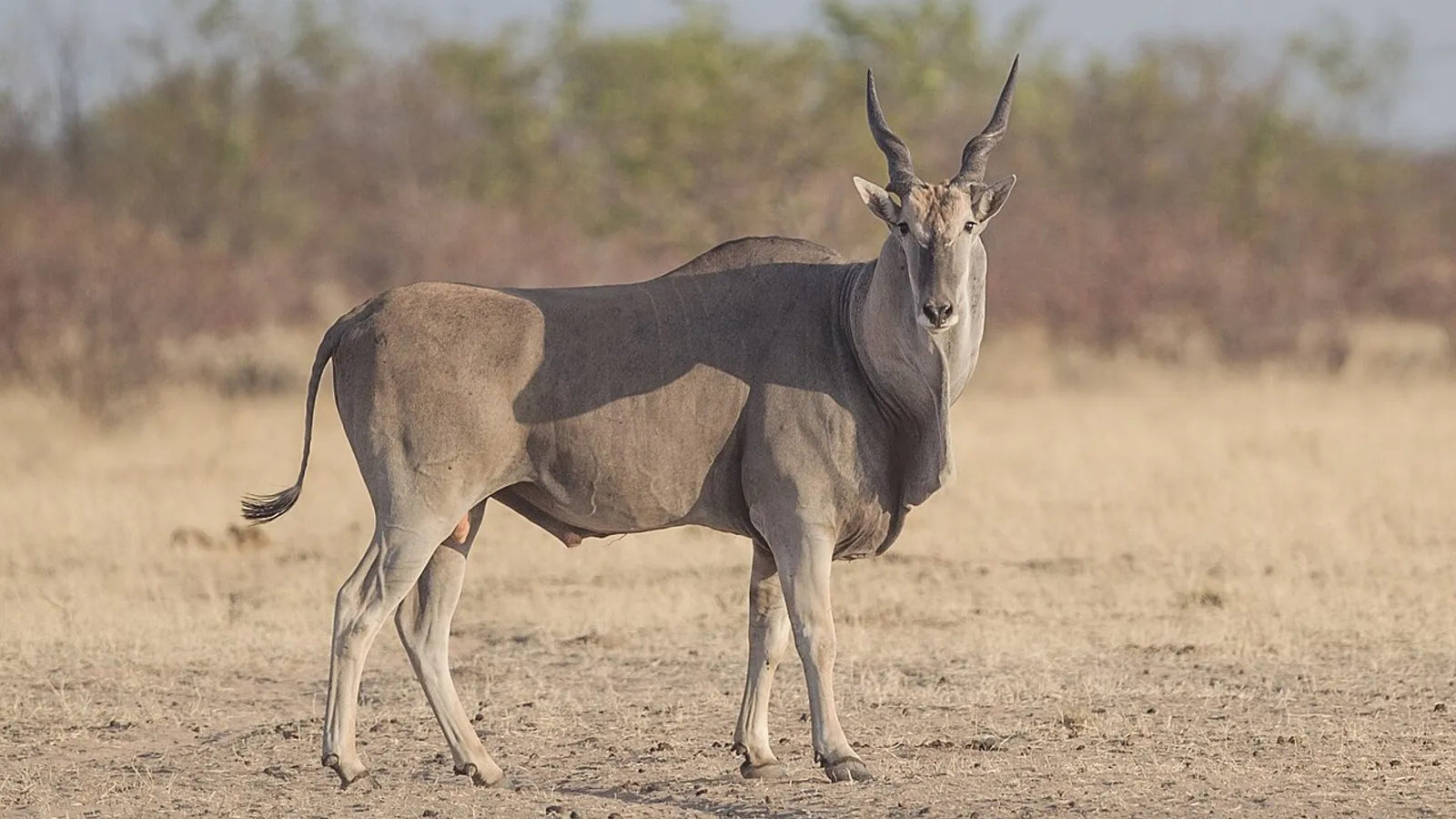
Taurotragus is “bull-goat”, from the Greek taûros and trágos, and oryx was the Greek word for a pickaxe: the straight, pointed horns. But the common name is the finest error: eland in Dutch means “elk”. The Boer colonists who reached the Cape were faced with the largest ungulate on the continent and gave it the name of the largest animal they knew in Europe, which lives in northern forests and resembles it not at all.
— Facts
- Group
- Mammals · Mammalia
- Order
- Even-toed ungulates
- Habitat
- Open savannah, bushland, semi-desert, highlands up to 4,900 m
- Range
- Eastern and southern Africa
- Size
- 200–345 cm of body, 300–950 kg
- Diet
- Herbivore — leaves, shoots, grass, fruit
- Lifespan
- 15–20 years
— Characteristics
- 01
It is the largest antelope in the world, with bulls approaching a tonne.
- 02
For all its bulk it clears two-and-a-half-metre fences from a standstill.
- 03
The joints of its legs give off a click audible at a hundred metres.
— What sets it apart
It walks by clicking. Every step produces a dry snap, made by tendons slipping over the bones of the wrist, and the sound carries: in large bulls it is deeper and louder, and it seems to work as an announcement of size that saves having to fight at all. A rival hears the noise of what is coming and decides whether it is worth it. Of all the dominance signals in the animal kingdom, this is the one an animal cannot fake, because it depends on the size of its bones.
