
Hartebeest
Alcelaphus buselaphus
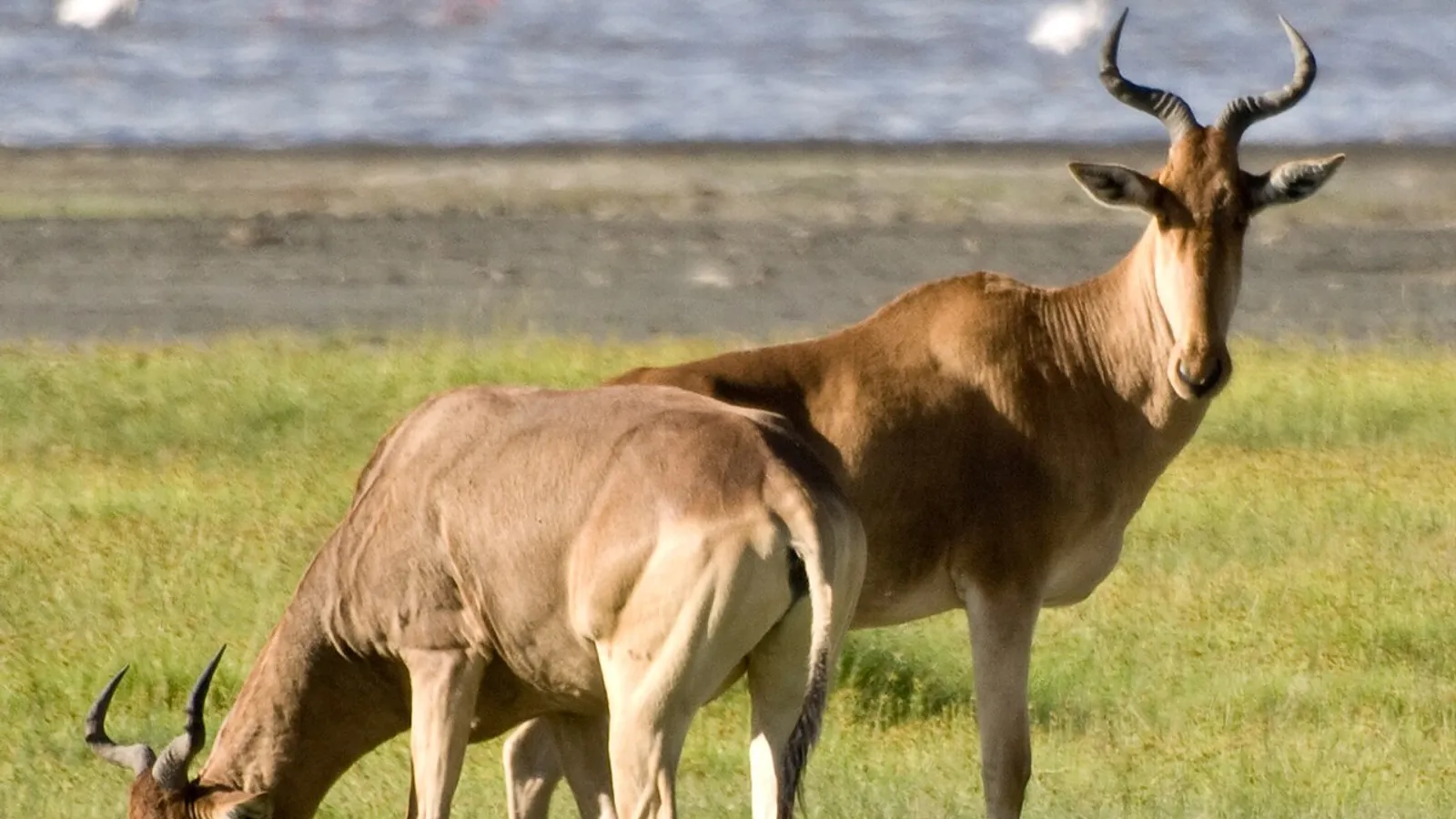
— Where the name comes from
It is the most despairing name in African zoology: Alcelaphus adds the Greek álkē, “elk”, to élaphos, “deer”; buselaphus adds boûs, “ox”, and élaphos again. Elk-deer ox-deer. Whoever named it found nothing to compare it with and heaped up three European animals, hoping an idea would come out of the sum. In English it is the hartebeest, from the Dutch: “deer-beast”. Exactly the same problem, another language.
— Facts
- Group
- Mammals · Mammalia
- Order
- Even-toed ungulates
- Habitat
- Open savannah, grassland, light bush
- Range
- Africa, in fragmented populations from Senegal to Tanzania and South Africa
- Size
- 150–245 cm of body, 100–200 kg
- Diet
- Herbivore — almost exclusively grasses
- Lifespan
- 12–15 years in the wild
— Characteristics
- 01
It has the longest, narrowest face of any antelope, and shoulders much higher than its rump.
- 02
The horns, carried by both sexes, rise from a single bony pedestal.
- 03
It is among the most enduring runners of the antelopes: it holds 70 km/h for a long way.
— What sets it apart
Its face is long because it has to do two things at once. With the muzzle buried in tall grass, eyes set at the top of a much-elongated skull still stay above the vegetation: it can graze and watch the horizon at the same moment, without ever lifting its head. Of all African grazers it is the one that has pushed this compromise furthest, and its very odd silhouette — the horse-like face, the humped shoulders — is entirely the consequence of a single problem in geometry.
