
Muskox
Ovibos moschatus
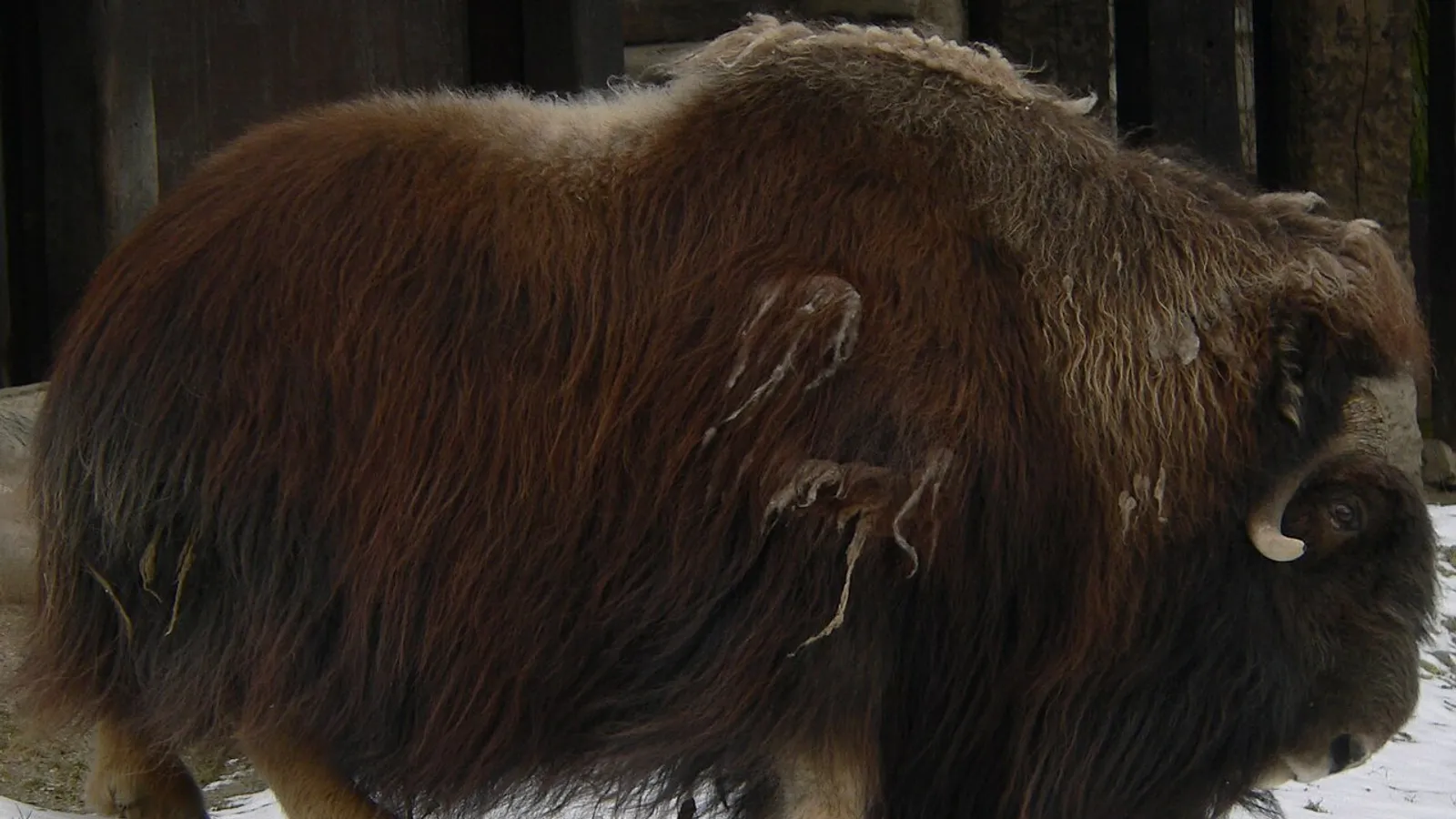
— Where the name comes from
Ovibos is “sheep-ox”, from the Latin ovis and bos, and for once the chimera is apt: it is neither, and is more closely related to goats and sheep than to cattle. Moschatus, “musky”, is by contrast wrong: the animal has no musk glands. The smell the first Europeans caught was the urine of rutting bulls. In Inuktitut it is umingmak, “the bearded one”.
— Facts
- Group
- Mammals · Mammalia
- Order
- Even-toed ungulates
- Habitat
- Arctic tundra, wind-scoured plateaus where snow does not lie
- Range
- Northern Canada, Greenland; reintroduced to Alaska, Siberia, Scandinavia
- Size
- 190–230 cm of body, 180–410 kg
- Diet
- Herbivore — sedges, grasses, dwarf willow, lichens
- Lifespan
- 12–20 years
— Characteristics
- 01
The underwool, called qiviut, is eight times more insulating than sheep’s wool.
- 02
Threatened, the herd forms a circle with the calves in the middle and the horns facing out.
- 03
It came through the end of the ice age along with very little other megafauna.
— What sets it apart
Its perfect defence against wolves was its undoing with people. Cornered, the herd does not flee: it forms a tight circle, horns outward and young at the centre, and from that position no wolf gets through. Against rifles it is a row of stationary targets, and in the 19th century this tactic allowed whole herds to be wiped out in minutes, erasing the species from Alaska and from Europe. It is back only because we put it back, from Greenlandic animals.
