
Dhole
Cuon alpinus
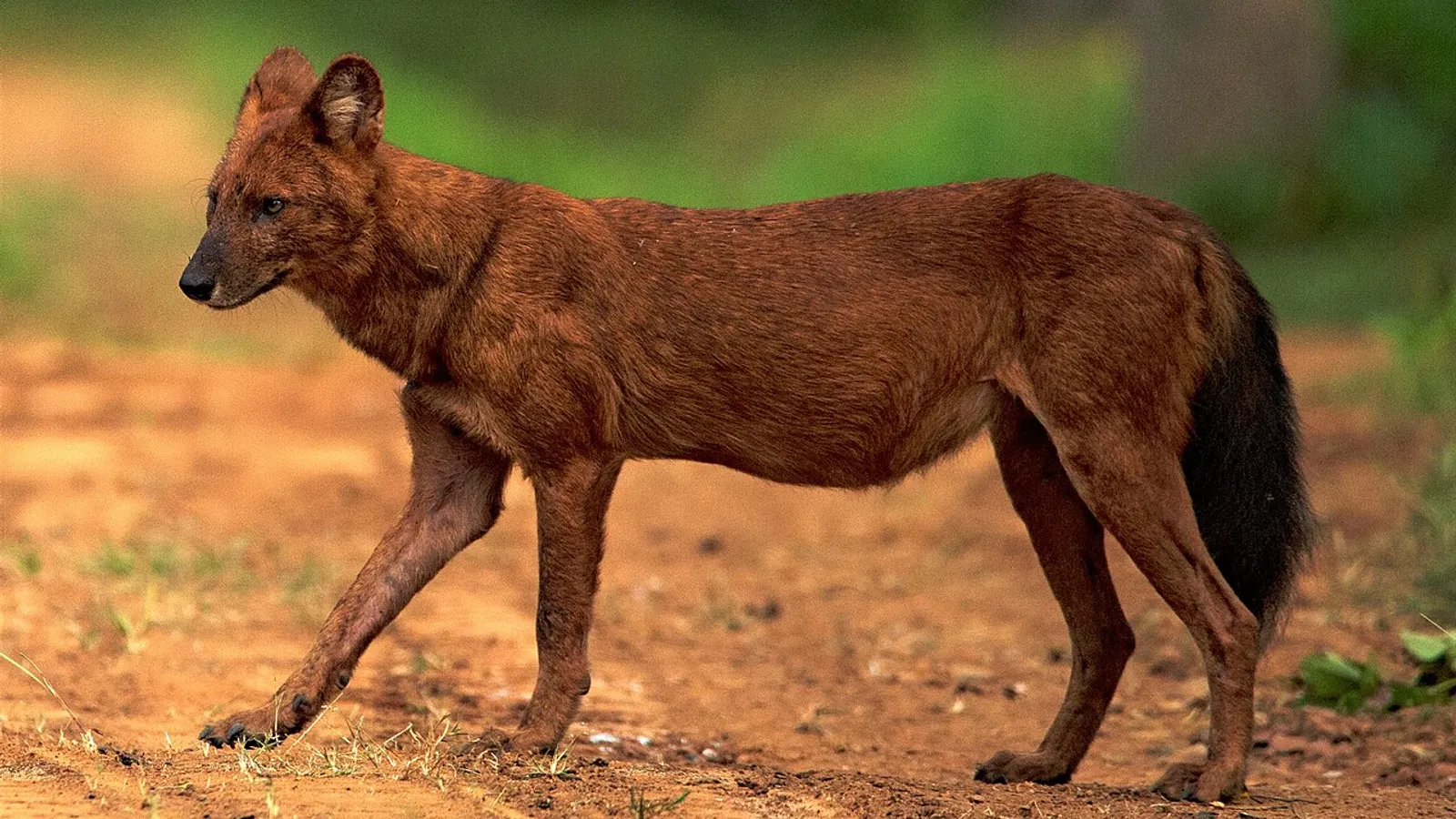
— Where the name comes from
Cuon is simply the Greek kýōn, “dog”, latinised. Alpinus is another geographical error: the type specimen came from the Altai, in Siberia, and “alpine” here means loosely “of the mountains” — it has nothing to do with the Alps. The name by which it is known worldwide is instead dhole, a word of uncertain origin that came from India, perhaps from Kannada or Marathi.
— Facts
- Group
- Mammals · Mammalia
- Order
- Carnivores
- Habitat
- Dense forest, alpine scrub, wooded steppe, from sea level to 5,300 m
- Range
- Central, southern and south-eastern Asia; reduced to fragmented populations
- Size
- 88–113 cm of body, 12–20 kg
- Diet
- Carnivore — deer and medium ungulates, hunted in packs
- Lifespan
- About 10 years in the wild
— Characteristics
- 01
It has one tooth fewer per side in the lower jaw than other canids.
- 02
It communicates with a modulated whistle, which has earned it the name “whistling dog”.
- 03
A pack can bring down prey ten times the weight of a single animal.
— What sets it apart
In the pack, the pups eat first. It is the opposite of what adult wolves and painted wolves do, social as they are, and it is a rule the dholes keep even when food is short: the adults wait until the young have filled themselves before touching the carcass, and regurgitate for them even when they are not the parents. A dhole pack has no feeding hierarchy, it has a priority — and it runs in the opposite direction to the one we would expect.
